

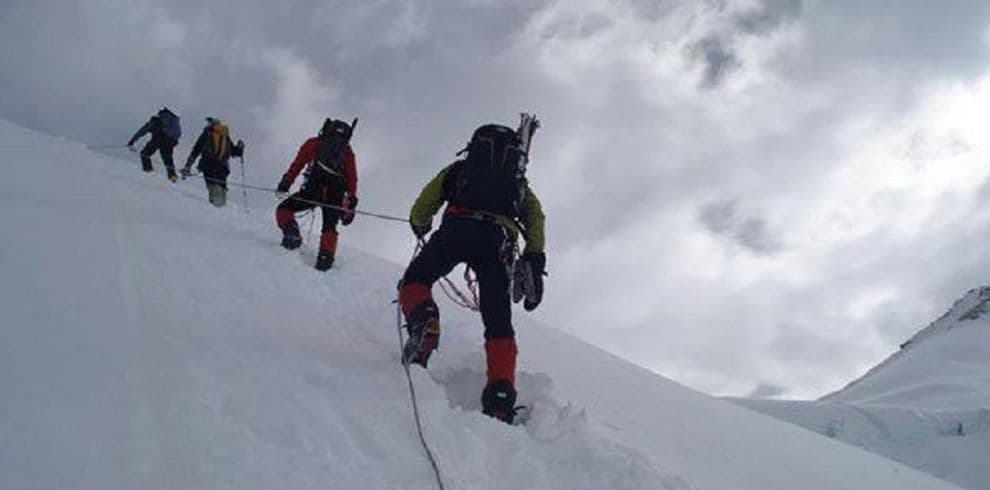
Pokalde Peak Climbing / Expedition
Overview
Nepal, as a tourist destination is good for all seasons, however, the best seasons for trekking to Kanchenjunga region are Spring (March – May) and Autumn (mid Sept. – mid Dec. ). Trekking in autumn season is noted for clear weather and excellent views of silvery mountains against blue sky. It gets colder towards the end of December. This trek can be done in any month except January and February.
Trek to Pokalde Peak in Everest region provides you unforgettable moments of your life. Trekking to the Everest region, exploring panoramic views of many stunning Himalayas like Mt. Everest (8848m\ 29028ft.), Mt. Nuptse (, Amadablam, Lhotse, Makalu, Thamserku and many more. Categorized under one of the challenging and technical climbing. It requires better previous experience and good health physical to climb. Pokhalde Peak with much special equipment like rope, ice ax, snow bar. Pokhalde Peak Climbing provides you a great chance to observe the local culture of any Mongolian people. Especially the Sherpa people, following their own different traditions and cultures. And you can also explore the wild habitat of many endangered species in the beautiful forest of pine and bamboo.
One of the shortest and easiest peaks situated in the Khumbu region requires a little skill for climbing. Also, the Pokhalde peak 5806 m (19048) is the easiest one to climb and the shortest trekking peak in the Everest Region. In trekking seasons this peak becomes rocky and gets covered by snow. Most prominently you see peaks such as Makalu, Ama Dablam & Pumori from the top/summit. The top of the peak is only 650m away from the base camp. Although, you can summit the peak within a time frame of half a day with mild fitness and appropriate leadership. Most of the time you won’t need to use climbing equipment like crampons and ice-axes except for the use of the rope near the top. The climb is relatively easy but you shouldn’t attempt to climb during the bad weather because the terrain is exposed. First, our trip starts from Kathmandu followed up by flight to Lukla and then we trek from there to Namche Bazaar through Phakding. After this, we trek to Tyangboche and the altitude gradually increases with it, on the next day we reach Dingboche.
Moreover, we also take rest in some places for acclimatization, so that you can adapt to the new environment and get comfortable with high altitude. Acclimatization is for beginners in the mountains. In first we trek to Pokhalde Base Camp and then to High Camp. Here you are taught some basics of climbing through the guide. The next day you will head to summit the peak and return to Base Camp afterward. We celebrate our summit at the camp and return back the same way. Finally, once you are in Kathmandu we organize a get-together and enjoy the successful summit with Sherpa’s and climbing guides.
What‘s Included
What‘s Excluded
Availability
Select your preferred departure date. Trip duration: 17 days
| Su | Mo | Tu | We | Th | Fr | Sa |
|---|---|---|---|---|---|---|
| Su | Mo | Tu | We | Th | Fr | Sa |
|---|---|---|---|---|---|---|
Number of Travellers
Select a date to book
Dates are subject to availability. Please contact us to confirm your preferred dates.
Itinerary
Altitude: 1,350m/4,428ft - Welcome to Kathmandu, the capital of Nepal! Our airport representatives welcomes you and transfers you to designated Hotel and give short brief and further details of the trip program. Overnight stay in hotel.
Today we succeed our day with sightseeing around Kathmandu along with the trek preparation. Sightseeing includes tour around Swayambhunath (monkey temple), Bauddhanath (Buddhastupa), Pashupatinath/Biggest Hindu Temple & Patan Durbar Square.
Today, you are transported to domestic terminal of Kathmandu airport with our team members. And take scenic flight to Lukla, this flight cumulates as the world’s most dramatic flight as we fly above the breathtaking green and white mountains. Upon the arrival, we do some packing and preparation and head to Phakding. Once you reach Phakding you can either rest or take short trek to local monastery.
From Phakding we trek to Namchhe Bazaar. The trail is uphill with downhill combined of crossing rivers and bridges. This way, our trekking permits are checked and pass some famous suspension bridge as well. Namche Bazaar is the main administrative and trading centre for the Khumbu region. With the inclusive of magnificent forests of blue pine, fir, juniper and rhododendron as well as first view of Everest, it helps you to control the anticipation of the thrilling journey.
Although we are acclimatizing, Health experts recommend us to stay active and move short distance instead of remaining idle. Therefore, we acclimatize in Namchhe Bazaar by taking a day hike to Thame or by visiting Khunde. Namchhe bazaar is full of facilities like government offices, ATMs, Internet cafes, shops, restaurants and various markets. This way you won’t get bored and acclimatize well. Meals included: Breakfast, lunch and dinner with tea or coffee and finally an overnight stay in trekking lodge or tented camp.
In our trek for today we can spot wild lives like pheasant, musk deer, Himalayan Thar, etc and this makes the walk for today a wild one. The trek from Namche to Tengboche is unbelievably stunning, Far below is the Dudh Koshi and Thamserku, Kantenga, Ama Dablam, Lhotse and Everest rises in front. Woods, Rhododendron Forest, Mani Walls, Chorten (Stupas), and suspension bridges across the rivers make this a lovely walk. Meals included: Breakfast, lunch and dinner with tea or coffee and finally an overnight stay in trekking lodge or tented camp.
We trail through upper trail for great views to visit Pangboche village and it’s ancient Monastery. Then we pass several Chorens and Mai walls and small village. We take lunch with stunning close-up view of Ama-Dablam and walk onward through Imja valley. The valley approaches with the confluence of Lobuche River and we descend into the river. From there take our steepest climb to reach Dingboche. Meals included: Breakfast, lunch and dinner with tea or coffee and finally an overnight stay in trekking lodge or tented camp.
We again acclimatize at Dingboche by taking short walk to the ridge at the North behind the village for nicer view of Mt. Ama Dablam, Mt. Lhotse and other peaks. We see many mountains from Dingboche with Imja Khola valley and the stunning fields and pasture of Dingboche. Meals included: Breakfast, lunch and dinner with tea or coffee and finally an overnight stay in trekking lodge or tented camp.
We take short walk to Pokhalde Base Camp and upon the arrival we learn some ice climbing skills and acclimatize for the upcoming altitude. The base camp is located near a large circular lake in the middle below the Kongma La Pass. We can see Mt. Makalu, Amadablam, the south face of Nuptse and other remarkable mountain peaks from the camp. Meals included: Breakfast, lunch and dinner with tea or coffee and finally an overnight stay in trekking lodge or tented camp.
As we pass Kongma La Pass, we can enjoy views of wide basin dotted with frozen lakes. You can see majestic view of Pokhalde peak from the high pass and as we tag along, the trail rewards us with eye-catching views of Cholatse, Nuptse, Lhotse, Makalu, Ama Dablam and several other peaks in Khumbu region. And we finally call it a day upon reaching High Camp of Pokhalde peak. Meals included: Breakfast, lunch and dinner with tea or coffee and finally an overnight stay in trekking lodge or tented camp.
Today is the most anticipated day of the trip. Today we conquer Pokhalde peak. We wake up fairly early today and move toward the climb. First we need to cross stony area then we reach to the narrow rocky Summit, Pokhalde peak. From the top you can observe the most breathtaking and panoramic views of the world’s highest mountains including Makalu, Ama Dablam & Pumori with many other remarkable mountains. Then after a while we trace back to the camp. Meals included: Breakfast, lunch and dinner with tea or coffee and finally an overnight stay in trekking lodge or tented camp.
Nature is unpredictable and sometimes some team members suffer from severe condition. Reserving one extra day to fill any kind of contingencies helps to complete the climb successfully in case of bad weather & suffering of any team member. If the trip goes smoothly this day won’t be used/necessary. Meals included: Breakfast, lunch and dinner with tea or coffee and finally an overnight stay in trekking lodge or tented camp.
We take standard Everest Base Camp route to Tengboche. We cross Louche River, pass several chortens and Mani walls to reach Monastery filled village of Tengboche. And not to forget the amazing close-up view of Ama-Dablam in the background as we trail. Meals included: Breakfast, lunch and dinner with tea or coffee and finally an overnight stay in trekking lodge or tented camp.
This is the day to return back Namchhe Bazaar and the path leads downhill to Phungitenga and we continue flat trail until Namchhe. Here you can explore The Everest National Park Museum which houses many mountaineering and Himalayan artifacts. This is the moment to relive the last trek and previous journey. Meals included: Breakfast, lunch and dinner with tea or coffee and finally an overnight stay in trekking lodge or tented camp.
Descending steeply downward we take slow walk across the rocky terrain. Then we cross the suspension bridges over Dudh Koshi and take quite and charming route. The trail is same as we trekked uphill but the sceneries appear different and the rhododendron & pine forest makes this trail even interesting. You can see Sherpa culture with prayer stones and flags in the monasteries once you arrive Lukla. Meals included: Breakfast, lunch and dinner with tea or coffee and finally an overnight stay in trekking lodge or tented camp.
Taking flight back to Kathmandu, you can relive the amazing mountain flight experience. After the arrival you can arrange your luggage, emails, and photos and do sightseeing in the evening. Also you can shop around for Nepalese goods, artifacts and buy souvenirs for friends and family at home. In the mean time we organize fantastic get-together with Sherpa’s and guides in the evening. Meals included: Breakfast and finally an overnight stay in hotel. Attend the evening dinner and cultural program provided by the company.
Thank you for enjoying the country of Mountain. We arrange your documents while you can organize your luggage. Approximately 3 hours prior to your scheduled flight, our airport representative drops you to the airport. Have a safe journey home.
FAQs about
the trip
Nepal, as a tourist destination is good for all seasons, however, the best seasons for trekking to Kanchenjunga region are Spring (March – May) and Autumn (mid Sept. – mid Dec. ). Trekking in autumn season is noted for clear weather and excellent views of silvery mountains against blue sky. It gets colder towards the end of December. This trek can be done in any month except January and February.
Nepal, as a tourist destination is good for all seasons, however, the best seasons for trekking to Kanchenjunga region are Spring (March – May) and Autumn (mid Sept. – mid Dec. ). Trekking in autumn season is noted for clear weather and excellent views of silvery mountains against blue sky. It gets colder towards the end of December. This trek can be done in any month except January and February.
Nepal, as a tourist destination is good for all seasons, however, the best seasons for trekking to Kanchenjunga region are Spring (March – May) and Autumn (mid Sept. – mid Dec. ). Trekking in autumn season is noted for clear weather and excellent views of silvery mountains against blue sky. It gets colder towards the end of December. This trek can be done in any month except January and February.
Nepal, as a tourist destination is good for all seasons, however, the best seasons for trekking to Kanchenjunga region are Spring (March – May) and Autumn (mid Sept. – mid Dec. ). Trekking in autumn season is noted for clear weather and excellent views of silvery mountains against blue sky. It gets colder towards the end of December. This trek can be done in any month except January and February.
Nepal, as a tourist destination is good for all seasons, however, the best seasons for trekking to Kanchenjunga region are Spring (March – May) and Autumn (mid Sept. – mid Dec. ). Trekking in autumn season is noted for clear weather and excellent views of silvery mountains against blue sky. It gets colder towards the end of December. This trek can be done in any month except January and February.
Nepal, as a tourist destination is good for all seasons, however, the best seasons for trekking to Kanchenjunga region are Spring (March – May) and Autumn (mid Sept. – mid Dec. ). Trekking in autumn season is noted for clear weather and excellent views of silvery mountains against blue sky. It gets colder towards the end of December. This trek can be done in any month except January and February.
Nepal, as a tourist destination is good for all seasons, however, the best seasons for trekking to Kanchenjunga region are Spring (March – May) and Autumn (mid Sept. – mid Dec. ). Trekking in autumn season is noted for clear weather and excellent views of silvery mountains against blue sky. It gets colder towards the end of December. This trek can be done in any month except January and February.
Nepal, as a tourist destination is good for all seasons, however, the best seasons for trekking to Kanchenjunga region are Spring (March – May) and Autumn (mid Sept. – mid Dec. ). Trekking in autumn season is noted for clear weather and excellent views of silvery mountains against blue sky. It gets colder towards the end of December. This trek can be done in any month except January and February.
Nepal, as a tourist destination is good for all seasons, however, the best seasons for trekking to Kanchenjunga region are Spring (March – May) and Autumn (mid Sept. – mid Dec. ). Trekking in autumn season is noted for clear weather and excellent views of silvery mountains against blue sky. It gets colder towards the end of December. This trek can be done in any month except January and February.
Nepal, as a tourist destination is good for all seasons, however, the best seasons for trekking to Kanchenjunga region are Spring (March – May) and Autumn (mid Sept. – mid Dec. ). Trekking in autumn season is noted for clear weather and excellent views of silvery mountains against blue sky. It gets colder towards the end of December. This trek can be done in any month except January and February.
Nepal, as a tourist destination is good for all seasons, however, the best seasons for trekking to Kanchenjunga region are Spring (March – May) and Autumn (mid Sept. – mid Dec. ). Trekking in autumn season is noted for clear weather and excellent views of silvery mountains against blue sky. It gets colder towards the end of December. This trek can be done in any month except January and February.
Speak to an Expert
Suresh Bhandari
Leave a Reply
Your email address will not be published.