Annapurna round with Tilicho Lake Trekking
.jpg&w=3840&q=75)
Overview
The Annapurna Circuit with Tilicho Lake is one of the most adventurous and iconic treks that you can find in Nepal. It offers you an opportunity to visit one of the highest lakes in the world, that is Tilicho. This package provides travellers a deep Himalayan journey where they get to witness mountain scenery, diverse landscapes, peaceful valleys, traditional villages, rich cultures, history and many more. Through the journey you will constantly encounter some amazing green forests and waterfalls. Therefore, all these components add up to a beautiful, fulfilling trek which is very unique and memorable for a lifetime.
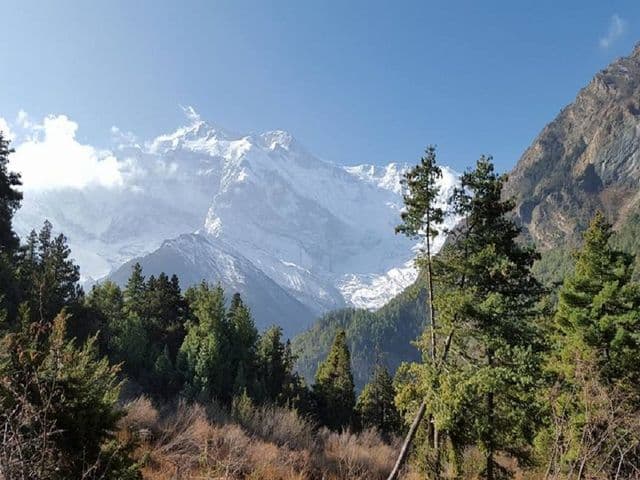
Annapurna Round with Tilicho Lake Trek is the best opportunity to enjoy nature in its true form throughout. The lower part of the trail passes through beautiful villages like Bahundanda, Chamje and Bagarchhap, etc., and climbs through green hills, waterfalls, rivers and forests with diverse forests like pine, bamboo, rhododendron, etc. The scenery starts to enhance its level as one heads towards Chame through amazing snow-capped mountains and hills.
Then, as you go higher in elevation, it will be possible to visit destinations with views of the Himalayas and a culture, monastery and prayer flags influenced by Tibet like Pisang and Manang. After this, the path is a bit further off and rougher as it winds towards Khangsar and Tilicho Lake, where one of the world's highest lakes is nestled in the breathtaking panorama of the mountains.
The journey then continues through Yak Kharka and Thorong Phedi. Right after this, trekkers cross the famous Thorong La Pass. After the pass, trekkers descend to the sacred site of Muktinath and later reach Jomsom, a beautiful town known for its windy valleys, mountain views, and unique local culture. Throughout the trek, the sounds of rivers, waterfalls, prayer flags, and yak bells create a peaceful Himalayan atmosphere.
Visitors can enjoy the lifestyle, tradition, and hospitality of Gurung, Magar, Thakali and Manangi communities during the trek. Visitors get to witness the traditional stone houses, monasteries and try and experience local foods, prayer wheels, and the warm hospitality of the local community. People make the trekking experience even more meaningful and memorable.
In conclusion, the Annapurna Circuit with Tilicho Lake trek is an unforgettable Himalayan journey that takes about 16 – 20 days. This expedition gives trekkers a trek filled with breathtaking landscapes, rich and diverse culture, and mesmerizing mountains. Trekkers also get to stand next to one of the finest lakes in the world, Tilicho Lake. The trek might be a physical challenge to some, but trust us, it's nothing compared to the reward it gives you after the accomplishment. You’ll enjoy every moment of this trip without a single hesitation. Therefore, this is a once-in-a-lifetime experience into the heart of the Himalayas.
Things to know before this trek
- You must have a guide in this journey because it is a safety and permit requirement. You cannot trek solo.
- You will walk at a high altitude, so do not rush, drink plenty of water, about 3-4 litres.
- Never ignore minor headaches, take enough rest and carry medications you may need.
- Prepare your body to endure physical activities, especially distant and inclined walking.
- Accommodation is decent, simple. You’ll need to purchase additional luxuries like Wi-Fi and hot showers. As you go higher, these services get less available and may cost slightly higher.
- Carry reusable bottles and materials in order to protect the environment.
- Bring the trekking tools such as trekking poles, comfortable boots, shorts, etc.
- Back up for your devices or gadgets would be a lot helpful since electricity might be unreliable sometimes, especially at higher altitudes.
- Hygiene equipment such as hand sanitiser, soap, toilet paper and wipes is rarely provided in teahouse bathrooms.
- Make sure to carry backup clothes like a jacket, pants or joggers, since they may be needed when another item is not wearable. Also, the temperature at the Base Camp is below freezing, so you might need them.
- Travel insurance covering high-altitude trekking and emergency evacuation is strongly recommended for safety.
- Do not rely on ATMs, as they are very rare. Please carry enough Nepalese cash to prevent money transaction problems.
- Being able to communicate, socialise, understand, and respect will do you good, so be prepared.
Route Overview
The Annapurna Circuit with Tilicho Lake is one of the most beautiful and adventurous trekking trails in Nepal. The journey begins after arriving in Kathmandu, where trekkers prepare for the adventure before driving towards Besisahar and further into the Annapurna region. As the road leaves the city behind, the surroundings gradually change into hills, rivers, terraced farms, and mountain landscapes.
The trek officially begins through lower hillside villages such as Bahundanda, Chamje, and Bagarchhap. These areas are known for their peaceful trails, waterfalls, suspension bridges, and forested surroundings. The trail gradually ascends towards Chame, where one starts to get better views of the Himalayan ranges and a cooler mountain winds.
As the trail continues through Pisang and Manang, the landscape becomes more open and dramatic. Manang is one of the key places where trekkers will stay to acclimatise themselves before going towards higher altitudes. The village also offers beautiful mountain views, monasteries, and insight into the local Himalayan lifestyle.
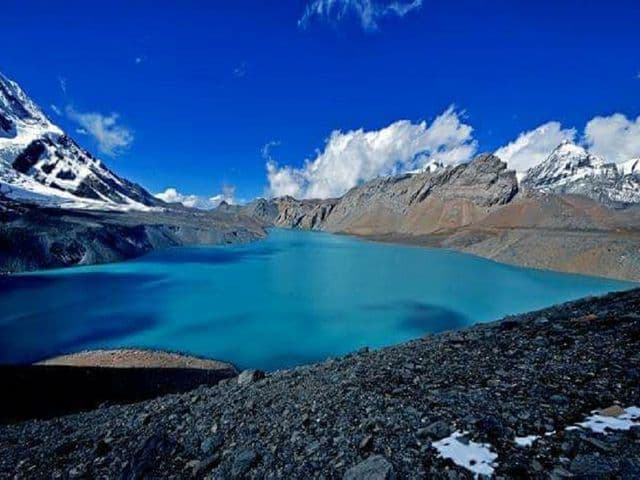
From Manang, the route heads towards the quieter settlement of Khangsar and then towards Tilicho Base Camp. The trail in this section becomes more rugged and remote before finally reaching Tilicho Lake at 4,919 meters. The lake is a major attraction along the route and provides an experience of high altitudes, surrounded by the steep cliffs and snowy peaks.
After exploring Tilicho Lake, trekkers return to the main Annapurna Circuit trail and continue through Yak Kharka and Thorong Phedi. These settlements serve as preparation points before crossing the famous Thorong La Pass at 5,416 meters, one of the highest trekking passes in Nepal.
The trail then descends down to Muktinath, a holy place which is a destination for both Hindu and Buddhist pilgrims. After that, it is a trek to Jomsom in the Kali Gandaki Valley, where one will encounter a different topography characterized by dry hills, strong winds and traditional Thakali villages.
After completing the trek, trekkers return to Pokhara by road or flight and later travel back to Kathmandu. The Annapurna Round with Tilicho Lake Trek ends as a rewarding Himalayan journey filled with breathtaking landscapes, mountain trails, cultural experiences, and memorable moments throughout the Annapurna region.
Best time for Annapurna Circuit and Tilicho Trekking
The best time to visit or trek the Annapurna Circuit with Tilicho Lake is during the spring season (March – May) and autumn season (September–November), as both offer stable weather, clear mountain views, and safe trekking conditions in the Himalayas.
During the spring season, the weather is generally mild and very pleasant for trekking. The lower parts of the trail are warm, but higher parts such as Manang, Tilicho are cool. The trip is made more colorful and scenic by the sight of the beautiful blooms of rhododendron forests along the way, particularly in the lower hills. The weather is generally fine with clear skies that provide a breathtaking view of the mountains like Annapurna, Dhaulagiri, Manaslu and Tilicho Peak. Temperatures vary depending on altitude, ranging from around 15°C – 25°C in lower regions, 5°C – 15°C in mid-altitude areas like Manang, and dropping to around -5°C to -10°C at higher elevations such as Tilicho Lake and Thorong Phedi. Nights are much colder, especially above 4,000 meters.
The autumn season is considered the most stable and popular time for this trek. After the monsoon, the air becomes clean, and visibility improves as well, giving trekkers sharp and wide Himalayan views throughout the journey. The trails are dry and in good condition, making trekking easier and more comfortable. Temperatures are similar to spring, with lower regions staying warm, mid regions like Manang ranging between 5°C – 15°C, and higher areas such as Tilicho Lake, Yak Kharka, and Thorong Phedi dropping to around -5°C to -15°C at night. This season offers some of the clearest views of the entire Annapurna range, especially during the crossing of Thorong La Pass and the visit to Tilicho Lake.
Therefore, both spring and autumn are considered the best and safest seasons for the Annapurna Round with Tilicho Lake Trek.
Least ideal time for this Trek
During the winter months, the upper sections of the trek such as Manang, Tilicho Lake, and Thorong La Pass become extremely cold, with temperatures often dropping to -10°C to -20°C or even lower at night. Heavy snowfall can block high passes, especially Thorong La, making parts of the route inaccessible or risky. Many tea houses in higher regions also close during this time, limiting accommodation options. While the lower regions remain manageable, the overall experience becomes challenging due to freezing conditions and snow-covered trails.
The monsoon season is also considered less ideal for trekking. Heavy rainfall makes the lower trails muddy, slippery, and prone to landslides, especially in road sections leading towards the Annapurna region. Temperatures usually range between 18°C – 25°C, but high humidity and continuous rain make trekking uncomfortable and in higher areas like Manang and Tilicho, temperatures remain cooler, 5°C – 15°C. Visibility of the mountains is often poor due to clouds and fog, meaning trekkers may miss clear views of peaks like Annapurna, Dhaulagiri, and Manaslu. Leeches are also common in forested areas during this time, which can affect the trekking experience in lower elevations.
Because of these conditions, both winter and monsoon are generally avoided for this trek unless trekkers are highly experienced and prepared for difficult weather.
Highlights
- Travel the Annapurna Circuit, one of the most popular and well-known trekking routes in Nepal, experiencing the different terrain and landscapes along the way.
- Visit Tilicho Lake, one of the highest lakes in the world at an altitude of 4,919 meters, surrounded by snowy peaks and rugged mountain terrain.
- Cross the difficult Thorong La Pass (5416m) with stunning views of the Himalayas and a high-altitude trek.
- Enjoy breathtaking panoramic view of Annapurna I, Dhaulagiri, Manaslu, Tilicho Peak, Machhapuchhre (Fishtail) and other peaks of the Himalayas during the trip.
- Experience the culture, traditions, and warm hospitality of Gurung, Thakali, and Manangi communities while exploring traditional mountain villages.
- Walk through beautiful villages like Chame, Pisang, Manang, and Jomsom, each offering unique landscapes, culture, and mountain views.
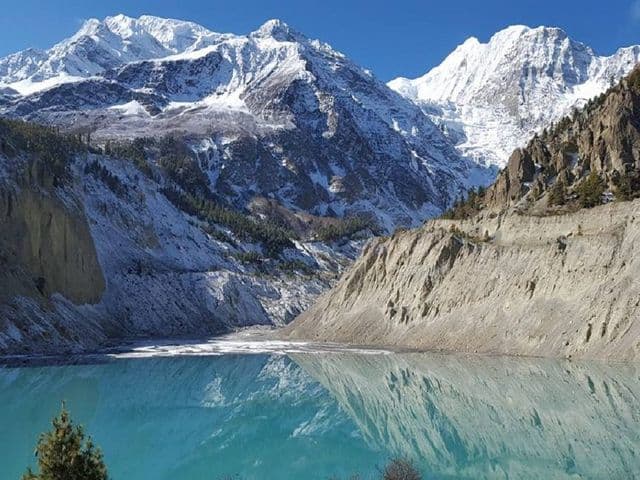
- Trek through diverse landscapes, including lush forests, waterfalls, rivers, alpine valleys, rocky cliffs, and high mountain deserts with dramatic scenery changes along the trail.
- Visit the holy Muktinath pilgrimage site, revered by both the Hindu community and the Buddhist community, and experience the ethereal ambience and spiritual significance.
- Witness Tibetan-influenced culture, ancient monasteries, prayer wheels, chortens, and colourful prayer flags throughout the trekking route.
- Enjoy a tranquil and serene view of the Himalayas, accompanied by the sound of the river, waterfall, mountain winds and yak bells.
What‘s Included
What‘s Excluded
Availability
Select your preferred departure date. Trip duration: 20 days
Number of Travellers
Select a date to book
Dates are subject to availability. Please contact us to confirm your preferred dates.
Itinerary
Equipment
Activity/Trek gear
- Trekking backpack - to carry your essentials at ease
- Rain cover for backpack – to protect the backpack from rain and dust
- Trekking poles – assist you in walking, preventing injuries
- Reusable bottle - for constant hydration
- Dry bag – helps keep electronics and documents safe
- Power bank/ Spare batteries with usable adapters or cable
- Handlamp or torch – useful during power cuts or night walks
Clothing or Layering
- Thermal top and bottom as a base layer
- Insulating layers like fleece jacket, thick wool sweater, etc.
- Waterproof or windproof shell jackets
- Trekking pants (should be comfortable for you)
- Multiple pairs of socks
- Sleepwear
- Quick-dry clothes like towels, shirts, inner
- Sportswear in case you want to get involved in running or some games
- Waterproof or rain clothes
Footwears
- Trekking boots
- Sandals
- Flipflops
- Camp shoes – provide comfort for lodge usage
- Gaiters (optional) – protect boots and pants from mud, snow or rocks
Headwear
- Warm hat
- Sun hat
- Sunglasses
- Buff or neck gaiter
Handwear
- Light gloves
- Watch
- Insulated gloves
Hygiene Materials
- Toothbrush and toothpaste
- Body wash
- Shampoo
- Deodorant
- Hand sanitiser
- Wet wipes
- Nail cutter
- Tissue
- Quick-dry towels
- Small first aid
- Toilet paper
- UV-protection sunglasses (polarised preferred)
- High SPF sunscreen (30–50+)
- Lip balm
- Moisturiser for dry mountain air
Optional Tools
- Earplugs, earpods
- Copies of insurance or passport
- Notebook and pen
- Snacks or energy bar
- Map guide
Trip Information
Situations during peak hours or the season
The Annapurna Circuit with Tilicho Lake is a popular trek, particularly in the spring (March – May) and autumn (September – November). During this time, it can be quite busy in certain areas, such as Chame, Pisang, Manang, Yak Kharka and Thorong Phedi. The Tilicho Lake side route through Khangsar and Tilicho Base Camp also sees more trekkers during this time. As the numbers are high, there may be a situation where the lodges and teahouses can get fully booked, and in some places you may need to wait for rooms or meals, so early booking is often recommended.
Even with the crowd, this is the most preferred time for the trek. The weather is stable, the skies are clear, and the mountain views are at their best, including peaks like Annapurna, Dhaulagiri, Manaslu, and Tilicho Peak. All trails are open, and there are additional services on offer, such as guides and porters, as well as upgraded teahouse food. In general, it is an exciting trek with good weather and stunning Himalayan scenery.
Situations during the off-season
During the off-season for the Annapurna Circuit with Tilicho Lake—mainly winter (December – February) and monsoon (June – August)—the trail is much quieter with very few trekkers. In winter, higher areas like Manang, Yak Kharka, Thorong Phedi, and Tilicho Lake can become extremely cold and snowy, and some teahouses may close. In the monsoon season, lower sections such as Bahundanda, Chamje, and Bagarchhap become wet, muddy, and slippery due to continuous rainfall, and road travel to the starting points can also be affected.
Although the trail is less crowded and feels more peaceful, trekking becomes more challenging in these seasons. Winter brings freezing temperatures and potential snow blockages at Thorong La Pass in the winter, and cloud and rain in the monsoon, reducing visibility of the mountains. Other services, such as lodging and dining, are also less available during off season time. However, for experienced trekkers, these seasons are the time to experience solitude and a much more quiet and raw Himalayan experience.
Preparation for this trek
Let's walk you through the ways to prepare for this trek, since it is very important how you do it. It can play a key role in eliminating some possible difficulties or problems.
Make sure you are physically fit. If you’re not, you'd better start your physical training, such as building endurance, leg strength, improving cardio, etc. You could try to walk shorter hikes around your place or upstairs.
Regarding the gear, you’ll need trekking boots, layered clothing, a down jacket, and rain gear. Boots better be broken ones because new ones might hurt your foot and toes, and may not fit you properly. Hence, broken ones are already compatible with your foot. You also need to include trekking poles (optional) since they can save your energy massively and also prevent you from hurting your knees or legs.
Waters, snacks, primary first-aid, hand sanitiser, and toiletries should lie in your backpack essentials. Similarly, a guide is mandatory; remember your hydration, maintain your pace and carry enough cash money. The goal is to trek this adventure without injuring or harming yourself.
Things to consider about transportation or flights
After you arrive in Kathmandu, the first major transportation for the Annapurna Circuit with Tilicho Lake is a road journey towards Besisahar. This drive usually takes around 6–8 hours depending on traffic and road conditions. It is the main gateway to the Annapurna region and marks the start of the overland journey into the mountains.
From Besisahar, the journey continues by local jeep deeper into the trail, depending on road access and itinerary. Common entry points include places like Chamje, Bagarchhap, or Chame. These off-road jeep rides are rough and bumpy but very important, as they shorten several days of walking and take trekkers closer to the higher mountain villages where the actual trekking begins.
At the end of the trek, most travelers descend to Jomsom and then continue either by flight or road to Pokhara. After this you return to Kathmandu. The flight from Jomsom to Pokhara is short (about 20-25 minutes) but highly weather-dependent due to strong winds in the Kali Gandaki Valley, so delays or cancellations can happen. Road travel is more stable but takes longer. It takes about 10-12 hours of a road trip.
Because of these uncertainties, it is always recommended to keep a buffer (about 1-2) days in the itinerary to ensure smooth and stress-free travel connections.
About Jomsom to Pokhara Flights
The flight from Jomsom to Pokhara is a short and scenic mountain flight that connects the Mustang region with Nepal’s lakeside city. The flight usually lasts around 20–25 minutes.
As you take off from the narrow valley of Jomsom, the journey offers stunning aerial views of the Kali Gandaki Gorge, deep river valleys, and surrounding Himalayan peaks. As you approach Pokhara, the landscape gradually changes to green hills and lakes, marking a beautiful and comfortable end to the trekking journey.
About Pokhara to Kathmandu Flights (While returning)
After completing the Annapurna Circuit with Tilicho Lake, many trekkers choose to travel from Pokhara back to Kathmandu by flight for a quicker and more comfortable return. The flight takes around 25–30 minutes and offers beautiful aerial views of hills, rivers, and the Himalayan ranges on a clear day. It is the fastest way to connect the two major cities after the trek.
In short, the Pokhara to Kathmandu flight is a smooth and time-saving way to conclude the trek, allowing trekkers to rest quickly in the capital after completing a long Himalayan journey.
Possible problems during transportation or flights
Flights between Pokhara and Kathmandu are generally frequent, but they can still be affected by weather conditions, especially during monsoon or low-visibility periods. Occasional delays or schedule changes may happen, so it is always better to keep some flexibility in your travel plan. Despite this, flying remains a convenient option compared to the 6–8-hour road journey.
Jomsom to Pokhara flights are weather-sensitive flights in Nepal. Travellers can expect some delays. One of the main issues is strong winds in the Kali Gandaki Valley, especially in the afternoon. This massively affects visibility and flight safety. Because of this, flights usually operate early in the morning, and even then, schedules can change or get delayed.
Road transport can also cause a travel delay. Bumpy and narrow roads will slow you down. You may also face traffic congestion while leaving Kathmandu. Especially during the monsoon season, the roads in some parts (Narayangadh – Muglin, Bnighat areas, Jawangkhola, etc.) of the highway are prone to landslides, causing road blockages. There are chances of vehicle breakdowns almost anywhere, maybe while travelling from Kathmandu to Besisahar. But this is very rare. Hence, you'd better be prepared for unpredictable moments like this.
Importance or Benefits of the Guide from us
Hiring a guide or a trek guide is equally helpful and mandatory for treks like this. It comes with lots of advantages and benefits because those folks have good trail knowledge. You’ll be very efficient at navigating your route and ensuring your safety. They will guide you with everything you need. You will be able to sort your plans, manage your pace and arrange accommodations without difficulty. They can be a massive communicator with the locals for your Q and As. They will explain to you deep cultural insights, provide you with firm support and make your journey stress-free.
When you purchase one, you will be given some complementary items. It depends on who and where you purchase. Therefore, you can trust us. We provide
- Pick-up and drop-off service through private vehicles
- Well-licensed, knowledgeable and experienced trek guides
- Provision of a briefing by the company director or a senior adventure expert
- Confirmed dates for trek
- Focus on client-centred service such as safety, comfort and satisfaction
- Customizable itineraries for flexible trek plans
- Several complementary items like a t-shirt, a cap, a sleeping bag, a down jacket and poles
- Required online briefing and 24-hour service for assistance or queries
- Free luggage storage at our office during your journey
FAQs about
the trip
Leave a Reply
Your email address will not be published.