Annapurna Base Camp Trekking
-1.jpg&w=3840&q=75)
-_IMG_5246-1-640x480.jpg&w=3840&q=75)
Overview
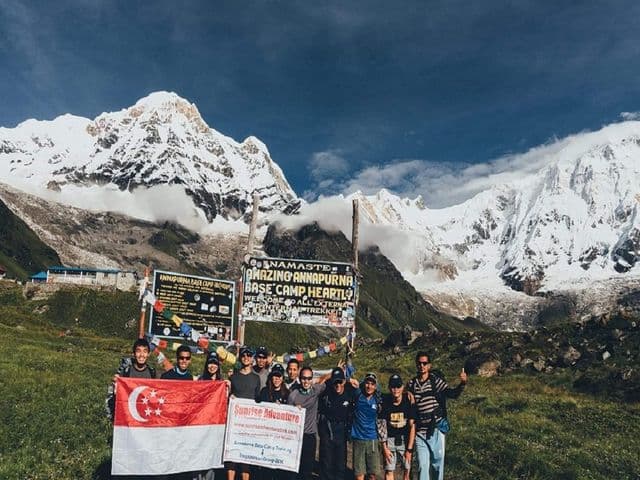
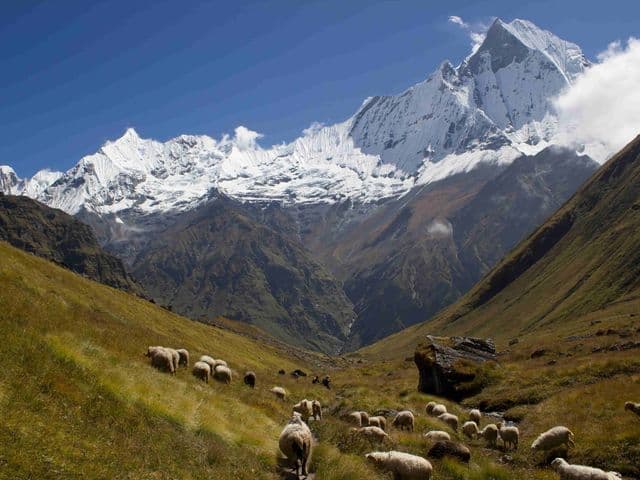
Annapurna Basecamp (ABC) is a place of wonder in the heart of the Himalayas. It’s one of the most famous and travelled destinations in Nepal. Surrounded by glacier mountains, forests, and rivers, it feels like stepping into another world. The trek passes through small villages where locals greet you warmly, and every trail offers amazing views. ABC is an experience worth living for, something that lasts a lifetime.
What brought you here? Of course, the dream, desire, need, or hobby to travel. Nevertheless, the question is, how do you pursue it? Don’t worry, you’re in the right place. So, the ABC trek is a 10–14-day trek package that offers you one of the most thrilling, adventurous, and exciting moments of your life.
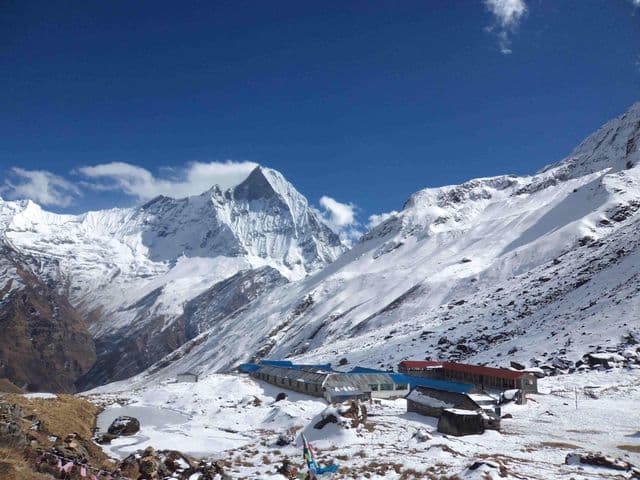
The natural beauty and rich culture are the main reasons to visit ABC. The basecamp lies at 4,130 m (Altitude). You’ll have panoramic views of the glacier mountains, breathtaking nature, and chances to witness the culture, traditions and lifestyle of different communities like Gurungs, Magars, Tamangs and Thakalis.
Once you touch down in Kathmandu, you head to Pokhara. It can be a good 6-7-hour drive, or you can also take a flight. A drive is recommended since you get to enjoy the view and the beauty of Nepal. The official trek begins from a small village, Nayapul. In the adventure, you walk through beautiful small villages, taking in fresh, lush air, and you reach places like Jhinu, Tukung, Chhomrong, Sinuwa, Dovan and so on. In the journey, you get to smell pine forests and taste several local dishes. You will also hear the babbling and burbling sound of the river and, of course, the sound of the yak bells. There are steady trail climbs, terraced fields, lush valleys, and rugged cliffs. Right after you get past these, you arrive at Machapuchare Base Camp before unveiling the awe-inspiring Annapurna Base Camp.
The famous landmarks are Poon Hill, where you get to witness mesmerizing early sunrise and the mountain glow of the Annapurna and Dhaulagiri ranges. There is a sacred peak named Machapuchare (Fishtail) that has never been climbed, and Chhomrong serves as a gateway to higher elevations.
Trekkers can rely on the Annapurna Region because there are many tea houses, lodges, and guesthouses to accommodate them along the trail. In most places, trekkers can properly sleep, eat, and rest. Rooms are simple but comfortable; there will be warm blankets, basic furniture and bathrooms which may even be shared. For meals, you’ll find dal (lentils) bhat, noodles, momo and local dishes. Talking about showers, you can find them in large villages, but it might be difficult to find them in smaller villages.
In short, the ABC trek is a 10 – 14 -days adventure where you experience a perfect mix of astounding nature. Beyond physical challenges, it can be a massive personal accomplishment, filled with unforgettable memories.
Is ABC trek for you?
The Annapurna Base Camp trek is for anyone who loves adventure, nature, and mountains. It is perfect for people who enjoy walking through villages, forests, and high trails, want to see stunning Himalayan views, and are ready for a fun but challenging outdoor experience. If you are a nature freak, this trek is perfect for you. For the best experience, you have to be physically and mentally healthy. Perhaps it may also serve you as a therapy.
Things to know before this trek
- You must have a guide in this journey because it is a safety and permit requirement. You cannot trek solo.
- Prepare your body to endure physically since there are stone staircases, like 3,300 steps at Ulleri.
- You will walk at a high altitude, so do not rush, drink plenty of water, about 3-4 litres.
- Never ignore minor headaches, take enough rest and carry medications you may need.
- Accommodation is decent, simple. You’ll need to purchase additional luxuries like Wi-Fi and hot showers.
- Carry reusable bottles and materials in order to protect the environment.
- Bringing the trekking tools such as trekking poles, comfortable boots, shorts, etc.
- Back up for your devices or gadgets would be a lot helpful since electricity might be unreliable sometimes, especially at higher altitudes.
- Hygiene equipment such as hand sanitizer, soap, toilet paper and wipes is rarely provided in teahouse bathrooms.
- Make sure to carry backup clothes like a jacket, pants or joggers, since they may be needed when another item is not wearable. Also, the temperature at the Base Camp is below freezing, so you might need them.
- Do not rely on ATMs, as they are very rare. Please carry enough Nepalese cash to prevent money transaction problems.
- Being able to communicate, socialise, understand, and respect will do you good, so be prepared.
Best time to visit Annapurna Basecamp/Trek ABC
This trek is best during the Autumn Season (i.e., between September and November). In this season, there are clear skies and little rain, which means you can have crispy panoramic views of the Himalayas, and the temperature remains between 10–20°C in the lower areas. But, near freezing around the basecamp. What you need to prepare yourself for is crowds because it is peak time, so accommodations are mostly packed/full, including the teahouses.
Another better time for this trek is during the Spring Season (March to May). The season speaks for itself. The weather is mild and gradually warming. Mountains remain snow-capped, flowers bloom, and trail conditions are good. The good side is that during this time there is less crowd, making it a peaceful trek.
Least ideal time to visit ABC
The winter season (December – February) and the monsoon (June – July) aren’t good times to do this trek. Because, in winter, it’s very cold, some teahouses are even closed. And in the monsoon, there’s heavy rain causing slippery trails and landslide risk. Not to forget, there will be too many leeches. Therefore, trekking gets very difficult. If you want a challenging adventure, then you can pick this at your own risk.
Situation during peak hours or season
In the peak season (September – November), the trails are usually busy. The villages like Ghorepani, Chhomrong, and Bamboo are crowded. Therefore, you need to make sure you arrive early or book in advance. Since it’s busy, there will be many trekkers and narrow paths. The costs for services and rooms might increase, and amenities might be limited. The good thing is that there will be a good social energy from people in different parts of the world. You must be careful with your belongings at the same time.
During the off-season
In the off-season, it is the opposite. During winter (December – February) and Monsoon (June – August), the situations are quite peaceful and challenging at the same time. If you’re trekking in winter, you’ll find peace and solitude, whereas in the monsoon it really gets difficult due to rain, slippery trails and leeches. For accommodations and services, you may not need to hurry, but they may not be available as well. So, it is up to you whether to pick the peaceful off-season or the socially energetic busy peak season.
Annapurna Basecamp Route Overview
First, you will touch down in Kathmandu. Then you head to Pokhara, which is about a 6-7 hour ride. It would also be a lot better if you separated a day for this ride, since you can feel the amazing atmosphere in Pokhara during the evening. After reaching Pokhara, you drive to Nayapul or Jhinu Danda. Finally, your official trek begins. The trail walks you through Birethanti, Tikheddhunga, and Ulleri. Then you climb stone staircases and walk terraced hillsides to reach Ghorepani (a mountain settlement).
You will continue the trail early morning the next day with quiet steps to reach Poon Hill (3,210 m). There you can see the sunrise and the wide mountain panorama (Annapurna & Dhaulagiri). The trail continues through Tadapani to Chuile, which is a much calmer stretch. Then you descend to the Modi Khola valley. As you walk past, you reach Chhomrong, the main gateway to your dream destination.
After Chhomrong, you descend to Chhomrong Khola, and you cross the river. Now the climb begins. At a steady pace, you continue your journey through Sinuwa, Bamboo to Dovan, which is a quiet stop. Followed by Himalaya and Machapuchare Base Camp, this is where the landscape opens up, and you can have amazing views. Then a last push to Annapurna Base Camp (4,130 m).
While returning, you may follow the same route, or you can also stop at some places or villages to fill your thirst and enjoy and feel the place.
Preparation for the ABC trek
The way you prepare for the ABC trek is very important. So, let's walk through the things to consider.
Make sure you are physically fit. If you’re not, you'd better start your physical training, such as building endurance, leg strength, improving cardio, etc. You could try to walk shorter hikes around your place or upstairs.
Regarding the gear, you’ll need trekking boots, layered clothing, a down jacket, and rain gear. Boots better be broken ones because new ones might hurt your foot and toes, and may not fit you properly. Hence, broken ones are already compatible with your foot. You also need to include trekking poles (optional) since they can save your energy massively and also prevent you from hurting your knees or legs.
Waters, snacks, primary first-aid, hand sanitizer and toiletries should lie in your backpack essentials. Similarly, a guide is mandatory; remember your hydration, maintain your pace and carry enough cash money. The goal is to trek this adventure without injuring or harming yourself.
Things to consider about transportation or flights
If you’re an outsider, your first move is to take a flight to Kathmandu. There won’t be a problem. After you head to Pokhara by bus or flight. You have a choice. If you decide to take a drive by bus or a car, trust me, you will not regret it. You’ll get to witness some amazing scenes and rivers travelling through Prithvi Highway. You’ll ride along the famous Trishuli River time and again, and also get the chance to see different places and towns in Nepal. Though roads at some points might be bumpy or narrow. Nevertheless, you don’t need to worry. You’ll be perfectly fine. After Pokhara, you’ll drive to Nayapul or Jhinu using a bus or private vehicle. From there your trail begin and the only way to transport is on your legs.
Another way for you is to take a flight straight to Pokhara. It is a quick 30-40-minute domestic flight. If you are short on time, then you shall take it. You still can witness parts of Nepal from high above, but you’ll have a very short time. Still, those glances from high above are worth the shot.
Possible problems during transportation or flights
Domestic flights in Nepal are weather dependent. So, sudden or drastic changes in weather result in delays or cancellations of your flight. Various reasons, such as fog, low visibility and strong winds or storms, can cause your schedule to be disrupted. So, please be well aware and maybe keep a day or two extra for such incidents. Therefore, pick your time wisely and be aware of the conditions during peak seasons as well.
Road transport can also cause a travel delay. Bumpy and narrow roads will slow you down. You may also face traffic congestion while leaving Kathmandu. Especially during the monsoon season, the roads in some parts (Narayangadh – Muglin, Bnighat areas, Jawangkhola, etc.) of the highway are prone to landslides, causing road blockages. There are chances of vehicle breakdowns almost anywhere, maybe while travelling from Pokhara to Nayapul or while travelling to Pokhara itself. But this is very rare. Hence, you'd better be prepared for unpredictable moments like this.
Talking about comfort, it is obvious that you might feel less comfortable during the peak season because it is very crowded
Importance or Benefits of the Guide from us to ABC Trek
Hiring a guide is equally helpful and mandatory for treks like this. It comes with lots of advantages and benefits because those folks have good trail knowledge. You’ll be very efficient at navigating your route and ensuring your safety. They will guide you with everything you need. You will be able to sort your plans, manage your pace and arrange accommodations without difficulty. They can be a massive communicator with the locals for your Q and As. They will explain to you deep cultural insights, provide you with firm support and make your journey stress-free.
When you purchase one, you will be given some complementary items. It depends on who and where you purchase. Therefore, you can trust us. We provide
- Pick-up and drop-off service through private vehicles
- Well-licensed, knowledgeable and experienced trek guides
- Provision of a briefing by the company director or a senior adventure expert
- Confirmed dates for trek
- Focus on client-centred service such as safety, comfort and satisfaction Customizable itineraries for flexible trek plans
- Several complementary items like a t-shirt, a cap, a sleeping bag, a down jacket and poles
- Required online briefing and 24-hour service for assistance or queries Free luggage storage at our office during your journey
Highlights
- Witness the Annapurna Massif (Annapurna I, II, III, IV) along with nearby peaks such as Ganhapurna, Hiuchuli, Dhaulagiri, Manaslu and of course the sacred mountain Machapuchre(Fishtail).
- Mesmerising sunrise in Poon Hill, where mountains light up with a golden glow in the cold, fresh air.
- Relax your tired legs in Jhinu, a small village with natural hot springs.
- Experience the thrill of walking on suspension bridges and glacial rivers.
- Walk through the pine forests, rhododendron trees, terraced fields, and quiet villages, breathing in the fresh scent in the air.
- A rest day at Jhinu to experience the hot springs, enjoy the surroundings and short trails.
- Meet, know or socialise with the culture of local people like Gurungs, Magars, Tamangs and Thakalis.
- Understand lifestyle, customs, traditions and simple routines of the people residing in that region.
- Enjoy the trail to the final destination, i.e Machapuchare Base Camp. Make an unforgettable moment by reaching the Annapurna Base Camp (4,130 meters), where you can have the 360° snow-capped mountain views.
What‘s Included
What‘s Excluded
Availability
Select your preferred departure date. Trip duration: 13 days
Number of Travellers
Select a date to book
Dates are subject to availability. Please contact us to confirm your preferred dates.
Itinerary
Equipment
Activity/Trek gear
- Trekking backpack - to carry your essentials at ease
- Rain cover for backpack – to protect the backpack from rain and dust
- Trekking poles – assist you in walking, preventing injuries
- Reusable bottle - for constant hydration
- Dry bag – helps keep electronics and documents safe
- Power bank/ Spare batteries with usable adapters or cable
- Handlamp or torch – useful during power cuts or night walks
Clothing or Layering
- Thermal top and bottom as a base layer
- Insulating layers like fleece jacket, thick wool sweater, etc.
- Waterproof or windproof shell jackets
- Trekking pants (should be comfortable for you)
- Multiple pairs of socks
- Sleepwear
- Swimsuit for natural hot spring
- Quick-dry clothes like towels, shirts, inner
- Sports wear in case you want to get involved in running or some games
- Waterproof or rain clothes
Footwears
- Trekking boots
- Sandals
- Flipflops
- Camp shoes – provide comfort for lodge usage
- Gaiters (optional) – protect boots and pants from mud, snow or rocks
Headwear
- Warm hat
- Sun hat
- Sunglasses
- Buff or neck gaiter
Handwear
- Light gloves
- Watch
- Insulated gloves
Hygiene Materials
- Toothbrush and toothpaste
- Body wash
- Shampoo
- Deodorant
- Hand sanitiser
- Wet wipes
- Nail cutter
- Tissue
- Quick-dry towels
- Cosmetics like face wash, moisturizer and high spf sunscreen
- Small first aid
- Toilet paper
Optional tools
- Earplugs, earpods
- Copies of insurance or passport
- Notebook and pen
- Snacks or energy bar
- Map guide
FAQs about
the trip
Leave a Reply
Your email address will not be published.