Kanchenjunga Base Camp Trek
Overview
The Kanchenjunga Base Camp trek is an exciting trip to explore the third highest mountain of the world, Kanchenjunga. In addition, during this trip, you will have an opportunity to visit the remote regions of eastern Nepal and explore their culture as well as enjoy the spectacular views of the mountains. Moreover, it is believed that the Kanchenjunga Base Camp trek is one of the most adventurous and unexplored trekking trails of Nepal.
This trek is located within the conservation area of Kanchenjunga and attracts tourists seeking to find peace of mind, a stunning mountainous view, and a real cultural experience. In contrast with other tourist destinations of the country, this place is very silent and calm; therefore, travellers have an opportunity to enjoy themselves in the midst of nature with its unique and diverse landscapes.
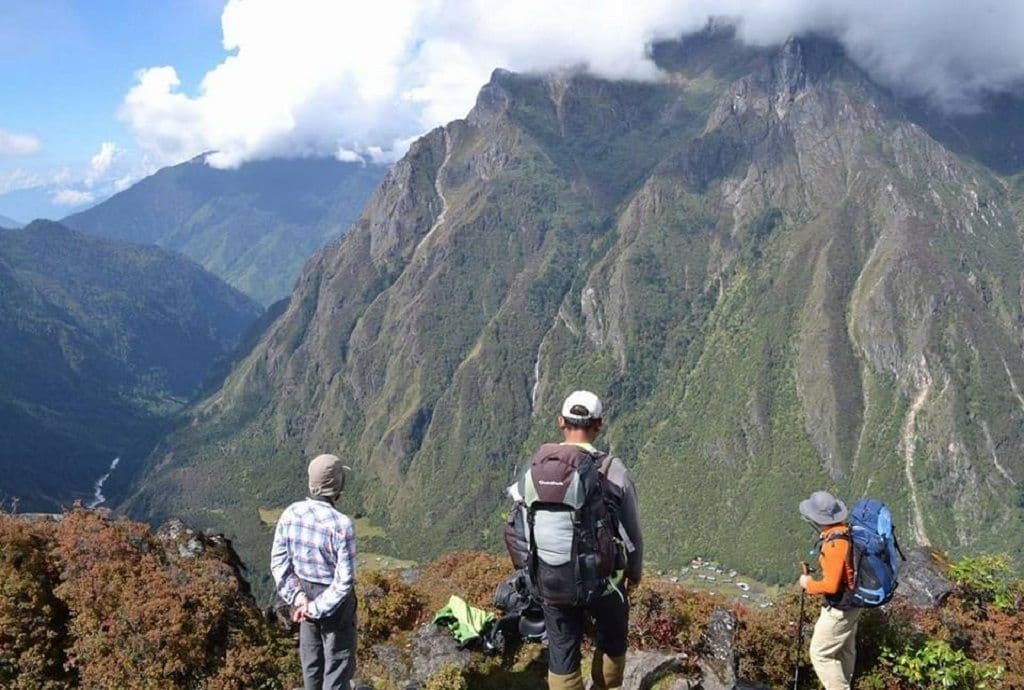
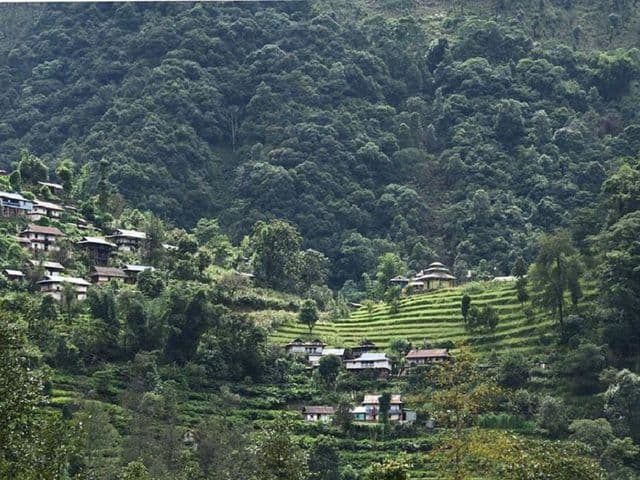
Moreover, this trek includes walking through the villages, crossing the rivers and suspension bridges, hiking in dense forests, and observing snow-capped mountains. While walking, people have to pass through various areas such as Mitlung, Chirwa, Ghunsa, and Kambachen to reach the North Base Camp. Ghunsa is one of the important villages in which people spend a day adjusting to the altitude.
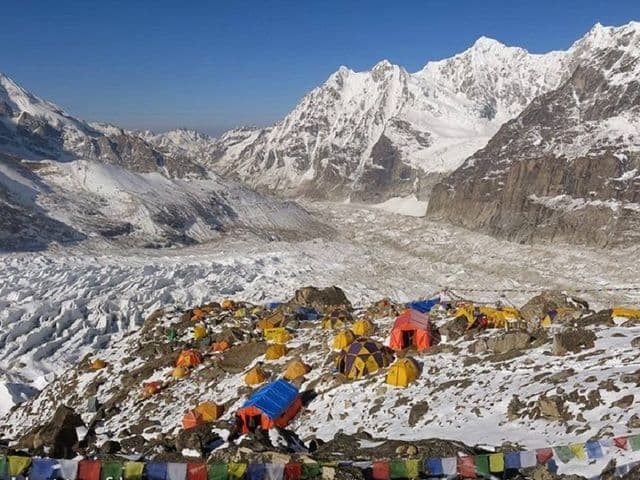
Then, the route passes through mountain areas until it arrives at the village of Lhonak and finally reaches the North Base Camp called Pangpema. In general, this trek takes about 23 days and requires good fitness, as it is considered to be quite difficult. However, the breathtaking views and opportunities to learn more about the culture make it really interesting.
Similarly, the Kanchenjunga Base Camp trek is not just the usual hiking trip; it is rather an adventure and an outstanding experience of exploring nature and oneself. In particular, for many people this trek is a unique and memorable experience that happens once in their lives.
Local Culture and Wildlife
The Kanchenjunga trek is primarily inhabited by Rai and Limbu people in the eastern part of Nepal. This area is influenced by Tibetan Buddhist cultures. Mount Kanchenjunga is located on the border of Tibet and Sikkim. The trek passes through beautiful monasteries, stupas, and gompas.
Flora and Fauna
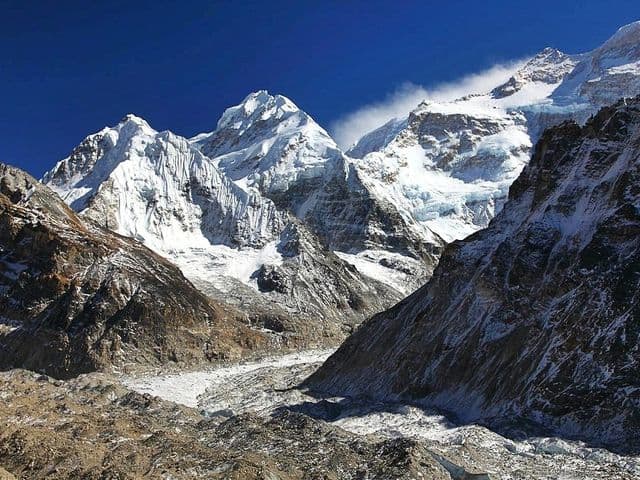
The Kanchenjunga Base Camp Trek takes you to the lap of the world’s third tallest mountain. You can explore diverse wildlife such as snow leopards, Tibetan wolves, and red pandas. At high altitudes, beautiful pine forests and bamboo jungles are visible. The name Kanchenjunga means "five treasures of the great snow," referring to the five summits that make up Kanchenjunga. This less crowded trek rewards you with a unique insight into the Nepali rural lifestyle and its rich culture. Along the way, observe remarkable valleys with their Buddhist culture and traditions. The trek also showcases a range of Nepalese culture, from Rai and Limbu to Tibetan Buddhist villages. Enjoy views of frozen lakes and crystal-clear streams. Finally, return to Bhadrapur and fly back to Kathmandu.
Things to know before the Kanchenjunga trek
• You must have a guide in this journey because it is a safety and permit requirement. You cannot trek solo.
• Prepare your body to endure physically, so prepare your body with regular walking or exercise before starting.
• You will walk at a high altitude, so do not rush; drink plenty of water, about 3-4 litres.
• Never ignore minor headaches, take enough rest and carry medications you may need.
• Accommodation is decent and simple. You’ll need to purchase additional luxuries like Wi-Fi and hot showers.
• Carry reusable bottles and materials in order to protect the environment.
• Bring the trekking tools such as trekking poles, comfortable boots, shorts, etc.
• Back up for your devices or gadgets would be a lot helpful since electricity might be unreliable sometimes, especially at higher altitudes.
• Hygiene equipment such as hand sanitiser, soap, toilet paper and wipes is rarely provided in teahouse bathrooms.
• Make sure to carry backup clothes like a jacket, pants or joggers, since they may be needed when another item is not wearable. Also, the temperature at the Base Camp is below freezing, so you might need them.
• Do not rely on ATMs, as they are very rare. Please carry enough Nepalese cash to prevent money transaction problems.
• Being able to communicate, socialise, understand, and respect will do you good, so be prepared.
Route Overview
First, you reach Kathmandu, the capital of Nepal. Next, you fly from Kathmandu to Suketar Taplejung, the beginning point of the Kanchenjunga Base Camp Trekking. When you reach Taplejung, the actual trekking will start. The path gradually starts passing through remote Eastern regions of Nepal with various villages such as Mitlung, Chirwa, and Sekathum. The trail then leads you through rivers, forests, and several suspension bridges.
Next, the trail becomes more difficult as you continue to walk through various terrains, including Amjilosa and Gyabla, both being dense forests. After this comes another village, Ghunsa, which is considered to be the most important stop in the trek.
Trekkers usually stay at Ghunsa for a day to acclimatize and then start heading towards Kambachen, which has a more rugged and snowy terrain.
From Kambachen, you continue your way towards Lhonak, which is a high-altitude settlement with vast views of the Himalayan range. This place is relatively colder and rocky.
In the end, you make an effort to move closer to Pangpema, which is the North Base Camp of Mount Kanchenjunga. It provides spectacular views of enormous glaciers and mountains.
While returning back from the trekking site, the same trail is followed in reverse order so that you can enjoy the natural beauty of these areas once again.
The ideal time to visit KBC
For the Kanchenjunga Base Camp Trek, the best time of visiting is the autumn season (September to November). The weather at this time is clear and stable, and there will be no rain. Moreover, days will be warmer and more comfortable, whereas nights will be quite chilly near the base camp. Autumn is the most popular trekking season; thus, you might see some other trekkers, but the path will remain peaceful as compared to any other trek.
Spring (March to May) is also another favourable time to visit this region. There is pleasant weather, clear skies, and magnificent mountain views in this season. However, it is slightly less busy as compared to autumn, making it a more enjoyable trip. Moreover, in spring, you will see numerous flowering rhododendron trees along with beautiful natural greenery.
Least ideal time to visit KBC
The least ideal time to go for the Kanchenjunga Base Camp Trek is during the monsoon season (June to August). The region experiences a lot of rain at this time, which makes the trails muddy and slippery to hike. There is also an increased likelihood of landslides within the lower areas, which might pose some dangers. Moreover, the presence of clouds obstructs mountain views and reduces visibility. However, the upside of this time is that the area turns very green and fresh, and very few trekkers use the route, hence it becomes quiet.
Another less favourable period for visiting KBC is the winter season (December to February). The temperatures become extremely cold and heavy snowfall might block part of the trail. Thus, hiking might become very challenging and dangerous at times, but the upside to this is the spectacular views of the clear mountains and empty paths devoid of crowds. Nevertheless, because of the weather and accessibility issues, the season is recommended for experienced trekkers only.
Situation During Peak Season to Kanchenjunga trek
During peak trekking seasons (mainly Autumn and Spring), the Kanchenjunga Base Camp Trek becomes more active but still not very crowded compared to popular routes like Everest or Annapurna. You will meet other trekkers on the trail, especially around villages like Ghunsa and Kambachen, but overall, the region still feels quiet and remote.
Tea houses within the area will be functioning and open to visitors; however, they may be fully occupied in certain stopping points. Thus, it is advisable to book your accommodation before setting out for the journey. The climate will be favorable, and mountain views will be clearly visible.
Trails will be in good condition to allow easy movement along the path. The Kanchenjunga area is not commercialized, and therefore, it will retain its natural feeling despite having more people within the path.
During the off-season
During the off-season (monsoon: June to August, winter: December to February), the area becomes very muddy because of the high amounts of rain in the monsoon season, and also the region experiences extreme cold in winter, which causes heavy snowfall to block part of the trail. However, mountain views will be obstructed during the monsoon, while the region looks fresh and green during all off-seasons.
In winter, the weather is extremely cold and snowfall can block some parts of the trail, and a few tea houses may be closed. However, on clear days, the mountains look very sharp and stunning, and the whole region feels raw and untouched. Nevertheless, the Kanchenjunga Base Camp Trek is very quiet and much less crowded. This makes it a good choice for trekkers who prefer complete peace and solitude.
Things to Consider About Transportation / Flights
It takes several steps to reach the Kanchenjunga Base Camp Trek, and transportation planning is highly essential. To start with, you normally fly out of Kathmandu to Suketar. It is a more comfortable and faster flight, but it is subject to delays or cancellations because of weather conditions and especially in mountainous areas.
Suketar, which is the main starting point of the trek. The road trip provides an authentic feel of the eastern Nepal countryside. Transport schedules are not fixed all the time, and so it is always best to have additional buffer days in your plan. Transport services are likely to be in demand during peak trekking seasons, and therefore, it is advisable to book tickets ahead of time. Therefore, the flexibility in timing is important when planning the trip.
About Kathmandu to Suketar flights
The Kathmandu to Suketar trip is one of the fastest routes to the starting point of the Kanchenjunga Base Camp Trek. The Suketar Airport is located in Taplejung, which is the gateway to the Kanchenjunga region.
The aeroplane ride is quick and provides a comfortable alternative to the lengthy road trip. It assists trekkers to save time and energy by reaching eastern Nepal quicker before commencing the trek. The service, however, relies heavily on the weather conditions, and flights may not always be regular.
After reaching Suketar, the walking experience starts soon after, and you start taking a step towards the neighboring villages and enter the isolated mountain tracks of the Kanchenjunga region officially.
Possible Problems During Transportation / Flights
Transportation is unpredictable at times when one is going to the Kanchenjunga Base Camp Trek. The bad weather, especially during the monsoon or winter seasons, can cause delays or cancellations of Kathmandu to Suketar flights. This may influence your general trekking timetable and might need additional buffer days.
Travel time may take more time than it is supposed to take, and delays are frequent. Due to these uncertainties, you should have a loose itinerary, have more days in your schedule plan, and neglect strict schedules. Preparation against delays will contribute to minimizing stress during the trip.
Importance or Benefits of the Guide from us
Hiring a guide from us is equally helpful and mandatory for treks like this. It comes with lots of advantages and benefits because those folks have good trail knowledge. You’ll be very efficient at navigating your route and ensuring your safety. They will guide you with everything you need. You will be able to sort your plans, manage your pace, and arrange accommodations without difficulty. They can be a massive communicator with the locals for your Q and As. They will explain to you deep cultural insights, provide you with firm support, and make your journey stress-free.
When you purchase one, you will be given some complementary items. It depends on who and where you purchase. Therefore, you can trust us. We provide
• Pick-up and drop-off service through private vehicles
• Well-licensed, knowledgeable, and experienced trek guides
• Provision of a briefing by the company director or a senior adventure expert
• Confirmed dates for trek
• Focus on client-centered service such as safety, comfort, and satisfaction
• Customizable itineraries for flexible trek plans
• Several complementary items like a t-shirt, a cap, a sleeping bag, a down jacket, and poles
• Required online briefing and 24-hour service for assistance or queries
• Free luggage storage at our office during your journey
Highlights
- Hike to the summit of the third highest mountain on earth, Mount Kanchenjunga.
- Trek on the remote and quiet paths of the Kanchenjunga Conservation Area.
- See beautiful mountains and glacier snow, and the high Himalayas.
- Get to know the culture and lifestyle of local groups of people, such as the Rai and Limbu.
- Stroll in lovely woodland with rhododendron, bamboo and wildlife. Visit old villages like Ghunsa and Kambachen.
- Visit Pangpema (North Base Camp), the most picturesque point of Kanchenjunga.
- Get to experience a less congested and more relaxed trekking experience as compared with other favourable treks.
- Get to experience adventure and nature in a single trip.
What‘s Included
What‘s Excluded
Availability
Select your preferred departure date. Trip duration: 22 days
Number of Travellers
Select a date to book
Dates are subject to availability. Please contact us to confirm your preferred dates.
Itinerary
Equipment
Activity/Trek gear
- Trekking backpack - to carry your essentials at ease
- Rain cover for backpack – to protect the backpack from rain and dust
- Trekking poles – assist you in walking, preventing injuries
- Reusable bottle - for constant hydration
- Dry bag – helps keep electronics and documents safe
- Power bank/ Spare batteries with usable adapters or cable
- Handlamp or torch – useful during power cuts or night walks
Clothing or Layering
- Thermal top and bottom as a base layer
- Insulating layers like fleece jacket, thick wool sweater, etc.
- Waterproof or windproof shell jackets
- Trekking pants (should be comfortable for you)
- Multiple pairs of socks
- Sleepwear
- Swimsuit for natural hot spring
- Quick-dry clothes like towels, shirts, inner
- Sports wear in case you want to get involved in running or some games
- Waterproof or rain clothes
Footwear
- Trekking boots
- Sandals
- Flipflops
- Camp shoes – provide comfort for lodge usage
- Gaiters (optional) – protect boots and pants from mud, snow or rocks
Headwear
- Warm hat
- Sun hat
- Sunglasses
- Buff or neck gaiter
Handwear
- Light gloves
- Watch
- Insulated gloves
Hygiene Materials
- Toothbrush and toothpaste
- Body wash
- Shampoo
- Deodorant
- Hand sanitiser
- Wet wipes
- Nail cutter
- Tissue
- Quick-dry towels
- Cosmetics like face wash, moisturizer and high spf sunscreen
- Small first aid
- Toilet paper
Optional tools
- Earplugs, earpods
- Copies of insurance or passport
- Notebook and pen
- Snacks or energy bar
- Map guide
FAQs about
the trip
Leave a Reply
Your email address will not be published.