
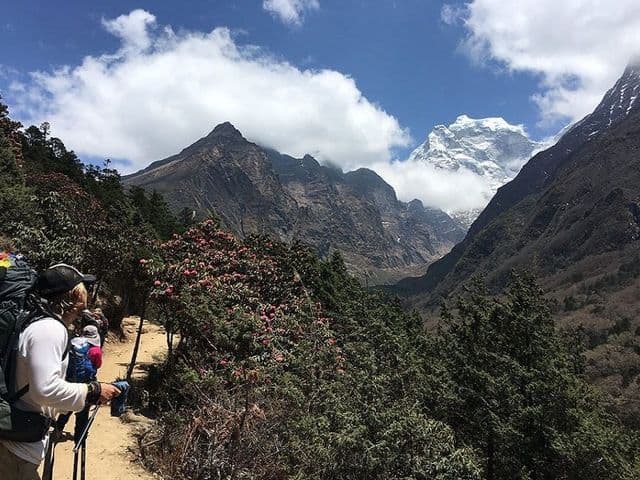
Everest Base Camp trek via Gokyo Chola Pass
Overview
Highlights of Everest Base Camp with Gokyo Chola Pass Trek
Everest Base Camp with Gokyo Lake Trek provides you an opportunity to observe the tallest and most stunning mountains, like Cho Oyu (8188 m/26864 ft), Gyachung Kang (7952 m/260 ft), Everest (8848 m/29028 ft), and Lhotse (8516 m/27940 ft).
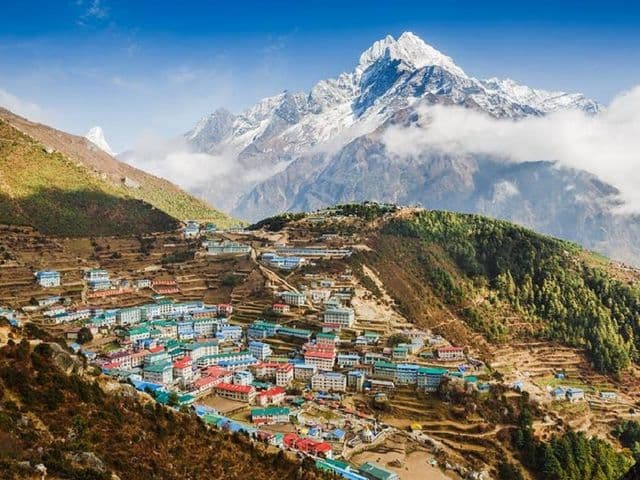
Views of the EBC, Kalapathar, Namche Bazar, the biggest Sherpa village, and Tengboche monasteries, where you can explore the famous Sherpa culture.
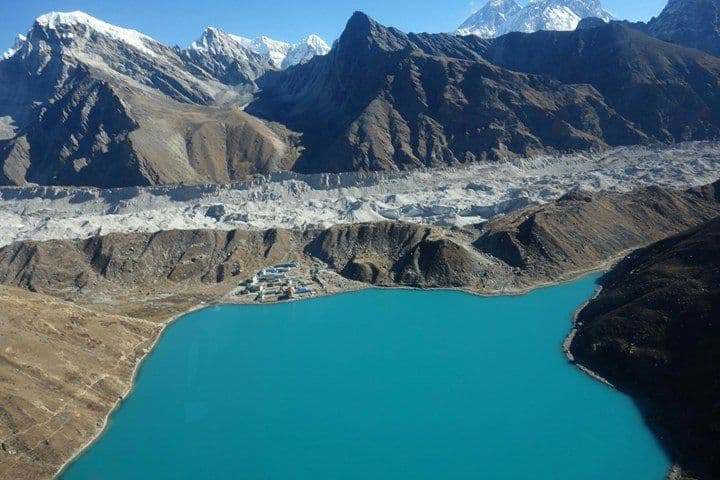
Attraction views of this trek include the enchanting Gokyo Lake and the world’s biggest glacier, Ngozumpa Glacier. Trekking to Gokyo provides you with unforgettable moments of your life.
Trip Summary
Everest Base Camp with Gokyo Lake is a famous trek in the Everest region. The trek offers magnificent views of the Himalayas, Sherpa villages, monasteries, Sagarmatha National Park, and Syangboche airstrip. The trek includes the high pass Renjo-La, which leads to Tibet's border, Nagpa-La, and the Gokyo valley. The EBC Chola Pass trek is one of the most fascinating trails, providing a close view of Gokyo Lake, situated 5350 m above sea level. During Gokyo Lake trekking, we enjoy the true scenery of Nepal, including high mountains like Cho Oyu, Gyachung Kang, Everest, and Lhotse.
Likewise, the EBC Gokyo Lake trek offers breathtaking moments, including an up-close view of Mt. Everest, visiting the largest Sherpa society, and exploring the geographical area of Everest. Khumjung village is another attraction during the trek where you can explore the village and visit exotic monasteries. If you have limited time in Nepal, you can opt for the Everest Panorama Trek.
Best time to do the EBC Gokyo Lake trek
Nepal, as a tourist destination, is good for all seasons; however, the best seasons for trekking to the Everest region are spring (March-May) and autumn (mid-Sept. – mid-Dec.). Trekking in the autumn season is noted for clear weather and excellent views of silvery mountains against a blue sky. It gets colder towards the end of December. This trek can be done in any month. The Jiri to Everest base camp trek can be done even during the monsoon and winter seasons too.
The trek also includes a visit to the Hillary School and a return to Namche Bazar for an overnight stay before heading back to Lukla and Kathmandu. The EBC Gokyo Lake trek is ideal for trekkers who seek more challenges and want to "stay off the beaten path." It also offers the chance to visit the largest monastery in the Khumbu region—Tengboche Monastery. Experience the harmony of Hinduism and Buddhism during Kathmandu sightseeing. Overall, the Everest Gokyo Lake trek is exhausting but unforgettable, offering a memorable journey to the Everest region.
What‘s Included
What‘s Excluded
Availability
Select your preferred departure date. Trip duration: 16 days
| Su | Mo | Tu | We | Th | Fr | Sa |
|---|---|---|---|---|---|---|
| Su | Mo | Tu | We | Th | Fr | Sa |
|---|---|---|---|---|---|---|
Number of Travellers
Select a date to book
Dates are subject to availability. Please contact us to confirm your preferred dates.
Itinerary
Welcome to Kathmandu, our Sunrise Adventure Trek airport representative will welcome you in the airport then transfer you to your hotel. At evening, we will give you shortly briefing and further details of the trip program.
Lukla is a famous as the village of Sherpa’s. We arrange loads and commence our journey further ahead. Flying over the spectacular scenery of mountains for about 40 minutes provides you unforgettable memories. After arriving at Lukla our journey passes through Dudh Koshi (“Milk River”). With beautiful ascents and descents over the trails surrounded by lush green forests we get to observe the magnificent views of mount Kusum Kangaru and many other mountains. We pass through the small Sherpa villages, monasteries and finally after hours of trek we reach to Phakding. Meals included: Breakfast, lunch and dinner and finally an overnight stay in trekking lodge.
Namche Bazaar is the main administrative and trading center for the Khumbu region. You can observe the Himalayan people involved in different occupations. The magnificent forests of blue pine, fir, juniper and rhododendron as well as first view of Everest; it helps you to control the anticipation of the thrilling journey. As we enter into the Sagarmatha National Park, we pass by many villages Tok Tok, Banker, Monjo, Josalle, Thamserku, Kangtega, and Konde. Here we get to explore the daily living style of Sherpa people following different traditional norms and values. Meals included: Breakfast, lunch and dinner and finally an overnight stay in trekking lodge.
To adopt with the altitude and new surrounding we acclimatize in Namche Bazaar. We spend the day by enjoying the scenes of mountains and sunrise and sunset in Khumbu Peak. We take a short trek to Sherpa museum where we get to observe the unique traditions and cultures of Sherpa people. Beside that we you will either be taken to explore Thame Monastery or Khumjung village. Khumjung village is a huge settlement of Sherpa people where we live observe their daily living style with unique cultural values. Adjusting ourselves with the less dense air, we enjoy the panoramic views of mountains and prepare for the next day trip! Meals included: Breakfast, lunch and dinner and finally overnight stay in trekking lodge.
Today taking our breakfast early in the morning, we start our trek to Dole. Firstly, overlooking snow-capped mountains of Shanasa we finally cross the loop of Namche Bazaar and ascend uphill to Mongla hill then head down to Phortse Thanga and then we walk to Dole. Dole is a small village of this region with teahouses. We pass through the magnificent views of mountains like Amadablam, Lhotse, Nuptse, Thamserku, Everest, Kantega etc. Reaching at Mong, we start walking down to the bank of Dudhkoshi. Again ascending to the hill, we cross a small village and finally reach Dole. Meals included: Breakfast, lunch and dinner and finally overnight stay in trekking lodge.
Climbing over the scenic ridge, we head off from Dole. We will walk high over the valley and along the river reaching to cross sand spurs. Passing by the villages Lhabharma and Luza offers us a chance to explore the living ways of local people with different cultural values. Following the amazing scenic views, we walk by Dudhkoshi valley. We also will visit the Himalaya Rescue Operation, established for basic treatment and take a refreshing rest before continuing our next journey. Meals included: Breakfast, lunch and dinner and finally overnight stay in trekking lodge.
Today following the lama footprints, we trek to Gokyo which is surrounded by dramatic views of mountains. We cross the second lake Longponga (4690m) and arrive to Gokyo after crossing a boulder-strewn path at the edge of third lake. Climbing over the ridge, offers the spectacular views of stunning mountains Cho-Oyu, Kantega, Cholatse and Pangka. On the way we explore Pangka where 1995 incident was happened: more than 40 people were killed by avalanche. Now we descend down to the river and steep climb up to the moraine of Ngozumpa. We cross by the lower and upper Gokyo Lake and finally walking some hour’s takes us to Gokyo. Meals included: Breakfast, lunch and dinner and finally overnight stay in trekking lodge.
At the elevation of 5483m., there’s Gokyo Ri. And, early in the morning we steeply trek up there. This place truly is rewarding as we can get super great view of Gokyo Valley and Khumbu Himalays such as Everest, Lhotse, Nuptse, Makalu, Cho-Oyu and Gychung Kang. Trekking to Gokyo is also known for the excellent sunrise and sunset views above the stunning Everest peaks. Descending down to the Gokyo Valley, we get to observe the views of Kusum Kagaru, Kantega, Thamserku along with many others. Walking through the green forests around the glaciers for some hours takes us to Thangnak. Meals included: Breakfast, lunch and dinner and finally overnight stay in trekking lodge.
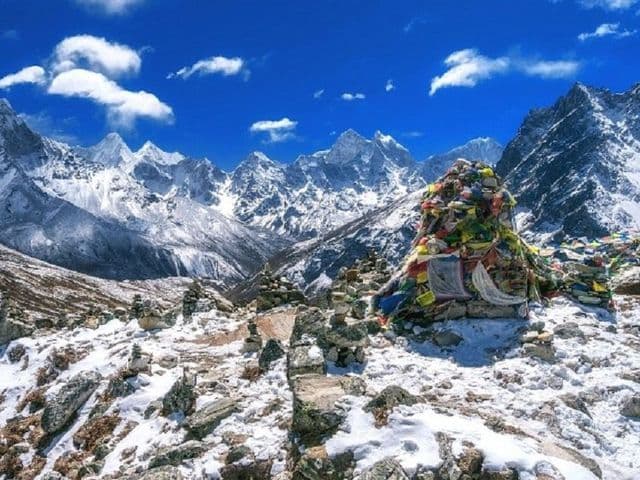
Today is really the day where nature tests our strength as we have to climb over the steep path on the highest point of this region and some really icy tracks. First we will climb steep path and ascend to sharp drops trail which leads to Cho la pass then we again climb. This time we pass through Buddhist prayers flags and mountain views on our side. As we are next to the marvelous peaks Cholatse and Tabuche, we can closely observe these mountains. After we cross the Cho La Pass we descents gently to Dzongla with beautiful views of valley and villages from the top. Meals included: Breakfast, lunch and dinner and finally overnight stay in trekking lodge.
The ascent towards Everest Base Camp continues through Alpine meadows and summer yak pastures towards the end of the moraine of the Khumbu Glacier. From here, it is a steep, tough climb towards the village of Gorak Shep. Continue on towards Lobuche, where the view is straight towards Nuptse and the sunset is truly magnificent. Walking through the glacial panoramas, we get to observe the amazing views of mountains like Nuptse, Lhotse, Amadablam and many more. Meals included: Breakfast, lunch and dinner and finally overnight stay in trekking lodge.
From Lobuche we trek to Gorak Shep. This is 5KM trek offering us an excellent time to see glacier named Changri and see other mountains, mostly dominated by Pumori. Trek to Gorakshep is among the best time of trekking to Everest Cho La Pass. Trek brings us through lots of ups and downs along the lush green forests. Ascending above the glacial route, we reach to the base camp. We enjoy the excellent glacial surroundings with breathtaking views of mountains here. Meals included: Breakfast, lunch and dinner and finally overnight stay in trekking lodge..
Today we take a hike to Kalapatthar, basically Kalapatthar is the best spot to speculate Everest whereas EBC is the base of the Everest where in season we can meet climbers and take amazing snapshots. Kalapathar offers the excellent views of mountains Nuptse, Lhotse, Amadablam, Taboche, Cholatse, Pumori, Everest and many others. After that we trek to Periche from Gorak Shep. Trek to Periche descents us through the downhill, forests with rhododendron. Meals included: Breakfast, lunch and dinner and finally overnight stay in trekking lodge.
From Periche we trek downhill to Tengboche and visit old monastery and back to Namche bazar. This monastery has recently been reconstructed. As we trek just below the stunning Himalayas, we get to observe the panoramic views of mountains Thamserku, Kangtega, Khumbi La and Kongdo Ri. Passing through the small village, Pangboche we explore the local living ways of people. Then walking for some time, trail takes us to the oldest monastery, Tengboche Nmache. Meals included: Breakfast, lunch and dinner and finally overnight stay in trekking lodge.
This will be our last trek and today we will be trekking back to Lukla to catch our flight to Kathmandu. We will spend the day by sightseeing around Lukla. We walk above the hill and pass by the beautiful villages of Khumbu region. Crossing the suspension bridges, we follow the trail edge of Dudhkoshi Rive and finally reach at Lukla. Meals included: Breakfast, lunch and dinner and finally overnight stay in trekking lodge.
In the morning we take the flight back to Kathmandu and once again enjoy the scenic valleys and terrains full of beautiful mountains views and locations. At evening you can join the evening meal and cultural program provided by the company.
Last day, you can either safely make return journey to home or you can join for another exciting adventure with Sunrise Adventure Treks and Tour. And according to flight schedule you will be escorted to airport approximately 3 hours earlier to catch flight to your next destination.
FAQs about
the trip
Nepal, as a tourist destination is good for all seasons, however, the best seasons for trekking to Everest region are Spring (March – May) and Autumn (mid Sept. – mid Dec. ). Trekking in autumn season is noted for clear weather and excellent views of silvery mountains against blue sky. It gets colder towards the end of December. This trek can be done in any month except January and February.
Nepal, as a tourist destination is good for all seasons, however, the best seasons for trekking to Everest region are Spring (March – May) and Autumn (mid Sept. – mid Dec. ). Trekking in autumn season is noted for clear weather and excellent views of silvery mountains against blue sky. It gets colder towards the end of December. This trek can be done in any month except January and February.
Nepal, as a tourist destination is good for all seasons, however, the best seasons for trekking to Everest region are Spring (March – May) and Autumn (mid Sept. – mid Dec. ). Trekking in autumn season is noted for clear weather and excellent views of silvery mountains against blue sky. It gets colder towards the end of December. This trek can be done in any month except January and February.
Nepal, as a tourist destination is good for all seasons, however, the best seasons for trekking to Everest region are Spring (March – May) and Autumn (mid Sept. – mid Dec. ). Trekking in autumn season is noted for clear weather and excellent views of silvery mountains against blue sky. It gets colder towards the end of December. This trek can be done in any month except January and February.
Nepal, as a tourist destination is good for all seasons, however, the best seasons for trekking to Everest region are Spring (March – May) and Autumn (mid Sept. – mid Dec. ). Trekking in autumn season is noted for clear weather and excellent views of silvery mountains against blue sky. It gets colder towards the end of December. This trek can be done in any month except January and February.
Nepal, as a tourist destination is good for all seasons, however, the best seasons for trekking to Everest region are Spring (March – May) and Autumn (mid Sept. – mid Dec. ). Trekking in autumn season is noted for clear weather and excellent views of silvery mountains against blue sky. It gets colder towards the end of December. This trek can be done in any month except January and February.
Nepal, as a tourist destination is good for all seasons, however, the best seasons for trekking to Everest region are Spring (March – May) and Autumn (mid Sept. – mid Dec. ). Trekking in autumn season is noted for clear weather and excellent views of silvery mountains against blue sky. It gets colder towards the end of December. This trek can be done in any month except January and February.
Nepal, as a tourist destination is good for all seasons, however, the best seasons for trekking to Everest region are Spring (March – May) and Autumn (mid Sept. – mid Dec. ). Trekking in autumn season is noted for clear weather and excellent views of silvery mountains against blue sky. It gets colder towards the end of December. This trek can be done in any month except January and February.
Nepal, as a tourist destination is good for all seasons, however, the best seasons for trekking to Everest region are Spring (March – May) and Autumn (mid Sept. – mid Dec. ). Trekking in autumn season is noted for clear weather and excellent views of silvery mountains against blue sky. It gets colder towards the end of December. This trek can be done in any month except January and February.
Nepal, as a tourist destination is good for all seasons, however, the best seasons for trekking to Everest region are Spring (March – May) and Autumn (mid Sept. – mid Dec. ). Trekking in autumn season is noted for clear weather and excellent views of silvery mountains against blue sky. It gets colder towards the end of December. This trek can be done in any month except January and February.
Nepal, as a tourist destination is good for all seasons, however, the best seasons for trekking to Everest region are Spring (March – May) and Autumn (mid Sept. – mid Dec. ). Trekking in autumn season is noted for clear weather and excellent views of silvery mountains against blue sky. It gets colder towards the end of December. This trek can be done in any month except January and February.
Nepal, as a tourist destination is good for all seasons, however, the best seasons for trekking to Everest region are Spring (March – May) and Autumn (mid Sept. – mid Dec. ). Trekking in autumn season is noted for clear weather and excellent views of silvery mountains against blue sky. It gets colder towards the end of December. This trek can be done in any month except January and February.
Nepal, as a tourist destination is good for all seasons, however, the best seasons for trekking to Everest region are Spring (March – May) and Autumn (mid Sept. – mid Dec. ). Trekking in autumn season is noted for clear weather and excellent views of silvery mountains against blue sky. It gets colder towards the end of December. This trek can be done in any month except January and February.
Nepal, as a tourist destination is good for all seasons, however, the best seasons for trekking to Everest region are Spring (March – May) and Autumn (mid Sept. – mid Dec. ). Trekking in autumn season is noted for clear weather and excellent views of silvery mountains against blue sky. It gets colder towards the end of December. This trek can be done in any month except January and February.
Speak to an Expert
Suresh Bhandari
Leave a Reply
Your email address will not be published.