

Lower Dolpo Trek
Overview
Nepal, as a tourist destination is good for all seasons, however, the best seasons for trekking to Makalu region are Spring (March – May) and Autumn (mid Sept. – mid Dec. ). Trekking in autumn season is noted for clear weather and excellent views of silvery mountains against blue sky. It gets colder towards the end of December. This trek can be done in any month except January and February.
The highlight of the Lower Dolpo Trek
One of the best treks, Lower Dolpo Circuit Trek provides you a great opportunity to explore the remote western region of Nepal.
Visit Shey Phosundo lake, explore the Buddhist monasteries and amazing landscape of Lower Dolpo.
Massif view of mountains beautiful flora and fauna of Phoksunda national park.
Bonpo religion is still in practice in this area. So you can closely explore this Buddhists cultures and Bonpo religion.
Experience the hidden wilderness of Dolpo region and its forbidden kingdom.
Trip Summary
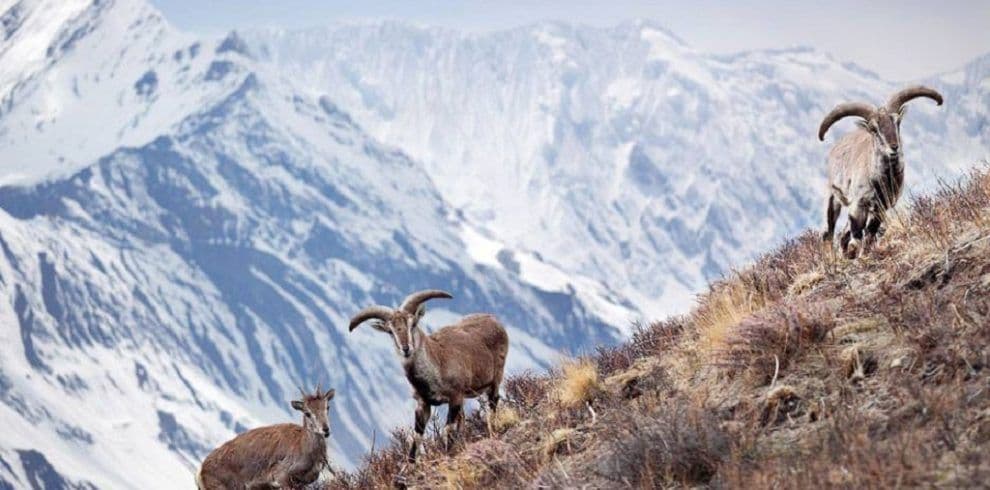
Lower Dolpo Trek is an outstanding choice to explore the amazing Phoksundo Lake and explore the endangered species like Blue Sheep and Mountain Goats. The landscapes are admirable and in the nice location with shadows of the Himalayas reflected in the colorful and barren slopes of mountains. Dolpo region is all featured in National Geographic by Eric Valli and it has shown its mystical side for the viewers. You will be amused by the caravans of Yaks and it is hard to believe that still Buddhist Bon Po is practiced in the rural place like this.
One of the best remote area trail, Lower Dolpo Trek provides you a great opportunity to explore a remote western region of Nepal. Dolpo region is beautifully filled with many geographic and you can get a great chance to observe the wild lives of this region like Snow leopard, Ghoral, Blue Sheep, Musk Deer, and Mountain Goat. Besides this, the trekking trail gives you a chance to explore the popular villages of this region. You can also learn the local culture of people influenced by Tibetan culture and their daily lifestyle while walking to Lower Dolpo. For the longer you can also do Upper Dolpo trek. This area offers you the deepest lake “Phoksundo Lake” and the biggest waterfall “Sluggard” of Nepal with spectacular landscapes and beautiful views of Himalayas. You can also sight seen in Kathmandu and explore ancient temples and monasteries. Sunrise Adventure trek will make your trip memorable from your arrival to departure.
Similarly, our trip begins from Kathmandu by taking the flight to Nepalgunj and then again taking another flight to Jhupal. We start our first trek from Jhupal to Dunai and feel the chill cold crisp air of the Himalaya for the first time. From Dunai, we trek to Tarakot passing some old villages and crossing bridges. We trek to Laini and see some amazing old villages as well as monasteries. From Laini, it is time to move toward Nawarpani by passing some narrow gorges and then trek to Dho Tarap to see interesting villagers and their lifestyle and also to take rest and properly acclimatize. The trek begins to take high altitude as we ascend Numa La Pass (5190m) and then trek to Pelung Tang. It is time to hike Dajok Tang at 4080m while we pass lush grassland and to trek to Ringmo – a popular village where you can experience Tibetan culture and simple lifestyle.
Hike to Phoksundo Lake which is famous because Hollywood movie “CARAVAN” was mostly shot in this area. We leave Phoksundo Lake behind us and trek to Santa where amazing disease curing minerals can be found and we trek along the hanging rock cliff. Now, it is all the way back to Juphal- Nepaljung and flight back to Kathmandu from the same route. Once, we are in Kathmandu, you can join dinner program.
What‘s Included
What‘s Excluded
Availability
Select your preferred departure date. Trip duration: 18 days
| Su | Mo | Tu | We | Th | Fr | Sa |
|---|---|---|---|---|---|---|
| Su | Mo | Tu | We | Th | Fr | Sa |
|---|---|---|---|---|---|---|
Number of Travellers
Select a date to book
Dates are subject to availability. Please contact us to confirm your preferred dates.
Itinerary
Our airport representative picks you up from airport and transfers you to hotel for further briefing about the upcoming trip. In the evening, a small meeting shall be held to discuss and prepare for the trek. And after meeting you can roam around Thamel to get familiar with environment and location.
Tour around different four UNESCO World Heritage Sites in Kathmandu. Patand Durbar holds the palaces of the medieval Kings , Pashupatinath houses a sacred Shiva lingum, or the phallic symbol of Lord Shiva. The Aryaghat alongside Pashupati and on the banks of the Bagmati River is a famous funeral site for the Hindus. The Buddhists shrine of Boudhanath is one of the largest stupas in the world, and one of the holiest Buddhist pilgrimage. Swayambhu meaning the "the self-existent" is popular among the foreigners as the Monkey Temple owing to the large number of monkey population residing in the area. Meals included: Breakfast, lunch and dinner and finally an overnight stay in trekking lodge.
Around an hour flight from Kathmandu to Nepalgunj in Western Nepal. Nepalgunj which is a border town near Nepal-India border is the gateway to Simikot of Humla. The town itself is an interesting Terai town of Nepal with influences from both the Nepal hills and plains well as local Hindu & Muslim cultures. We have to also make preparation for tomorrow's flight to Jhupal. (B, L, D) Meals included: Breakfast, lunch and dinner and finally an overnight stay in trekking lodge.
After breakfast around 45minutes flight over the high mountains brings you at Jhupal over the Himalayan foothills, with views of Annapurna and Dhaulagiri peaks to the north. Our first day adventure begins through the terraced fields to the Bheri River and the narrow gorge taking 2-3 hours to camp at Dunai. Dunai is the administrative headquarter of the Dolpo region. Explore Dunai in the evening. (B, L, D) Meals included: Breakfast, lunch and dinner and finally an overnight stay in trekking lodge.
After breakfast, we continue our walking to follow the Tarap chu river upstream, crossing by bridge and crossing the same river twice. The famed Sandul Gompa lies farther east from Tarakot and at the junction of Barbung khola and Tarup chu Rriver. The path leads through the farm terraces and rural villages. After a few ups and downs, finally descend to reach our overnight camp at Laini. (B, L, D) Meals included: Breakfast, lunch and dinner and finally an overnight stay in trekking lodge.
After breakfast we continue walking up to the gorge of the Tarap River, rising high above on a trail built out from steep slopes. Descend to Chyugur Khola. Sometimes the path vanishes for a while, making our own path across stone slabs fitted on logs in between the walls which act as a bridge. (B, L, D) Meals included: Breakfast, lunch and dinner and finally an overnight stay in trekking lodge.
With a gradual up leading us at Kamattarka at the confluence of the Tarap Chu and Lang Khola, a stream flowing from the east. After few hours leaving the narrow gorge, from here the path. Another 3 hours or more walk brings us to the village of Dho Tarap surrounded by an irregualr stone wall. In this Valley both Bon Po and Chaiba sects reside together. Tarap is also inhabited by a few Tibetans and mostly Magars are the ethnic people. (B, L, D) Meals included: Breakfast, lunch and dinner and finally an overnight stay in trekking lodge.
We spend a rest day in Do Tarap for gradually getting used to the altitude. Time to visit monasteries and enjoy the breathtaking views. Tibetan style somba or dhocha (boots with upturned toes) for foot wear. Both men and women often wear religious amulets and strings of coral, amber and turquoise. The people of the region are both Bon po and Nyingmapa of Buddhist sect. The Buddhist Gompa is nearby to the camp while the Bon Gompa (pre Buddhist) is about half an hour's walk. (B, L, D) Meals included: Breakfast, lunch and dinner and finally an overnight stay in trekking lodge.
After a wonderful time at Do Tarap, our journey continues towards upper Tarap valley, the walk follows in this plain valley with patched of lush verdant grass on both sides of the river, which is completely different from other parts of inner Dolpo. After visit this village our walk continues further up this valley climbing up the rough track for almost another three hours to reach our overnight camp beneath the Numa-la. (B, L, D) Meals included: Breakfast, lunch and dinner and finally an overnight stay in trekking lodge.
After breakfast our journey continues to crossing of Numa La pass at 5,190m, the track leads to steep climb all the way to the top ridge of Numa la with great views of the surrounding landscapes. An incredible panoramic view of the barren mountains of Dolpo up to the Dhaulagiri (8167m). After getting to the top of Numa La we will descend to camp at Pelung Tang. (B, L, D) Meals included: Breakfast, lunch and dinner and finally an overnight stay in trekking lodge.
After breakfast our morning trek starts with a steep climb to reach the ridge top of Baga-la at 5,070m, which offers fantastic views of the surrounding landscapes and of the distant snow capped peaks of Kanjirowa Himal range, after a glorious moment at the pass, almost three hours of downhill walk takes to the Dajok Tang for overnight. (B, L, D) Meals included: Breakfast, lunch and dinner and finally an overnight stay in trekking lodge.
After breakfast our morning trek starts through the pine forest, on leaving the forest behind the country and the vegetation changes for pasture field and alpine shrubs most of the way to Ringmo on the gradual slopes with few ups and downs as we reach our final destination at Ringmo. (B, L, D) Meals included: Breakfast, lunch and dinner and finally an overnight stay in trekking lodge.
A rest and exploration day. And of course we sit right on the shore of the spectacular Phoksumdo Lake; remember the harrowing scene in 'Himalaya' when Thinley's yak caravan attempted the 'Devil's Trail'. Yak caravans will be heading in and out of Ringmo on their way north towards the border of Tibet, and our most northerly destinations, Saldang and Thinje. This is a great day exploring the lake areas and the crystal serene Lake of Phoksundo with a great views. overnight at camp. (B, L, D) Meals included: Breakfast, lunch and dinner and finally an overnight stay in trekking lodge.
Trek downhill to Chepka. From Chepka the trail follows the massive overhanging rock. We found many important medicinal mineral which is believed to cure almost anything in this area. The route then passes through the villages, before climbing to Shyanta. (B, L, D) Meals included: Breakfast, lunch and dinner and finally an overnight stay in trekking lodge.
Following the trail gently sloping upwards, we march towards Jhupal via Sulighat. We meet tall birch trees on our way. From atop the ridge, we can have the most spectacular views of the mountain and Jhupal below. Utmost caution is required while trekking along this trail. After reaching Jhupal, we can spend our afternoon exploring the busy market town or simply pursuing whatever we feel like. (B, L, D) Meals included: Breakfast, lunch and dinner and finally an overnight stay in trekking lodge.
We take a flight from Jhupal to Nepalgunj. On reaching Nepalgunj, we return to Kathmandu on the next available flight. Upon arrival in Kathmandu, you will be transferred to hotel and in the Join evening especial cultural show dinner program. Overnight at Kathmandu. (B, L, D) Meals included: dinner by our side and finally an overnight stay in hotel.
Our airport representative will finally drop to airport or you can join another memorable journey.
FAQs about
the trip
Nepal, as a tourist destination is good for all seasons, however, the best seasons for trekking to Dolpo region are Spring (March – May) and Autumn (mid Sept. – mid Dec. ). Trekking in autumn season is noted for clear weather and excellent views of silvery mountains against blue sky. It gets colder towards the end of December. This trek can be done in any month except January and February.
Nepal, as a tourist destination is good for all seasons, however, the best seasons for trekking to Dolpo region are Spring (March – May) and Autumn (mid Sept. – mid Dec. ). Trekking in autumn season is noted for clear weather and excellent views of silvery mountains against blue sky. It gets colder towards the end of December. This trek can be done in any month except January and February.
Nepal, as a tourist destination is good for all seasons, however, the best seasons for trekking to Dolpo region are Spring (March – May) and Autumn (mid Sept. – mid Dec. ). Trekking in autumn season is noted for clear weather and excellent views of silvery mountains against blue sky. It gets colder towards the end of December. This trek can be done in any month except January and February.
Nepal, as a tourist destination is good for all seasons, however, the best seasons for trekking to Dolpo region are Spring (March – May) and Autumn (mid Sept. – mid Dec. ). Trekking in autumn season is noted for clear weather and excellent views of silvery mountains against blue sky. It gets colder towards the end of December. This trek can be done in any month except January and February.
Nepal, as a tourist destination is good for all seasons, however, the best seasons for trekking to Dolpo region are Spring (March – May) and Autumn (mid Sept. – mid Dec. ). Trekking in autumn season is noted for clear weather and excellent views of silvery mountains against blue sky. It gets colder towards the end of December. This trek can be done in any month except January and February.
Nepal, as a tourist destination is good for all seasons, however, the best seasons for trekking to Dolpo region are Spring (March – May) and Autumn (mid Sept. – mid Dec. ). Trekking in autumn season is noted for clear weather and excellent views of silvery mountains against blue sky. It gets colder towards the end of December. This trek can be done in any month except January and February.
Nepal, as a tourist destination is good for all seasons, however, the best seasons for trekking to Dolpo region are Spring (March – May) and Autumn (mid Sept. – mid Dec. ). Trekking in autumn season is noted for clear weather and excellent views of silvery mountains against blue sky. It gets colder towards the end of December. This trek can be done in any month except January and February.
Nepal, as a tourist destination is good for all seasons, however, the best seasons for trekking to Dolpo region are Spring (March – May) and Autumn (mid Sept. – mid Dec. ). Trekking in autumn season is noted for clear weather and excellent views of silvery mountains against blue sky. It gets colder towards the end of December. This trek can be done in any month except January and February.
Nepal, as a tourist destination is good for all seasons, however, the best seasons for trekking to Dolpo region are Spring (March – May) and Autumn (mid Sept. – mid Dec. ). Trekking in autumn season is noted for clear weather and excellent views of silvery mountains against blue sky. It gets colder towards the end of December. This trek can be done in any month except January and February.
Nepal, as a tourist destination is good for all seasons, however, the best seasons for trekking to Dolpo region are Spring (March – May) and Autumn (mid Sept. – mid Dec. ). Trekking in autumn season is noted for clear weather and excellent views of silvery mountains against blue sky. It gets colder towards the end of December. This trek can be done in any month except January and February.
Nepal, as a tourist destination is good for all seasons, however, the best seasons for trekking to Dolpo region are Spring (March – May) and Autumn (mid Sept. – mid Dec. ). Trekking in autumn season is noted for clear weather and excellent views of silvery mountains against blue sky. It gets colder towards the end of December. This trek can be done in any month except January and February.
Nepal, as a tourist destination is good for all seasons, however, the best seasons for trekking to Dolpo region are Spring (March – May) and Autumn (mid Sept. – mid Dec. ). Trekking in autumn season is noted for clear weather and excellent views of silvery mountains against blue sky. It gets colder towards the end of December. This trek can be done in any month except January and February.
Speak to an Expert
Suresh Bhandari
Leave a Reply
Your email address will not be published.