
Rolwaling Tashi Lapcha Trek
Overview
Nepal, as a tourist destination is good for all seasons, however, the best seasons for trekking to EBC and Island peak climbing are Spring (March – May) and Autumn (mid Sept. – mid Dec. ). Trekking in autumn season is noted for clear weather and excellent views of silvery mountains against blue sky. It gets colder towards the end of December. This trek can be done in any month except January and February.
Highlight of the Rolwaling Tashi Lapcha Trek
Experience Tibetan lifestyle and their cultures and visit the hidden kingdom.
Explore oldest Buddhist monasteries and massif view of Khumbu glaciers.
Panoramic views of stunning mountains like Mt. Ghauri Shankar (7145m/23441ft.), Dorje Lakpa (6989m/22929ft.), Mount Everest (8848m/29028ft.) and other many Himalayas.
Trip Summary
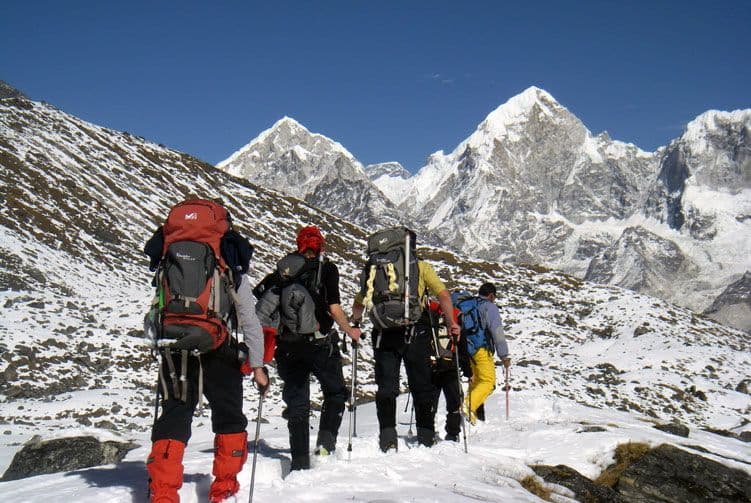
Rolwaling Tashi Lapcha Trek is located in the vicinity of the Everest base camp and Langtang regions. Views of Mt. Ghauri Shankar, Dorje Lakpa, Mount Everest, Tso Rolpa Lake, breathtaking waterfalls, ancient monasteries, and glaciers add to the joy of trekking in the region. It is supposed that the human-like creature Yeti lives here. Although several expeditions to search for the mysterious creature have been in vain, villagers have been reporting sightings of the great beast every now and then. Rolwaling Tashi Lapcha Trek provides you an opportunity to explore the beautiful floras and faunas of the Khumbu region.
Rolwaling valley is also known as one of the seven hidden valleys in the Himalayas. The indigenous people call the valley “the grave” probably because it is burrowed between enormous snow-capped mountains on either side. On the way lie villages belonging to the Sherpas, Tamang, and Chhetri communities. During the trek, you can observe the breathtaking views of waterfalls, ancient monasteries, and glaciers. This trek also provides you with a great chance to explore the famous “Sherpa” culture along with other communities such as Brahmin, Chhetri, and Gurung, and their unique traditions and rituals. Amazing wild animals like musk deer, blue sheep, wild yaks, and leopards can be seen. You can also do the Everest panorama trek. The beautiful rhododendron forest provides you with unforgettable moments. Great views of Namche Bazaar and Lukla along with the unique culture of local people.
Similarly, during the trek, you have to cross many high passes such as the Kongma La, Cho-La, and Renjo-la pass. Trekkers would also visit Na Gaun, a village located at the highest altitude region of the entire trek. The maximum elevation that trekkers would climb to is 5,545m at Kalapatthar. The duration of the trek is 22 days. The trek entails climbing to Gokyo RI peak (5360m) and walking past the quaint Sherpa villages. The trek is full of adventurous journeys into the heart of Nepal’s most remote places. Explore beautiful art and architecture, and temples of the Kathmandu valley. We at Sunrise Adventure Trek will arrange your trek wisely. You can also do the Everest panorama tour to shorten your trip.
Trekkers are expected to bring their own equipment or will arrange your tented and high pass few climbing equipments. There is no provision for providing mountaineering equipment during the trek. Those who aren’t physically fit to endure the stress of the journey are advised against going on this trek.
What‘s Included
What‘s Excluded
Availability
Select your preferred departure date. Trip duration: 20 days
| Su | Mo | Tu | We | Th | Fr | Sa |
|---|---|---|---|---|---|---|
| Su | Mo | Tu | We | Th | Fr | Sa |
|---|---|---|---|---|---|---|
Number of Travellers
Select a date to book
Dates are subject to availability. Please contact us to confirm your preferred dates.
Itinerary
After you arrive in the airport our airport representative will welcome you, take you to your hotel and explain the program further. There are no planned activities for the day, so check into the hotel. Enjoy your overnight stay at the hotel.
Touring the World Heritage Sites in Kathmandu Valley includes: Kathmandu Durbar Square, Swayambhunath Temple, Boudhanath Stupa and Pasupatinath Temple. Exploring these ancient monuments offers a chance to get to know the cultural and traditional values of Nepalese people. The unique beautiful architects reflect the legendary histories of art galleries in Nepal. Overnight at hotel, breakfast included.
After the breakfast, we take a jeep from Kathmandu to reach Sigatte. During the drive we pass the scenic green hills and views of white glittering mountains. This will keep you engaged all along the way with plus orchid fields, rhododendrons and other vegetations. Along with this this trek offers the visit to Bhimeswor Temple in Dolakha. After an hour’s rough road drive, we reach to our campsite which is on the bank of the Tama Kosi River. Overnight at tented camp or trekking lodge, breakfast, lunch and dinner included.
Today the trail takes us deep into the Bhote Kosi’s valley. fi We pass a flat river through terrace fields, hamlets and picturesque villages. We walk through a dense rhododendron forest and cross a suspension bridge to Jagat. Panoramic views of Gaurishanker (7145m) on the way through forest is mind-blowing. We can see the area adorned with prayer flags and chortens though it is a Hindu settlement area. Jagat is a small town where we get to observe the different cultural community. Overnight at tented camp or trekking lodge, breakfast, lunch and dinner included
Walking for two and half hours we leave the valley and continue to the east. After this the trial makes a steep ascent to Simigaon. Simigaon is a Sherpa and Tamang village where we can observe the Tamang and Sherpa traditions. We pass by many terrace fields along the villages. Tibetan monastery perched above the houses on top of the hill in front of Gaurishanker marks the Buddhist lifestyle of the area. Overnight at tented camp or trekking lodge, breakfast, lunch and dinner included.
After having breakfast, we trek to Donga from Simigaon today. During the trek we pass through a rhododendron-bamboo forest and walking for some hours constantly the trail takes us to Rolwaling valley. First we steadily climb up and then eventually descend back down to the river. Climbing towards Gyalche offers the amazing moments with spectacular surroundings. Here we set up our camp on the bank of Rolwaling Khola, a narrow green belt beneath Gaurishanker. Overnight at tented camp or trekking lodge, breakfast, lunch and dinner included.
We continue trek through the forest with excellent mountain scenery surrounding us. Upon our arrival at Beding, we can see Melungtse I (7181m), Rolwaling highest summit. Beding is a small village well known amongst Everest summiteers. You can see an old historical Buddhist Monastery in the center of the village. We set up a camp in bank of the river in Beding for an overnight halt. Overnight at tented camp v, breakfast, lunch and dinner included.
We can hike to the Malung La pass (5616m). It will help with acclimatization. The spectacular views of more than fifteen snowy peaks, glaciers and the natural forest in the Beding Valley can be rewarding. Overnight at tented camp or trekking lodge, breakfast, lunch and dinner included.
We take a short walk from Beding along the riverside trial to the village of Na. Na village is situated just below the Tsho Rolpa Glacier Lake in a beautiful valley. The views of the peaks like Chobutse (6685m), Chugimago (6259m), (5630m) from here are pretty impressive. We set up a camp at a vantage point near the Sherpa village. During this trek we can observe the mountain yaks grazing in barley field along with incredible ranges of mountains above 6000m heights like: Bamango, Cheking, Konyklemo and Yalung Ri. Overnight at tented camp or trekking lodge, breakfast, lunch and dinner included.
We can either take a rest or go for an excursion to the Yalung La pass. We climb up steadily as the path takes us to a vast amphitheatre at 4900m which is situated just below the pass. The view of Ramdun peak ice fall which furrows with streams is amazing. We get stunning views in every direction: Yalung Glacier in the east, Ramdung Peak (5930m) in the south, Yalung Ri (5630m) in the west and some of the breathtaking Himalayan views to the north along the Tibetan border. Overnight at tented camp or trekking lodge, breakfast, lunch and dinner included.
We climb up to the dam that holds back the Tsho-Rolpa Lake to prevent it from splitting the thin moraine and destroying the valleys below. We continue along the south bank. (The ancient route, marked on all maps, following the northern bank and passing through Chobu, after a 300m climb, we cross a disordered moraine area and scramble down the height we walked up. We set a campsite in a sandy amphitheatre, between the Tsho Rolpa and Trakarding glaciers. Overnight at tented camp or trekking lodge, breakfast, lunch and dinner included.
Trek to the Trakarding glacier. Trakarding is a huge, impressive rocky area that gives way to large sections of bluish ice from time to time. We struggle towards a rocky spur, beneath the Dolumbau glacier and climb up a rock face we set up a rope for the porters to help them to scramble up the 160m before accessing the campsite area .Views of countless streams running off the glacier, falling rocks and collapsing ice from the glacier are interesting. Overnight at tented camp or trekking lodge, breakfast, lunch and dinner included.
The route to Drolumbau glacier is tricky and fairly steep but our efforts will be rewarded by the spectacular views of Tengi Ragi Tau (6943m), Bigphero-Go Shar (6729m), Dragkar-Go (6793m) with the views of various peaks towards and beyond the Tibetan border in the background. Cross glacial areas and head towards the summit. We set up a camp 300m below the summit beyond an impressive rocky section. Overnight at tented camp or trekking lodge, breakfast, lunch and dinner included.
Today’s walk is relatively easy as we make a descent to Thame. We visit a picturesque monastery perched on the hillside just before entering the tiny Sherpa village of Thame. Thame is an important route for all the Tibetan traders and their yak caravans as they trek across the Nangpa La (5716m/18,752) on the Tibetan border to Namche Bazaar and beyond. Overnight at tented camp or trekking lodge, breakfast, lunch and dinner included.
From Thame we take a short hike to Namche Bazar. We trek through the old trading route of northern Tibet following Bhote Koshi River. Descending the trail gently and then climbing up to the bridge over Dudh Koshi takes us to Sanasa. We reach Sanasa after passing several small villages and tea shops. Sanasa is Sherpa’s settlement where we observe their cultural and traditional beleifs. Overnight at trekking lodge, breakfast, lunch and dinner included.
We will hike to Syangboche Airport (3700m), supposed to be the highest airport in the world, then continue climbing to Everest View Hotel for great panoramic views of the Everest, Lhotse, Amadablam, Tawache etc. On the way back, we visit Sherpa Culture Museum and Everest Photo Gallery. Overnight at trekking lodge, breakfast, lunch and dinner included.
The trek continues along the Dudh Kosi River to the small mountain airstrip at Lukla, where you will catch your return flight to Kathmandu. We pass by the amazing lush green surroundings along with snowy peaks views on the way. Overnight at trekking lodge, breakfast, lunch and dinner included.
30-minutes amazing scenic fly back to Kathmandu. After arriving at hotel, take some rest or you can do some shopping in rest of the day. Attend the evening meal and cultural program offer by the company. Overnight at hotel, breakfast included and attend dinner program arranged by our company.
Today is your departure. Approximately 3 hours before the scheduled flight we will drop you to the airport. Or you can join another adventures trip in Nepal or outside the country with Sunrise Adventure Treks. We are always here for operating your trip. Have a safe flight!
FAQs about
the trip
Nepal, as a tourist destination is good for all seasons, however, the best seasons for trekking to Khumbu region are Spring (March – May) and Autumn (mid Sept. – mid Dec. ). Trekking in autumn season is noted for clear weather and excellent views of silvery mountains against blue sky. It gets colder towards the end of December. This trek can be done in any month except January and February.
Nepal, as a tourist destination is good for all seasons, however, the best seasons for trekking to Khumbu region are Spring (March – May) and Autumn (mid Sept. – mid Dec. ). Trekking in autumn season is noted for clear weather and excellent views of silvery mountains against blue sky. It gets colder towards the end of December. This trek can be done in any month except January and February.
Nepal, as a tourist destination is good for all seasons, however, the best seasons for trekking to Khumbu region are Spring (March – May) and Autumn (mid Sept. – mid Dec. ). Trekking in autumn season is noted for clear weather and excellent views of silvery mountains against blue sky. It gets colder towards the end of December. This trek can be done in any month except January and February.
Nepal, as a tourist destination is good for all seasons, however, the best seasons for trekking to Khumbu region are Spring (March – May) and Autumn (mid Sept. – mid Dec. ). Trekking in autumn season is noted for clear weather and excellent views of silvery mountains against blue sky. It gets colder towards the end of December. This trek can be done in any month except January and February.
Nepal, as a tourist destination is good for all seasons, however, the best seasons for trekking to Khumbu region are Spring (March – May) and Autumn (mid Sept. – mid Dec. ). Trekking in autumn season is noted for clear weather and excellent views of silvery mountains against blue sky. It gets colder towards the end of December. This trek can be done in any month except January and February.
Nepal, as a tourist destination is good for all seasons, however, the best seasons for trekking to Khumbu region are Spring (March – May) and Autumn (mid Sept. – mid Dec. ). Trekking in autumn season is noted for clear weather and excellent views of silvery mountains against blue sky. It gets colder towards the end of December. This trek can be done in any month except January and February.
Nepal, as a tourist destination is good for all seasons, however, the best seasons for trekking to Khumbu region are Spring (March – May) and Autumn (mid Sept. – mid Dec. ). Trekking in autumn season is noted for clear weather and excellent views of silvery mountains against blue sky. It gets colder towards the end of December. This trek can be done in any month except January and February.
Nepal, as a tourist destination is good for all seasons, however, the best seasons for trekking to Khumbu region are Spring (March – May) and Autumn (mid Sept. – mid Dec. ). Trekking in autumn season is noted for clear weather and excellent views of silvery mountains against blue sky. It gets colder towards the end of December. This trek can be done in any month except January and February.
Nepal, as a tourist destination is good for all seasons, however, the best seasons for trekking to Khumbu region are Spring (March – May) and Autumn (mid Sept. – mid Dec. ). Trekking in autumn season is noted for clear weather and excellent views of silvery mountains against blue sky. It gets colder towards the end of December. This trek can be done in any month except January and February.
Nepal, as a tourist destination is good for all seasons, however, the best seasons for trekking to Khumbu region are Spring (March – May) and Autumn (mid Sept. – mid Dec. ). Trekking in autumn season is noted for clear weather and excellent views of silvery mountains against blue sky. It gets colder towards the end of December. This trek can be done in any month except January and February.
Nepal, as a tourist destination is good for all seasons, however, the best seasons for trekking to Khumbu region are Spring (March – May) and Autumn (mid Sept. – mid Dec. ). Trekking in autumn season is noted for clear weather and excellent views of silvery mountains against blue sky. It gets colder towards the end of December. This trek can be done in any month except January and February.
Nepal, as a tourist destination is good for all seasons, however, the best seasons for trekking to Khumbu region are Spring (March – May) and Autumn (mid Sept. – mid Dec. ). Trekking in autumn season is noted for clear weather and excellent views of silvery mountains against blue sky. It gets colder towards the end of December. This trek can be done in any month except January and February.
Speak to an Expert
Suresh Bhandari
Leave a Reply
Your email address will not be published.