13 days Everest Base Camp trek
-1-640x480.jpg&w=3840&q=75)
-640x480.jpg&w=3840&q=75)
+ 1
Overview
The 13-day Everest Base Camp trek is an epic journey to the lap of the world's highest peak, Mount Everest. You can explore Sagarmatha National Park, the Sherpa lifestyle, and beautiful nature. The Everest Base Camp trek is considered to be one of the best-known adventure trips in the world. This trek is found in the Himalayan region of Nepal and is the region that attracts travelers to enjoy the breathtaking mountains, mountain trails, and the unique culture of the Everest region. To a great number of travellers, arriving at the foot of Mount Everest is the goal of their whole life and an outstanding personal success.
Trekking to Everest Base Camp starts with a flight from Kathmandu to Lukla. Lukla Airport is known as a dangerous airport and a thrilling flight in the world. Trekking to the Khumbu region is one of the touristic attraction places; the trail passes all the way through the amazing view of the world's tallest mountains. Sunrise Adventure trek is one of the renowned trekking companies for your Everest base camp trek. Nepal is the home of over 1300 mountain peaks, which are famous for trekking and climbing from all over the world. Trekking passes through the Dudhkosi River, enjoying the great nature and beautiful suspension bridges.
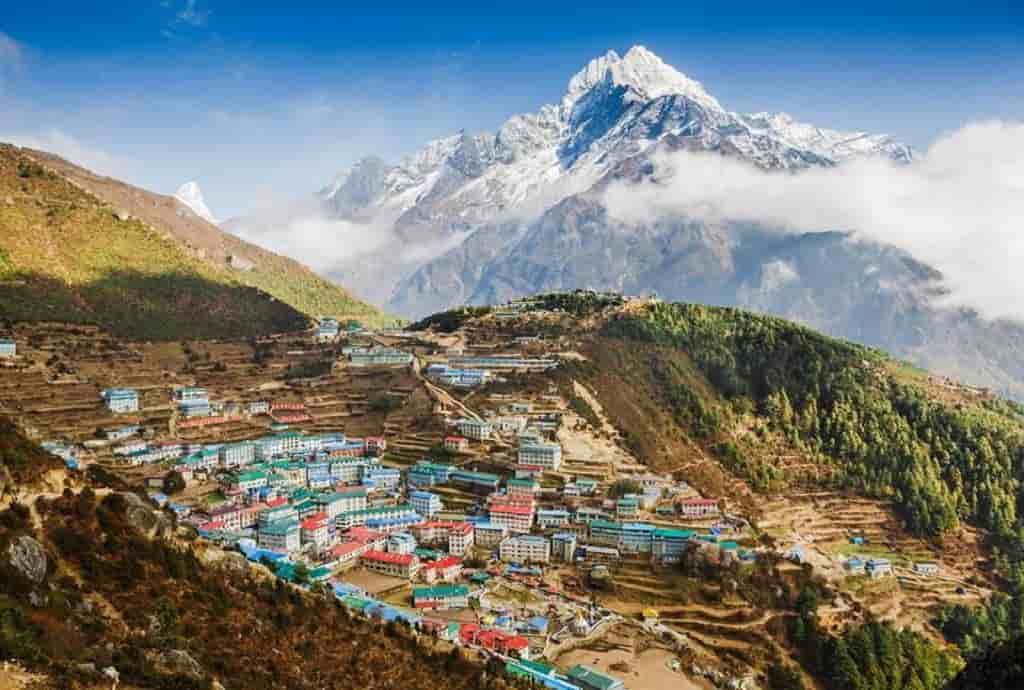
Likewise, trekking passes through Phakding, Manjo, the main entrance of Sagarmatha National Park, and finally reaches Namche Bazar, the trade hub of the Khumbu region. However, you will have an extra day acclimatization; it is better to recommend and Namche to digest high altitude. You can see the Mount Thamserku, Kusum Kangaru, and Kwangde, which are the main attraction of Namche.
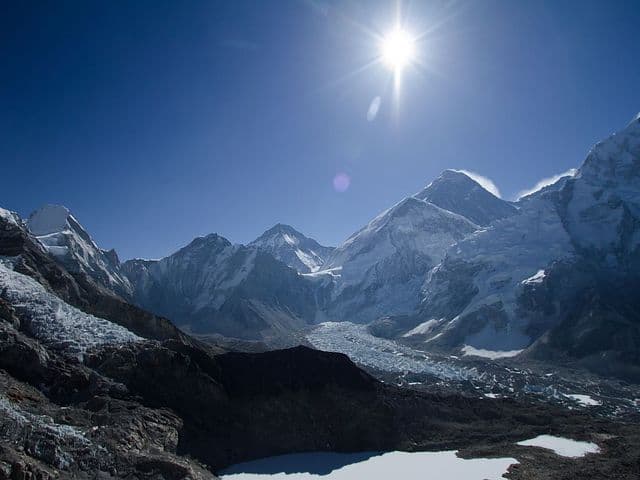
Next, continue trek to Tengboche and enjoy the oldest Tengboche monastery. Amazing view of Mt Amadabalam, Mt. Everest, Nuptse, and Lhotse on the way to Dingboche. Extra day acclimatization is significant in Dingboche and the next day hiking to Nagarsha hill and explore surrounding mountain peaks. trek to Lobuche and overnight and finally next day trek continue to Gorakshep, and hike to Everest base camp and hiking to Kalapathar (5545 m) to the close view of massif Mt. Everest. Enjoy the amazing sunrise and sunset view of Mount Everest from Kala Patthar which is the mesmerizing attraction of the EBC short trek.
The trek to the Everest Base Camp normally takes 12 to 14 days to be completed, and this is a moderate trek. Although the climbing skills are not high-level, good physical condition and correct preparation are necessary in case trekkers have to cope with the length of walking days and high altitude. Although it is physically demanding, the trip pays the traveller with memorable experiences, beautiful scenery, and valuable cultural experiences.
All in all, the Everest Base Camp hike is not an ordinary mountain hike. It is an exploration voyage, personal success, and an engagement with nature. Hiking up to the highest point of the tallest mountain in the world, one will experience an adventure, spiritual inspiration, or the thrill of being inside the best region of the Himalayas.
Is Everest base camp trek for you?
This is a trek for a person who loves to spend time in nature and reminisce about the memories spent in it. Does anyone want the thrill during travel and want to explore the world? The Everest Base Camp trek is for anyone who loves adventure, nature, and mountains. It is perfect for people who enjoy walking through villages, forests, and high trails, want to see stunning Himalayan views, and are ready for a fun but challenging outdoor experience. If you are a nature freak, this trek is perfect for you. For the best experience, you have to be physically and mentally healthy. Perhaps it may also serve you as a therapy.
One will go through numerous checkpoints and settlements where they can have unique experiences. And spend time to experience the new environment among the Sherpa communities. One can also socialise with the tourists who come to visit.
Things to know before EBC trek
- You must have a guide in this journey because it is a safety and permit requirement. You cannot trek solo.
- You will walk at a high altitude, so do not rush, drink plenty of water, about 3-4 litres.
- Never ignore minor headaches, take enough rest and carry medications you may need.
- Prepare your body to endure physical activities, especially distant and inclined walking.
- Accommodation is decent, simple. You’ll need to purchase additional luxuries like Wi-Fi and hot showers.
- Carry reusable bottles and materials in order to protect the environment.
- Bring the trekking tools such as trekking poles, comfortable boots, shorts, etc for your EBC trek.
- Back up for your devices or gadgets would be a lot helpful since electricity might be unreliable sometimes, especially at higher altitudes.
- Hygiene equipment such as hand sanitiser, soap, toilet paper and wipes is rarely provided in teahouse bathrooms.
- Make sure to carry backup clothes like a jacket, pants or joggers, since they may be needed when another item is not wearable. Also, the temperature at the Base Camp is below freezing, so you might need them.
- Do not rely on ATMs, as they are very rare. Please carry enough Nepalese cash to prevent money transaction problems.
- Being able to communicate, socialise, understand, and respect will do you good, so be prepared.
The Everest Base Camp Route Overview
The Everest Base Camp is a well-known path in the Khumbu region in Nepal. The northeastern side. The route walks you through traditional Sherpa villages, exposing you to local mountain culture along with scenic valleys and rugged terrain. You will also walk through a high-altitude Himalayan landscape. From the start, the elevation gain will be gradual. But as a whole, it might be challenging yet rewarding.
The expedition usually starts at Kathmandu, where the trekkers board a short mountain flight to Lukla Airport, at an elevation of approximately 2,860 meters above sea level. Starting at Lukla, the route starts with a comparatively smooth walk-through forests and small villages until it enters Phakding village.
After that, you trail to the Dudh Koshi River valley. Here, you get to cross multiple suspension bridges and have a little thrill of a walk. Eventually, you reach Monjo, which is an entry gate to Sagarmatha National Park. Then you continue your journey to Namche Bazaar. It is a major trading and cultural centre of the Sherpa in the Khumbu region. Many trekkers spend an extra day acclimatising while also exploring and knowing Sherpa traditions and cultures, and local markets.
The path out of Namche Bazaar ascends slowly up the mountain paths in pine forests to Tengboche, where the famous Tengboche Monastery is located. The path has excellent scenery with well-known Himalayan mountains such as Ama Dablam, Lhotse and Nuptse.
The trail ascends to the upper villages of the Khumbu region. Starting from Dingboche. Here, again, trekkers may use their time as an acclimatisation day. From there, the trail leads to Lobuche, eventually leading to Gorak Shep which is the final stop before the base camp.
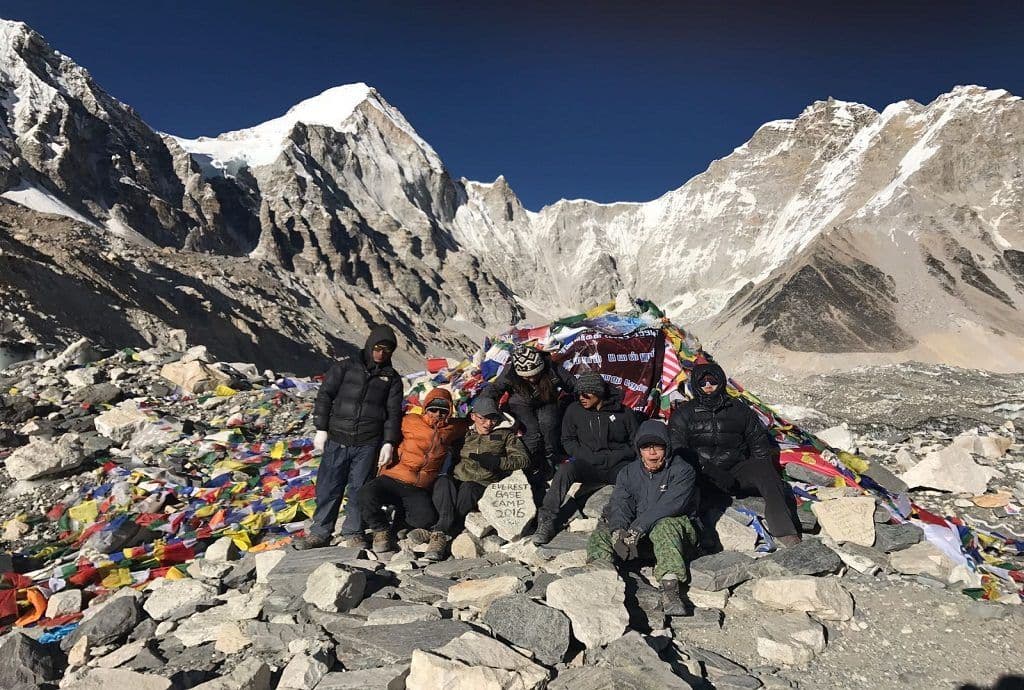
From Gorak Shep, your trek continues to the final destination, the Everest Base Camp (5,364m approx.). Trekkers then hike up to Kala Patthar for breathtaking panoramic Himalayan views. There, trekkers can capture Everest and the surrounding peaks. After experiencing these highlights, trekkers return via the same trail to Lukla Airport. Therefore, the trekker has now made one of the most remarkable trekking experiences around the world.
Best time to visit Everest Base Camp/ trek EBC
The best time to visit or trek EBC would be during the autumn season (September – November). So, during autumn, the weather is pretty stable with crisp air and still retains post-monsoon freshness. Nevertheless, the mountain visibility is excellent in this season too. Temperature in the lower region ranges between 10–20°C, while near the base camp it can drop to around freezing. Since this is a peak trekking season, accommodations are mostly packed/full, including the teahouses, so you need to be prepared for it. Perhaps even do early bookings.
Another good time to trek to the Everest Base Camp is during the spring season (March – May), as the weather is mild and the rhododendron forests are blooming along with the snow-capped mountains. In this season, the skies are clearer, allowing you to have beautiful and panoramic views of Everest, Lhotse, Nuptse and Ama Dablam. And trekkers can also find alpine flowers along the trail. The temperature ranges from 0-15 °C on average. Compared to the autumn season, there is generally less crowd, making it more of a peaceful, intimate and tranquil trekking experience.
Therefore, spring and autumn are considered safe, scenic, and enjoyable trekking conditions for this journey.
Least ideal time to visit EBC
Trekking to Everest Base Camp during the Monsoon Season (June - August) is not considered an ideal time to trek/ visit. During this time, the region experiences heavy rainfall and cloudy skies, causing the trails to be slippery and reducing visibility of the wonderful views. Natural disasters like landslides and floods make trekking dangerous, too. Additionally, the trail conditions are more challenging, and some teahouses may not be available or closed. Sometimes, such teahouses may be crowded with stranded trekkers. In the lower elevations. The temperature ranges from 15–20 °C at lower elevations, whereas 0–5 °C at higher elevations.
The winter season (December – February) is also considered one of the least ideal seasons to trek to Everest Base Camp. It is less favourable due to very cold temperatures, strong winds and snow at high altitudes. It will be peaceful and less crowded, but the night duration is very long and freezing cold. Just like that, major high-altitude lodges remain closed, making the trek more difficult and riskier. The temperature ranges from 0-10 °C at lower elevations, whereas -15–5 °C at higher elevations.
Situation during peak hours or season
During the autumn season (September – November) and the spring season (March – May), the trail is heavily crowded, especially in the popular trail sections like Namche Bazaar, Tengboche, Gorak Shep and so on. Likewise, due to the same reason, you would also need to wait at popular viewpoints and suspension bridges, teahouses and lodges are often fully booked. Therefore, most of the time, early reservations are needed to make out in this season. Despite the crowd, there are clear skies, the best weather and Himalayan views as visual rewards in this season. Hence, to make this time prolific, there will be more tourist services such as organised trekking groups, porter availability, wider food options and additional luxuries in the teahouses.
Situation during the off-season
In the monsoon months (June-August) and winter (December-February), the trekking region is much quieter. Therefore, the trekking journey becomes a much more peaceful and solitary experience. If you’re trekking in winter, you’ll find peace and solitude, whereas in the monsoon it really gets difficult due to rain, slippery trails or natural disaster risk. High altitudes are covered in snow, and due to extreme coldness trekking gets a lot more difficult and riskier. Likewise, there could be less service availability, such as lodges and teahouses at higher altitudes, porter availability and organised trekking groups may be limited. Despite the weather and service facilities at some places, trekkers who are interested or prepared can enjoy the pristine beauty of the Himalayas with minimal crowds.
Preparation for the EBC trek
Let's walk you through the ways to prepare for this trek, since it is very important how you do it. It can play a key role in eliminating some possible difficulties or problems.
Make sure you are physically fit. If you’re not, you'd better start your physical training, such as building endurance, leg strength, improving cardio, etc. You could try to walk shorter hikes around your place or upstairs.
Regarding the gear, you’ll need trekking boots, layered clothing, a down jacket, and rain gear. Boots better be broken ones because new ones might hurt your foot and toes, and may not fit you properly. Hence, broken ones are already compatible with your foot. You also need to include trekking poles (optional) since they can save your energy massively and also prevent you from hurting your knees or legs.
Waters, snacks, primary first-aid, hand sanitizer and toiletries should lie in your backpack essentials. Similarly, a guide is mandatory; remember your hydration, maintain your pace and carry enough cash money. The goal is to trek this adventure without injuring or harming yourself.
Things to consider about transportation or flights
After you touch down in Kathmandu, or if you are a local citizen of Nepal, your first transportation will be from Kathmandu/ Ramechhap to Lukla by flight. It is about a 30 – 35-minute mountain flight. Lukla airport is located at an altitude of 2,860 m, which is one of the most thrilling and high-altitude airports. If not from Kathmandu, then departure from Ramechhap is another option. It is useful during the busy season to manage heavy air traffic. Kathmandu to Ramechhap is about a 5-6-hour drive. It may add an extra day in your itinerary, but if you decide to make a private drive early in the morning, then you might save your day. One of the major things to consider is the baggage limit, as there is a strict weight limit for luggage on small aircraft. While returning, you may depart for Kathmandu or Ramechhap. Therefore, proper planning of transportation is important to ensure a smooth and convenient trip.
Flights to Lukla are mostly early morning departures since the weather in the mountains is usually stable at that time. By chance, there could be a possible wait for long airport delays due to unpredictable flight timing. There could be various causes of delay, such as bad weather, heavy air traffic, a short runway or difficult mountain terrain. Our advice for you is to manage 1-2 buffer days in the itinerary. It is a win-win. First, this time helps travellers manage possible flight disruptions and prevents missing international flights if Lukla flights are delayed or cancelled. Second, you can utilise that time to travel around the famous places in your vicinity.
About Kathmandu to Lukla flights
The Kathmandu-Lukla airline in itself is an exciting 25-30 minutes flight through the spectacular Himalaya Mountain ranges. But there is an airport at Lukla which is amongst steep hills with rapidly changing weather conditions under normal circumstances, thus causing delays or cancellations. The majority of flights are planned in the early morning when weather conditions are more predictable, but it still might require the passengers to spend several hours at the airport. Poor weather, air traffic, runway restrictions, and difficult mountain geography are some of the factors that frequently influence the flight operations. Thus, the tourists intending to visit the Everest area are highly encouraged to include one or two additional buffer days in their schedule to deal with potential flight cancellations and not miss their international travel links.
Ramechhap to Lukla Flights
The Ramechhap to Lukla flight is an alternate option to the Kathmandu to Lukla flight to reduce heavy air traffic at Kathmandu. This flight helps trekkers to conserve their time and prevent other flight and transportation delays. The Ramechhap-Lukla flight lasts about 20 minutes and it provides breathtaking scenes of the Himalayan scenery. Just like Kathmandu flights, these flights are made by use of small aircrafts, which have little passenger and luggage capacity, and are also very sensitive to the weather. Due to the potential delays or early arrival time, most trekkers prefer to spend the night in Ramechhap prior to their flight to Lukla in order to have a better experience on their travels to Lukla and the commencement of the Everest Base Camp trek.
Possible problems during flights or transportation
As we have already said most of it. The transit to the Everest area, particularly air flights to Lukla Airport, may be problematic when the weather is unpredictable, there are short runways, and a high level of air traffic during high-season. Small airplanes possess low luggage capacity, and the road to Ramechhap takes 5-6 hours to Kathmandu. Trekkers are highly encouraged to include 1-2 more days to their itinerary in order to deal with delays or cancellations that might occur.
Importance or Benefits of the Guide from Us
Hiring a guide or a trek guide is equally helpful and mandatory for treks like this. It comes with lots of advantages and benefits because those folks have good trail knowledge. You’ll be very efficient at navigating your route and ensuring your safety. They will guide you with everything you need. You will be able to sort your plans, manage your pace and arrange accommodations without difficulty. They can be a massive communicator with the locals for your Q and As. They will explain to you deep cultural insights, provide you with firm support and make your journey stress-free.
When you purchase one, you will be given some complementary items. It depends on who and where you purchase. Therefore, you can trust us. We provide
- Pick-up and drop-off service through private vehicles
- Well-licensed, knowledgeable and experienced trek guides
- Provision of a briefing by the company director or a senior adventure expert
- Confirmed dates for trek
- Focus on client-centred service such as safety, comfort and satisfaction
- Customizable itineraries for flexible trek plans
- Several complementary items like a t-shirt, a cap, a sleeping bag, a down jacket and poles
- Required online briefing and 24-hour service for assistance or queries
- Free luggage storage at our office during your journey
Highlights
- Chance to admire Khumbu Glacier and Icefalls along the trail.
- Stunning sight of Ama Dablam towering above the Tengboche area.
- Spend your moment in the Everest Base Camp (5,364 m) among the massive Himalayan Summits.
- Witness a lively Sherpa trading hub in Namche Bazar, along with their warm hospitality in the traditional lodges.
- Observe local lifestyle, customs, traditions and cultures.
- Trek across the scenic conservation wilderness of the Sagarmatha National Park.
- Early morning ascent to Kala Patthar (5,545 m) to have an awesome view of the sunrise over Everest, Lhotse, and Nuptse.
- Touching down on a far-off, dramatic, high-altitude landing runway and one of the most thrilling airports in the world.
- Enjoy walking around the mountain settlements like Pangboche and Dingboche.
- A short scenic panoramic mountain flight to Lukla Airport.
- Explore Tengboche Monastery and Namche Monastery as spiritual landmarks in the area.
- Have the view of a mesmerizing sunrise over Everest from Kala Patthar.
- Travel on one of the most popular trails in the world, lying in the region of the tallest mountain.
What‘s Included
What‘s Excluded
Availability
Select your preferred departure date. Trip duration: 13 days
Number of Travellers
Select a date to book
Dates are subject to availability. Please contact us to confirm your preferred dates.
Itinerary
Equipment
Equipment list for Everest Base Camp hike
We suggest packing only essential clothing and accessories for the trek. While preferences vary, we’ve provided a list to guide your packing. Porters will carry your luggage, but each trekker’s luggage is limited to 9 kg. We recommend pairing up with another trekker to share a duffle bag with a capacity exceeding 60 kg.
Activity/Trek gear
- Trekking backpack - to carry your essentials at ease
- Rain cover for backpack – to protect the backpack from rain and dust
- Trekking poles – assist you in walking, preventing injuries
- Reusable bottle - for constant hydration
- Dry bag – helps keep electronics and documents safe
- Power bank/ Spare batteries with usable adapters or cable
- Handlamp or torch – useful during power cuts or night walks
Clothing or Layering
- Thermal top and bottom as a base layer
- Insulating layers like fleece jackets, thick wool sweaters, etc.
- Waterproof or windproof shell jackets
- Trekking pants (should be comfortable for you)
- Multiple pairs of socks
- Sleepwear
- Swimsuit for natural hot spring
- Quick-dry clothes like towels, shirts, inner
- Sports wear in case you want to get involved in running or some games
- Waterproof or rain clothes
Footwear
- Trekking boots
- Sandals
- Flipflops
- Camp shoes – provide comfort for lodge usage
- Gaiters (optional) – protect boots and pants from mud, snow or rocks
Headwear
- Warm hat
- Sun hat
- Sunglasses
- Buff or neck gaiter
Handwear
- Light gloves
- Watch
- Insulated gloves
Hygiene Materials
- Toothbrush and toothpaste
- Body wash
- Shampoo
- Deodorant
- Hand sanitiser
- Wet wipes
- Nail cutter
- Tissue
- Quick-dry towels
- Cosmetics like face wash, moisturizer and high spf sunscreen
- Small first aid
- Toilet paper
Optional tools
- Copies of insurance or passport
- Notebook and pen
- Snacks or energy bar
- Map guide
Accessories
- Sleeping bag (-10 to -15 degrees is the best) **
- Water purification system (tablets, filter, or UV purifier)
- Water bottle or bladder with a capacity of at least 2 liters (insulated for cold weather)
- Adjustable and lightweight poles (preferably collapsible)
Trip Information
Everest Base Camp Trek Information
Arrival, Welcome, and Trek Start
Upon your arrival in Kathmandu, our representative will greet you at Tribhuvan International Airport, holding a signboard with your name. As a warm welcome, they will offer you a traditional garland and then escort you to your hotel in a private vehicle. On the second day, we’ll arrange a guided sightseeing tour of Kathmandu.
On the third day, we’ll fly you to Lukla. During peak trekking seasons (March, April, May, September, October, and November), flights to Lukla may be rerouted from Tribhuvan International Airport (TIA) in Kathmandu to Manthali Airport due to high air traffic. In these months, our guide will pick you up from your hotel around 12:30 AM for a five-hour drive to Manthali, followed by a 20-minute flight to Lukla.
During the quieter months (December, January, February, June, July, and August), flights to Lukla depart directly from Kathmandu. On those days, we’ll take you to Kathmandu Airport early in the morning for a 40-minute flight to Lukla.
Accommodations
In Kathmandu, your package includes three nights of stay at a three-star hotel in twin sharing rooms.
Throughout the trek, we arrange comfortable accommodation in the best available lodges. In the lower regions like Lukla, Phakding, and Namche, you'll stay in rooms with private attached bathrooms while higher up in places like Tengboche, Dingboche, Lobuche, Gorakshep, and Pheriche, you will stay in standard rooms.
While most lodges provide Wi-Fi, electricity for charging your devices, and hot showers, they come with an additional cost.
Meals
Meals on the trek are thoughtfully designed to supply the essential nutrition needed for high-altitude environments. You’ll be provided with full-board meals (main course), consisting of 13 breakfasts, 13 lunches, and 13 dinners. Nutritious choices include Tibetan bread, Sherpa stew, noodles, and a variety of soups and vegetables.
We advise drinking fluids like ginger, green, or lemon tea and garlic soup to enhance energy and support acclimatization. The menu features both local and international cuisine, though options may become more limited as the trek continues. For health and hygiene reasons, we recommend avoiding alcohol, caffeinated beverages, and dairy products. Drinks (cold, hot, or alcoholic) are not included in this package.
Luggage
Porters will handle your luggage during the trek, with a 9 kg weight limit per trekker. We allocate one porter for every two trekkers and suggest combining your belongings with another trekker in a duffle bag exceeding 60 liters in capacity. Carry essentials like documents and valuables in a small daypack. Extra luggage can be stored at no cost at your hotel or our office storage in Kathmandu.
Facilities and Essentials
Water
Keeping hydrated is crucial, particularly at high altitudes. You can buy bottled mineral water from local shops and lodges along the trail. Alternatively, you can refill your water bottle with boiled water at teahouses for a small additional fee, which is an environmentally friendly choice. Always use water purification tablets before drinking. Avoid drinking directly from rivers, taps, or wells.
Communication
You can buy a local SIM card in Kathmandu, though signal strength may be inconsistent in remote regions. We stay in daily contact with trek leaders via phone to track the trek’s progress and ensure your safety. Additionally, we remain on standby to address any issues that may arise.
Travel Essentials
Visa
All foreign nationals, except those from India, need a visa to enter Nepal. You can get an on-arrival visa at Tribhuvan International Airport in Kathmandu. The visa application requires a passport valid for at least six months, a passport-size photo, and a visa fee (USD 50 for a 30-day visa). For more information, visit https://www.immigration.gov.np/en.
Travel Insurance
Travel insurance is compulsory. Ensure your policy includes medical treatment and emergency helicopter rescue up to the trek’s maximum altitude (5,500 m). We suggest verifying with your insurance provider that emergency helicopter rescue is covered.
Currency Exchange
The official currency of Nepal is the Nepalese Rupee (NPR), with 1 USD approximately equal to NPR 138. You can exchange major currencies (USD, EUR, GBP) for NPR at banks or money changers in Kathmandu. We advise converting cash to Nepalese Rupees, as trekking areas lack currency exchange services. While ATMs are available, note the associated transaction fees. Make sure to bring clean, new bills for exchange, as Nepali banks accept only new currency notes.
Extra Expenses
Although the trekking package includes major costs, you’ll need to budget for additional expenses like meals in Kathmandu, personal snacks, Wi-Fi access, drinks (alcoholic and non-alcoholic), extra meal courses, souvenirs, and tips for your trekking crew. Plan for approximately USD 20 per trek day to cover these miscellaneous costs.
Trek Season and Weather Conditions
The optimal periods for Everest Base Camp trekking are spring (March-May) and autumn (September-November), when clear skies and moderate temperatures offer breathtaking Himalayan views. Winter (December-February) brings extreme cold and heavy snowfall, while summer (June-August) experiences monsoon rains that may disrupt plans. Daily temperatures at high altitudes vary: 15°C to -15°C in winter, 18°C to -12°C in spring, 25°C to 5°C in summer, and 20°C to -5°C in autumn.
Flight Delays
Flights to and from Lukla depend on weather conditions and may face delays. We’ll make every effort to manage these changes, but flexibility is key, as flights could be rescheduled or canceled due to unfavorable weather. We suggest arriving in Kathmandu one or two days early to account for potential delays.
Typical Day
Each day on the Everest Base Camp trek begins early with a hot drink and breakfast, followed by departure around 7-8 AM. After a few hours of trekking, lunch is provided around midday with an hour of rest. The afternoon includes 2-3 more hours of trekking, followed by free time to visit local villages or unwind at the lodge. Dinner is served around 6-7 PM, after which your guide will brief you on the next day’s plan. Evenings offer opportunities to play games, socialize, or relax before bedtime.
Trip Conclusion
Farewell Dinner
After finishing the Everest Base Camp trek, we will organize a farewell dinner in Kathmandu to celebrate your successful journey. This dinner offers a great chance to share feedback about your experience. Afterwards, we will present you with a certificate of trek completion.
Departure
Following your trek, we will arrange a complimentary airport transfer. Please provide your hotel name, room number, departure date, and time to facilitate this. We look forward to welcoming you back to Nepal for more trekking adventures.
Trek Bookings
Private Treks
We offer private treks with flexible schedules for a personalized experience. We accommodate all group sizes and provide discounts based on the number of trekkers. Additionally, for groups of 12 or more, we include an assistant guide.
Safe Trek Bookings
We are a government-licensed and bonded trekking company with over 12 years of experience. Additionally, we are affiliated with the Trekking Agency Association of Nepal (TAAN) and the Nepal Mountaineering Association (NMA). To confirm your booking, a 10 percent advance payment of the trek cost is required, payable via bank transfer, credit card, Wise, or Western Union. The remaining balance is due upon your arrival in Kathmandu, where cash payments are also accepted. We will send you payment details via email. Please provide essential documents, such as a passport photocopy, within one week of booking confirmation.
Last-Minute Bookings
While we recommend booking in advance, we recognize that plans can emerge unexpectedly. Therefore, we offer a last-minute booking option. For last-minute bookings, we accommodate travelers who pay the full tour cost 24 hours prior to departure. However, we cannot be held accountable for delays caused by external factors, such as flight unavailability, in these cases.
Flexible Schedule
Our treks operate on fixed departure dates. If these dates don’t work for you, please let us know, and we can arrange to reschedule your trek for a more convenient date.
Trip Extension
For those wishing to prolong their time in Nepal, we provide thrilling activities like sightseeing, jungle safaris in Chitwan, or additional treks.
Tipping Culture
Tipping is a standard custom in Nepal. We suggest determining tips according to the quality of service, the total cost of your trek, and its duration. For the sake of clarity and equity, we recommend that tips be collected and distributed as a group at the conclusion of the trek.
FAQs about
the trip
Leave a Reply
Your email address will not be published.
Related Tours
See our Most popular tours
.jpg&w=3840&q=25)