Dhampus Peak Climbing
Trip at a glance
- Duration
- 18 days
- Difficulty
- Strenuous
- Best season
- September- December and March - May
- Accommodation
- Lodge to Lodge Trek
- Group size
- 1 – 18 people
- Tour type
- Small Group Tour
- Meals included
- Breakfast, Lunch, Dinner
- Max altitude
- 6,012 m
- Transportation
- Private vehicle, Tourist bus or flight
Overview
Nepal, as a tourist destination, is good for all seasons; however, the best seasons for trekking and climibng to Dhampus region are spring (March – May) and autumn (mid Sept. – mid Dec. ). Trekking in the autumn season is noted for clear weather and excellent views of silvery mountains against blue sky. Where as monsoon and winter are low season.
Dhampus Peak Climbing
Dhampus is located in between the Dhaulagiri and Annapurna ranges.
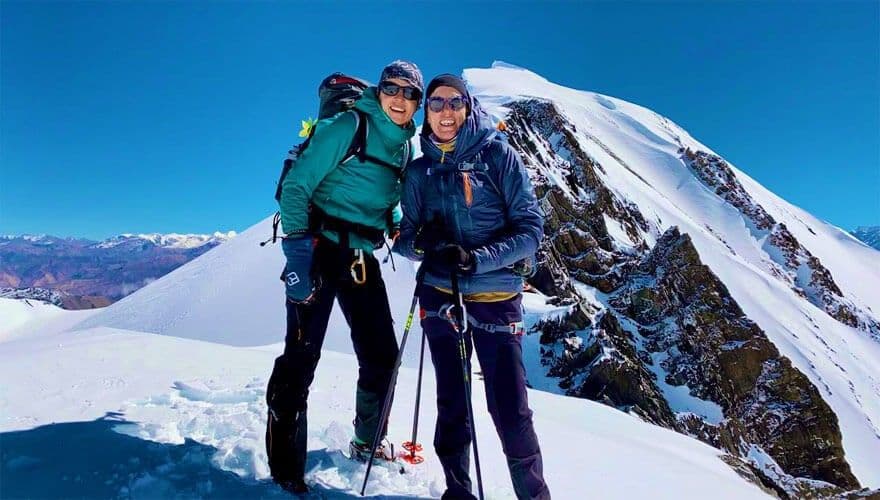
Dhampus Peak Climbing offers a challenging and rewarding trek within the Annapurna region, presenting spectacular views of iconic peaks including Annapurna I, II, III, IV, Nilgiri, Macchapuchrey, Lamjung Himal, and Hiunchuli. This climb takes place amidst enchanting rhododendron forests, providing opportunities to observe diverse wildlife such as musk deer, spotted deer, red pandas, pikas, and blue sheep. This trail also allows for immersion in the unique cultures of the Gurung, Rai, and Magar communities, experiencing their distinct traditions, languages, and customs.
Dhamous Peak needed a bit of technical and physical challenging. Due to the technical nature of the climb, participants need specialized equipment, including crampons, ropes, ice axes, and other climbing gear, to safely navigate the terrain.
This trek provides you a great opportunity to explore the Annapurna region, offering marvelous and stunning views of mountains like
Annapurna I
Annapurna II
Annapurna III
Annapurna IV
Nilgiri
Macchapuchrey
Lamjung Himal
Hiunchuli
Along with these, you can also enjoy beautiful wildlife such as:
Musk deer
Spotted deer
Red panda
Pika
Blue sheep
All of this can be found in enchanting rhododendron forests. This trek also provides you a great chance to closely observe the culture of the Gurung, Rai, Magar, and other local people, who follow their own traditions, languages, and customs.
Being one of the most challenging and technical climbs, Dhampus Peak Climbing requires useful equipment like crampons, ropes, ice axes, and other climbing gear.
What’s included
A clear breakdown of what your trip price covers.
Included
- Arrival & Departure transfers on both domestic and international flights.
- Accommodation at 3 star hotels in Kathmandu.
- Full board meals on tented camping & Lodge expedition.
- Accommodation on tented camp.
- Half day guided city tour as listed in itinerary.
- Peak Climbing Permit Royalty and other government tax.
- Group Climbing gear including climbing rope, ice axe, roomer, harness, figure of eight, carabineer etc.
- All camping equipment - 2-person member tent, dinning tent, kitchen tent, staff & porter tent, toilet tent with commode, dining table with backrest chair etc.
- Free use of quality trekking gear - sleeping bag, fleece inner liner, insulated mat, down jacket, duffel bagetc during the trip.
- Well-experienced Climbing guide with all his allowance and expenses.
- Porters to carry all personal gear and group equipment.
- Insurance of all staff including porters.
- Adventure Treks T-shirts / other seasonal gifts as perks.
- 10 % VAT and 13% TSC Taxes.
- High altitudes chamber bags (PAC) for very high altitudes.
Not included
- Nepal entry Visa fees your travel insurance of any kind emergency evacuation insurance is recommended as this is an adventurous trip and evacuation by Helicopter may be necessary
- International Airfare
- Lunch and Dinner except mentioned itinerary
- All Drinks and main meals in cities.
- Tips items for trekking crew members personal expenses like hot shower battery charge Telephone laundry beverage drinks etc.
Availability
Pick a departure date and we’ll fill in the rest of your 18-day trip automatically.
Select a date to enquire
Choose any available start date on the calendar.
Dates are subject to availability. Please contact us to confirm your preferred dates.
Itinerary
18 days, planned step by step. Tap a day to see the details.
Welcome to Kathmandu (1334), Sunrise Adventure Trek’s airport representative picks up you from Kathmandu International airport – transfer to hotel and Dhampus peak climbing briefing is done. You can also meet the climbing guides and other staffs to discuss about the upcoming adventure.
During this day, you can do excursion or sightseeing around Kathmandu valley and preparation for Dhampus peak climbing. Sightseeing includes tour around Swayambhunath (monkey temple), Bauddhanath (Buddhastupa), Pashupatinath/Biggest Hindu Temple & Patan Durbar Square.
After breakfast, we take scenic drive from Kathmandu to Pokhara (915m) by tourist bus. Along the way you see rivers, villages and get glimpses of Nepali lifestyle. This is one of the highlight of the trip. Many tourists love the drive and for most of them it is a new experience to realize that the topography completely changes. Meals included: Breakfast, lunch and dinner with tea or coffee and finally an overnight stay in hotel.
From Pokhara we drive to Nayapul and you will start your trek to Tikedhunga. At a 30minutes walk from Nayapul you will reach to Birethati. After a short stops, and trail slightly goes hot sparing, follow the Modi Khola, village of syaulibazar, Kueme new bridge and finally crossing several rice field beautifully settled hamlets and reach to hot sparing, Jhinu Danda. Meals included: Breakfast, lunch and dinner with tea or coffee and finally an overnight stay in trekking lodge or tented camp.
The trail goes steep up for 1.5 hours through stone steps where the trail leads through cultivated fields. The rest of the trail weaves through enchanting rhododendron and oak forest (blooms in March, April). Arriving at the top of the Ghorepani pass, you will be taken to your accommodation and have a chance to rest your feet. Meals included: Breakfast, lunch and dinner with tea or coffee and finally an overnight stay in trekking lodge or tented camp.
Early in the morning we hike to Poon Hill for superb Himalayan scenery including the Dhaulagiri (8167m), Nilgiri (7041m), Fishtail/Machhapuchhare (6998m), Annapurna I (8091m), Annapurna II (7939m), Annapurna III (7555m), Annapurna IV (7525m), Annapurna south (7219m), Hiunchuli (6441m), Lamjung Himal (6986m),Tukuche peak (6920m), etc. We take breakfast at Ghorepani & trek to Tatopani/Natural hot spring (1189m), Meals included: Breakfast, lunch and dinner with tea or coffee and finally an overnight stay in trekking lodge or tented camp.
Trek to Ghasa begins via Kali Gandaki George – world’s deepest George that situates between two 8,000m peaks (Annapurna & Dhaulagiri). We continuously ascend to Dana (1400m), Rupse Chhahara (1550m) – you can see waterfall here and Kopchepani (1935m) from where a short climb escorts us to Ghasa (2110m). Meals included: Breakfast, lunch and dinner with tea or coffee and finally an overnight stay in trekking lodge or tented camp.
From Ghasa we trek to Marpha : this village is famous for Apple. You can find different variation of Apple product here. We reach Marpha for overnight. The surrounding is amazing and you can learn the local lifestyle as well as make some new friends while taking a sip of apple wine. Meals included: Breakfast, lunch and dinner with tea or coffee and finally an overnight stay in trekking lodge or tented camp.
Our destination for today is to halt at Yak Kharka – you can see animals grazing here. The trail offers glazing views of Annapurna range (mostly Annapurna II, III & IV with Gangapurna) and you can see small colorful houses once you reach Yak Kharka. Meals included: Breakfast, lunch and dinner with tea or coffee and finally an overnight stay in trekking lodge or tented camp.
We trek to Dhampus Base Camp from Yak kharka. The trail is quite fascinating with amazing single landscape. We take breakfast in Yak Kharka and head toward base camp with our guide. The trail is full of mountains and amazing landscapes which is totally captivating and make you feel like you are in different planet. Meals included: Breakfast, lunch and dinner with tea or coffee and finally an overnight stay in trekking lodge or tented camp.
Our trail follows through the glaciated mountain passes for today. After arriving we set up our camp and make preparation of ropes, crampons, harness, ice axes & other equipments for climbing. Our climbing guides give you training on climbing and ropes and you need to reserve as much energy as possible for successful summit of the Dhampus Peak. Meals included: Breakfast, lunch and dinner with tea or coffee and finally an overnight stay in trekking lodge or tented camp.
Our ultimatum for today is to summit Dhampus Peak (6012m). We start fully prepared for the summit and follow the footsteps of expert and experienced climbing guides. Once we are in the top of the mountain, we can get quality view of mountain tops like Annapurna I, II, III & IV, Annapurna South, Dhaulagiri, Nilgiri South & North, Tilicho Peak with other numerous snow topped peaks. We spend some time at the top and descend back to High Camp. Meals included: Breakfast, lunch and dinner with tea or coffee and finally an overnight stay in trekking lodge or tented camp.
Our trip continues with trek toward Dhanpus Pass. After crossing the pass we make steep descend to the world’s Deepest Gorge – Kali Gandaki Valley. And then we traverse across the snow which takes around four hours before descending all the way to Yak Kharka. Meals included: Breakfast, lunch and dinner with tea or coffee and finally an overnight stay in trekking lodge or tented camp.
We trek to Marpha- very famous village for apple. You can get apple ciders and drinks here. The trail is through sparse forest. Here, you can relive the moment you have spent in prevent journey. Meals included: Breakfast, lunch and dinner with tea or coffee and finally an overnight stay in trekking lodge or tented camp.
We start our trek from Marpha and reach Jomsom to call it a day. Jomsom is the center hub of Mustang & Upper Mustang, having airstrip, lots of tea houses and better facilities. We celebrate our summit here and enjoy the trip. Meals included: Breakfast, lunch and dinner with tea or coffee and finally an overnight stay in trekking lodge or tented camp.
After breakfast, we take jeep/bus from Jomsom and enjoy the awe-inspiring views of mountains and rivers. We pass Magar, Gurung & Thakali villages and enjoy fresh as well as dry apples and apple products. Or we fly from Jomsom to Pokhara for faster arrival. Meals included: Breakfast, lunch and dinner and finally an overnight stay in hotel.
Pokhara to Kathmandu drive takes around 5/7 hours. It is a scenic drive along the Trishuli and Marshyangdi Rivers. After your arrival in Kathmandu, in the evening, you are treated with a special cultural dinner program as a complimentary commencement of Sunrise Adventure Trek. Meals included: Breakfast, and finally an overnight stay in hotel. Attend the evenning dinner and cultural program provided by the company.
After victorious ending of our trip, our representative drops you to the airport for your journey home. You are dropped off 3 hours earlier so that there is no any delay in flight. Or you can join another adventure and explore hidden gems of Nepal. Till then, have a safe journey to Home!
Frequently asked questions
Quick answers about this trip. Still unsure? Our team is happy to help.
Nepal, as a tourist destination is good for all seasons, however, the best seasons for trekking to Kanchenjunga region are Spring (March – May) and Autumn (mid Sept. – mid Dec. ). Trekking in autumn season is noted for clear weather and excellent views of silvery mountains against blue sky. It gets colder towards the end of December. This trek can be done in any month except January and February.
Nepal, as a tourist destination is good for all seasons, however, the best seasons for trekking to Kanchenjunga region are Spring (March – May) and Autumn (mid Sept. – mid Dec. ). Trekking in autumn season is noted for clear weather and excellent views of silvery mountains against blue sky. It gets colder towards the end of December. This trek can be done in any month except January and February.
Nepal, as a tourist destination is good for all seasons, however, the best seasons for trekking to Kanchenjunga region are Spring (March – May) and Autumn (mid Sept. – mid Dec. ). Trekking in autumn season is noted for clear weather and excellent views of silvery mountains against blue sky. It gets colder towards the end of December. This trek can be done in any month except January and February.
Nepal, as a tourist destination is good for all seasons, however, the best seasons for trekking to Kanchenjunga region are Spring (March – May) and Autumn (mid Sept. – mid Dec. ). Trekking in autumn season is noted for clear weather and excellent views of silvery mountains against blue sky. It gets colder towards the end of December. This trek can be done in any month except January and February.
Nepal, as a tourist destination is good for all seasons, however, the best seasons for trekking to Kanchenjunga region are Spring (March – May) and Autumn (mid Sept. – mid Dec. ). Trekking in autumn season is noted for clear weather and excellent views of silvery mountains against blue sky. It gets colder towards the end of December. This trek can be done in any month except January and February.
Nepal, as a tourist destination is good for all seasons, however, the best seasons for trekking to Kanchenjunga region are Spring (March – May) and Autumn (mid Sept. – mid Dec. ). Trekking in autumn season is noted for clear weather and excellent views of silvery mountains against blue sky. It gets colder towards the end of December. This trek can be done in any month except January and February.
Nepal, as a tourist destination is good for all seasons, however, the best seasons for trekking to Kanchenjunga region are Spring (March – May) and Autumn (mid Sept. – mid Dec. ). Trekking in autumn season is noted for clear weather and excellent views of silvery mountains against blue sky. It gets colder towards the end of December. This trek can be done in any month except January and February.
Nepal, as a tourist destination is good for all seasons, however, the best seasons for trekking to Kanchenjunga region are Spring (March – May) and Autumn (mid Sept. – mid Dec. ). Trekking in autumn season is noted for clear weather and excellent views of silvery mountains against blue sky. It gets colder towards the end of December. This trek can be done in any month except January and February.
Nepal, as a tourist destination is good for all seasons, however, the best seasons for trekking to Kanchenjunga region are Spring (March – May) and Autumn (mid Sept. – mid Dec. ). Trekking in autumn season is noted for clear weather and excellent views of silvery mountains against blue sky. It gets colder towards the end of December. This trek can be done in any month except January and February.
Nepal, as a tourist destination is good for all seasons, however, the best seasons for trekking to Kanchenjunga region are Spring (March – May) and Autumn (mid Sept. – mid Dec. ). Trekking in autumn season is noted for clear weather and excellent views of silvery mountains against blue sky. It gets colder towards the end of December. This trek can be done in any month except January and February.
Nepal, as a tourist destination is good for all seasons, however, the best seasons for trekking to Kanchenjunga region are Spring (March – May) and Autumn (mid Sept. – mid Dec. ). Trekking in autumn season is noted for clear weather and excellent views of silvery mountains against blue sky. It gets colder towards the end of December. This trek can be done in any month except January and February.
Leave a review
Travelled with us? Share your experience. Your email address will not be published.
Planning a trip to Nepal?
Tell us what you have in mind and we’ll tailor a trip around you.