Jaljala Trek
Trip at a glance
- Duration
- 13 days
- Difficulty
- Moderate
- Best season
- March to May Sep to Oct
- Accommodation
- Lodge to Lodge Trek
- Group size
- 1 – 18 people
- Tour type
- Private Tour
- Meals included
- Breakfast, Lunch, Dinner
- Max altitude
- 3,270 m
- Transportation
- Deluxe bus, jeep, car
Overview
Highlights of Jaljala Trek
Jaljala trek refers trekking in the Rolpa district of Nepal and offers the excellent views of stunning mountains like: Mt. Sisne, Mt. Putha, Mt. Dhaulagiri, Mt. Annapurna, and many other.
Great chance to explore hidden beauty and wilderness. It is best for trekking in Jaljalad during spring season. Jaljala trek is mainly famous for its religious sites, many Hindu pilgrimages.
Trip overview
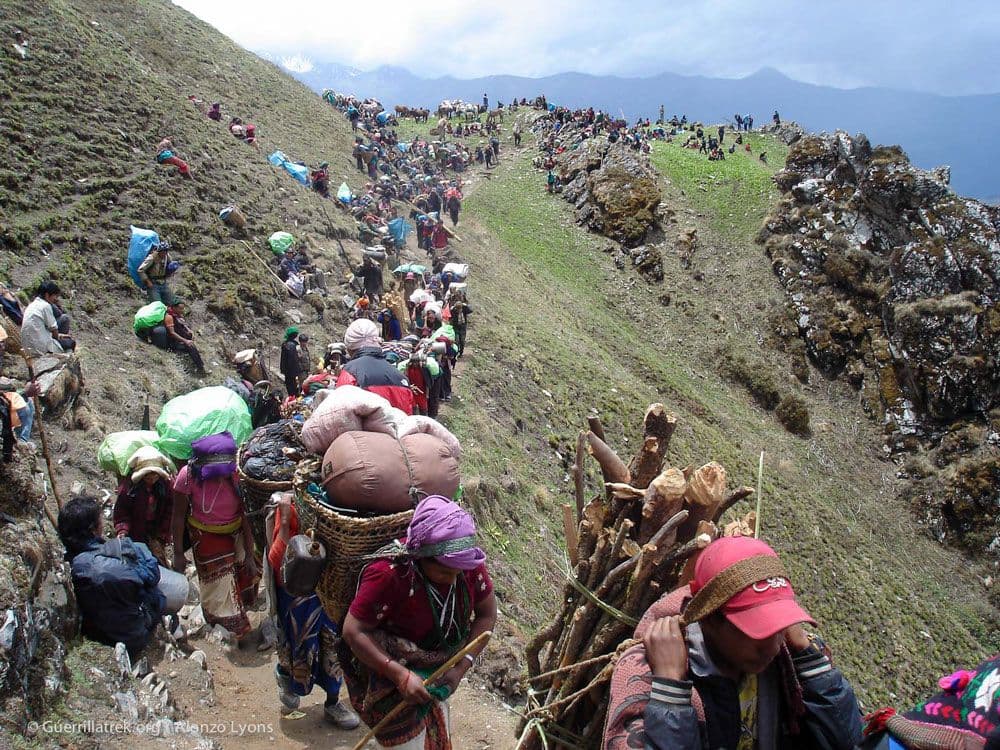
Jaljala Trek newly opened trekking in Rolpa district is very untouched by tourists. You should consider this trek when it is still fresh and remote trail. The best time is in spring and Autumn – the landscape is magical with colorful wild blossoms, meadows. Enjoy beautiful waterfalls and hills covered with rhododendrons. The route explores wildlife such as leopard, musk dear, wild boar. As we reach the villages, you get insights of the unique local culture, their lifestyle and diverse ethnicity. Jaljala is also one of the famous pilgrimage destinations in Mid-Western region of Nepal. And the best month is during the full moon of April, May or June. Very famous temples of this region, also known as than in local are worship by Hindu pilgrimages. The best part of the trek is the breathtaking views of Mt. Sisne, Mt. Putha, Mt. Dhaulagiri, Mt. Annapurna and other mountains.
Similarly, local people worship in “Than” (local temples) in major festivals during the full moon of April, May or June. Being highly populated by “Magar” community people, you can get a great chance to explore their cultures, traditions, and daily ways of living.
Our trip starts from Kathmandu to Sulichaur by taking a long drive. We take another drive to Fulibang and pace toward Kotalbara in foot. This is our first & warm up hike. We pass rivers, a waterfall and enjoy views of hills and settlements before reaching Kotalbare. We trek to Commune Village of Ajambari. This village is very special and you can hear story of People’s war. From here, we trek to Thabang—this village is the one where the People’s War originated, and you can hear their experience and story of ex-combatants in the war. We stay in Thabang for a whole day and explore the lifestyle. Moreover, one of the most popular things in Thabang is Bhumya Puja which means worship Land.
Similarly, people come here every mid-June and celebrate for five days. You can watch amazing marathon – Selsine here in Thabang. We trek to Jaljala and explore the caves and amazing views of mountains before heading to Dharampani. After reaching Dharampani, we move to Majhibang where you can explore more modernized village and then we head to Sulichaur to take bus to Kathmandu.
What’s included
A clear breakdown of what your trip price covers.
Included
- Airport pick up and departure and all ground transportation during trips.
- Hotel in Kathmandu two or three star category in twin sharing bed with breakfast basis
- Kathmandu sightseeing with city tour guide
- Accommodation in lodge and full board meals during the trekking
- Govt. trained guide and necessary no.of porters with their insurance, salary and meals
- All fees for TIMS card and Trekking Permit
- Domestic Flight according to Itinerary
- Sleeping bag, Down jacket & necessary equipment's during the trek
- One cultural show and dinner program
Not included
- International Flight ticket & your personal expenses
- Major meals in cities cold & alcoholic drinks
- Extra shower, battery re-charge, laundry charge etc.
- Tips to guide and porter and your insurance
Availability
Pick a departure date and we’ll fill in the rest of your 13-day trip automatically.
Select a date to enquire
Choose any available start date on the calendar.
Dates are subject to availability. Please contact us to confirm your preferred dates.
Itinerary
13 days, planned step by step. Tap a day to see the details.
You are welcome to the Land of Mountains! Our airport representative picks you up from the airport terminal and transfers you directly to the designated hotel. Later in the evening, you can unpack your belongings. A small meeting is usually held to welcome you as well as meet your guide and other staffs.
After all you are in Kathmandu and missing all the heritage sites is not suitable. So, you take guided tour of the historic sites in Kathmandu. Some includes: Bouddhanath, Swayambhunath, Pashupatinath, Patan, etc. Most of the time, you visit around 5 sites maximum. Later in the evening, we check every equipments and prepare for the upcoming trip.
We take a long drive to Sulichaur because road transportation is the only route to reach Rolpa or you can opt-out for Helicopter. The drive itself is special with scenery and hills. Sulichaur – is a commercial hub of Rolpa district and lies near the confluence of Lungri Khola and Fagam Khola. Meals included: Breakfast, lunch and dinner and finally an overnight stay in trekking lodge.
We take breakfast at Sulichaur and take drive to Fulibang through the graveled road. We pass Sunchahari Fall 91450) – it translates to Gold and stream. The locals believe that gold used to flow in this fall in the past. We reach Pobang after a while and have lunch there. Short drive from here takes us to Fulibang. Our official trek starts from here. We take smooth walk up to Sirkyang – you can see amazing views of hills, rivers and settlements. After half and a hour, we reach Kotalbara. Meals included: Breakfast, lunch and dinner and finally an overnight stay in trekking lodge.
We pass through plain trail till Posbang River and from here on, we take uphill route. First we cross a suspension bridge and after four hours of walk, we reach Posbang and take lunch. We pass through Dilbhanjyang (2576m) and reach Sandho River. The trail from here I quite new, so we navigate around the river and reach Ajambari Commune for overnight. Meals included: Breakfast, lunch and dinner and finally an overnight stay in trekking lodge.
We spend our early day by talking with ex-combatants and listen to their experience during people’s war. We take lunch and walk toward Thabang. The hike is short and we are warmly greeted with enchanting music and cultural dance in the Magar community. The village accommodates nice teahouses and communes. Later in the evening, we enjoy cultural dance of the Magar community. Meals included: Breakfast, lunch and dinner and finally an overnight stay in trekking lodge.
Thabang is widely known as headquarter of People’s War and is reported that the People’s War was originated from here. We visit Bhumya Puja (festival) – one of the attractions in this village. This festival is celebrated for five days just before the start of monsoon (mid June). People enjoy the festive by worshipping land and they sacrifice sheep/pig. Sport is also held; mainly Selsine marathon – a sport where a guy picks up a girl and run toward the river. Next option is to visit the nearby Dhakpa Hill – this attraction awards us with view of endangered Red Panda if you are lucky and also get amazing views of mountain peaks. Meals included: Breakfast, lunch and dinner and finally an overnight stay in trekking lodge.
We trek to amazing destination – Jaljala (Our trek name). Jaljala houses great nature, religion and is influenced by politics of Rolpa district. Jaljala is a wetland and water is available throughout the year. We can view amazing scenery of Sisne Himal, Dhaulagiri and many other Himalayas. You can go to Bhama Cave also. Jaljala is also famous as pilgrimage site for people of mid-west. And people from various parts come here to the four temples to worship. Meals included: Breakfast, lunch and dinner and finally an overnight stay in trekking lodge.
We take breakfast and begin our trek uphill. We climb to the highest point of the trek and you will be amazed with views of amazing mountains. There is no settlement at this point and therefore, we take lunch by ourselves. We take downhill trail from Dharampani to Majhibang. This is also the most challenging part of the trek and we reach Nabang (3193) to see the first human settlement. Meals included: Breakfast, lunch and dinner and finally an overnight stay in trekking lodge.
Majhibang is the most modernized amongst all the villages you have visited so far. The houses here are clean, sanitized and well furnished. The village sits between two rivers, hence the name; Majhibang (middle ground). The village is also affected by the war and you can hear many stories. We can visit the micro hydro project and in the evening, we enjoy the cultural dance of Magar people. Meals included: Breakfast, lunch and dinner and finally an overnight stay in trekking lodge.
We take walk to the sister village of Majhibang – Jailbang. The village is also settled by Magar community and you can once again enjoy the amazing Magar cultural dance. This is our last trek of the trip. So, make most out of it. From Jailbang, we take drive to Sulichaur. Meals included: Breakfast, lunch and dinner and finally an overnight stay in trekking lodge.
After breakfast, we take drive to Kathmandu. The drive is scenic and as we drive nearer to the city life. We surely miss those ancient feeling and miss the mountains – the most. You can take rest in Kathmandu or you can shop around. In the evening, you have to join a small dinner program as a complementary from our side. Meals included: Breakfast, and finally an overnight stay in hotel. Attend the evening dinner and cultural program provided by the company.
The trip in the Himalayas comes to an end. You can organize all your belongings to be ready to take off to your home country or join another adventure. You are dropped off to the airport just 3 hours before your scheduled flight. It makes sure you do not miss your flight. Have a safe journey home.
Frequently asked questions
Quick answers about this trip. Still unsure? Our team is happy to help.
Nepal, as a tourist destination is good for all seasons, however, the best seasons for trekking to Kanchenjunga region are Spring (March – May) and Autumn (mid Sept. – mid Dec. ). Trekking in autumn season is noted for clear weather and excellent views of silvery mountains against blue sky. It gets colder towards the end of December. This trek can be done in any month except January and February.
Nepal, as a tourist destination is good for all seasons, however, the best seasons for trekking to Kanchenjunga region are Spring (March – May) and Autumn (mid Sept. – mid Dec. ). Trekking in autumn season is noted for clear weather and excellent views of silvery mountains against blue sky. It gets colder towards the end of December. This trek can be done in any month except January and February.
Nepal, as a tourist destination is good for all seasons, however, the best seasons for trekking to Kanchenjunga region are Spring (March – May) and Autumn (mid Sept. – mid Dec. ). Trekking in autumn season is noted for clear weather and excellent views of silvery mountains against blue sky. It gets colder towards the end of December. This trek can be done in any month except January and February.
Nepal, as a tourist destination is good for all seasons, however, the best seasons for trekking to Kanchenjunga region are Spring (March – May) and Autumn (mid Sept. – mid Dec. ). Trekking in autumn season is noted for clear weather and excellent views of silvery mountains against blue sky. It gets colder towards the end of December. This trek can be done in any month except January and February.
Nepal, as a tourist destination is good for all seasons, however, the best seasons for trekking to Kanchenjunga region are Spring (March – May) and Autumn (mid Sept. – mid Dec. ). Trekking in autumn season is noted for clear weather and excellent views of silvery mountains against blue sky. It gets colder towards the end of December. This trek can be done in any month except January and February.
Nepal, as a tourist destination is good for all seasons, however, the best seasons for trekking to Kanchenjunga region are Spring (March – May) and Autumn (mid Sept. – mid Dec. ). Trekking in autumn season is noted for clear weather and excellent views of silvery mountains against blue sky. It gets colder towards the end of December. This trek can be done in any month except January and February.
Nepal, as a tourist destination is good for all seasons, however, the best seasons for trekking to Kanchenjunga region are Spring (March – May) and Autumn (mid Sept. – mid Dec. ). Trekking in autumn season is noted for clear weather and excellent views of silvery mountains against blue sky. It gets colder towards the end of December. This trek can be done in any month except January and February.
Nepal, as a tourist destination is good for all seasons, however, the best seasons for trekking to Kanchenjunga region are Spring (March – May) and Autumn (mid Sept. – mid Dec. ). Trekking in autumn season is noted for clear weather and excellent views of silvery mountains against blue sky. It gets colder towards the end of December. This trek can be done in any month except January and February.
Nepal, as a tourist destination is good for all seasons, however, the best seasons for trekking to Kanchenjunga region are Spring (March – May) and Autumn (mid Sept. – mid Dec. ). Trekking in autumn season is noted for clear weather and excellent views of silvery mountains against blue sky. It gets colder towards the end of December. This trek can be done in any month except January and February.
Nepal, as a tourist destination is good for all seasons, however, the best seasons for trekking to Kanchenjunga region are Spring (March – May) and Autumn (mid Sept. – mid Dec. ). Trekking in autumn season is noted for clear weather and excellent views of silvery mountains against blue sky. It gets colder towards the end of December. This trek can be done in any month except January and February.
Nepal, as a tourist destination is good for all seasons, however, the best seasons for trekking to Kanchenjunga region are Spring (March – May) and Autumn (mid Sept. – mid Dec. ). Trekking in autumn season is noted for clear weather and excellent views of silvery mountains against blue sky. It gets colder towards the end of December. This trek can be done in any month except January and February.
Leave a review
Travelled with us? Share your experience. Your email address will not be published.
Planning a trip to Nepal?
Tell us what you have in mind and we’ll tailor a trip around you.