Kailash Mansarovar Yatra via Lhasa flight
Trip at a glance
- Duration
- 15 days
- Difficulty
- Moderate
- Best season
- May to October
- Accommodation
- Hotel and tea house
- Group size
- 1 – 40 people
- Tour type
- Group Tour
- Meals included
- ( B,L,D ) Breakfast, Lunch, Dinner full board base
- Max altitude
- 5,660 m
- Transportation
- Deluxe bus, jeep
Overview
Kailash Mansarovar Yatra via Lhasa flight ✈15 days
An Overview
The Kailash Mansarovar Yatra via Lhasa Flight is one of the world's premium and spiritually scenic journeys. The 15 days (British-English) trip combines devotion, culture, adventure, and exploration of Tibetan culture in the fabulous Himalayas.
The splendid journey usually begins with a flight to Lhasa. Prior to this, the travelers will explore the heritage sites and scenic landmarks in Kathmandu. Lhasa, the capital of Tibet, is also located at an elevation of 3,650 meters.
Flying to Lhasa allows pilgrims to acclimatize (British English) before initiating the steps to higher altitudes, making for a safer and more enjoyable trip compared to rapid overland routes.
While staying at Lhasa, we will explore the sacred and traditional landmarks—Jokhang Palace and Potala Temple. These pilgrimages are the holiest and most spiritual centre of the Tibetan Buddhists.
After exploration and acclimatization at Lhasa, we will reach the majestic and sacred Mount Kailash (6,638 m). It is one of the most spiritual and significant places revered by Hindu, Buddhist, Jain and Bon followers. It has several names – Kailash Parvat, Gang Rinpoche, Kailasa, or Gang Tise.
The place is considered the cosmic centre of the Universe. It is also the holy land of Lord Shiva (destroyer) – one of the deities of the Trinity, God, Brahma and Vishnu.
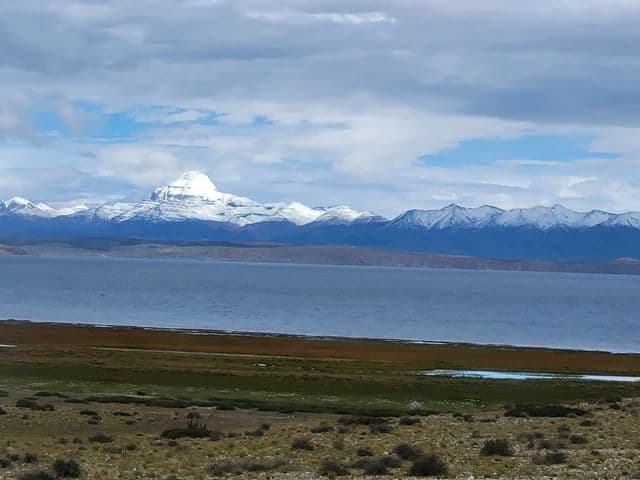
The sacred journey also takes pilgrims to the Lake Mansarovar, a serene lake located near Mount Kailash. There is a belief that bathing in the holy lake washes away sins and cleanses the soul.
One of the main highlights of the journey is Kailash Parikrama (Kora) – a holy circumambulation that usually takes three days to complete. The Parikrama takes the trekker through Dolma La Pass (5,630 m) – the highest point of the trek. From the top of this place, you will get the breathtaking views of the Himalayas and the surroundings.
The Kailash Mansarovar Trip via Lhasa Flight is not just a physical journey or trek. It is a life-changing opportunity for the pilgrims and trekkers who quest for deep faith, trust, belief and endurance between God and worshipper.
Highlights & Significance
- A pilgrimage site significant for Hindu, Buddhist, Jain, and Bon followers.
- Enjoy a scenic flight over the Himalayan range to Lhasa.
- Spiritually connects with the Hindu and Buddhist sites in Kathmandu—Pashupatinath Temple, Swayambhunath, and Boudhanath.
- Explore the sacred and traditional landmarks of Lhasa - Jokhang Palace and Potala Temple.
- Stroll through the Barkhor Market – a vibrant market in Lhasa.
- Take a holy bath and perform rituals/puja at the sacred Mansarovar Lake.
- Learn the customs, traditions and cultures of Tibetan Buddhists.
- A 3-day and 52 kilometres of the spiritual Mount Kailash Parikrama
- Cross the thrilling and rewarding Dolma La Pass (5,630 m).
- A lifetime journey beyond Physical Travel.
The Expectations of the Trip: Your 15 Days Kailash Yatra
The Kailash Mansarova Yatra is a journey that’s beyond the imagination of the visitors. The trip is not only limited to sightseeing or exploring—it is a pilgrimage tour that touches the souls and hearts of pilgrims. The Lhasa flight route makes this pious trip more comfortable, allowing visitors to acclimate and have cultural encounters.
The 15-day Mount Kailash Yatra via Lhasa doesn’t demand a high level of fitness or endurance to complete the trip. The pilgrims will expect a spiritual journey and witness the majestic peak Mount Kailash—the holy land of Lord Shiva (Destroyer) – one of the three deities of the Trinity. Aside from this, the visitors will also explore the Potala Palace and Jokhang Temple in Lhasa.
All through the journey, the devotees will also get chances to take a dip in the holy water of Lake Mansarovar. It is believed to cleanse sins and purify the soul.
The visitors will be glad after crossing the Dolma La Pass (5,630 m) – the highest point of the trek.
The visitors will have gradual acclimatization, a moderate trip, simple and delicious foods, and a sense of comfortable accommodation.
During the journey, the visitors will have limited communication and networks near Mount Kailash and Lake Mansarovar. The weather can also be unpredictable and can change at any time. It is advisable to carry warm and comfortable clothes.
The trip is not just a travel or sightseeing – it balances your mind, soul and transforms the pilgrims to the significance of spirituality.
Trip Difficulty: Kailash Mansarovar Yatra via Lhasa Flight
The Kailash Mansarovar tour via Lhasa is moderate, but much easier than the overland routes. The trip doesn’t require technical climbing or long days of walking. However, understanding the difficulty level is significant before starting the journey.
The sacred trip takes you above 5,000 meters to Dolma La Pass (5,630 m) – the highest point of the trek. At the higher elevations, altitude sickness is quite common. The pilgrims may have symptoms of dizziness, nausea, vomiting or shortness of breath.
The most demanding part of the trek is Kailash Parikrama. The pilgrims have to walk 13-14 kilometers per day. It demands good endurance, stamina, and careful footing.
The temperature may drop below freezing with certain changes in the weather. Strong winds, sudden rain and snowfall may create difficulty during traveling.
A moderate level of fitness is recommended for the pilgrims to accomplish the trek. Daily exercises, running, and cardiovascular practices will prepare the traveler’s body for the journey.
Plan & Preparations of the Kailash trip
You need a thoughtful plan & preparations for the safe and comfortable Kailash Mansarovar Trip via Lhasa. The Lhasa flight route is more convenient than the Kerung overland route. It reduces the physical strains for the travelers, but the pilgrims still must prepare for the high altitude conditions, uncertain weather and limited facilities in the remote regions.
The first and significant step is choosing the right season – May to Sep; being the most appropriate month, skies are clear, ideal weather conditions and perfect visibility of Mount Kailash. The travelers should avoid the winter months for the journey.
Mount Kailash is a restricted region. The pilgrims are advised to book in advance for flights, transportation, and hotels.
You don’t need to be a professional trekker; physical fitness plays a crucial role during the trip. It is better to engages daily exercises, swimming, and cardiovascular exercises before starting the trip.
Since the trek reaches above 5,500 meters, it is significant to stay hydrated and avoid alcohol and cigarettes.
Pack the essential things - warm clothes, a down jacket, trekking shoes, sunscreen, sunglasses, reusable water bottles, walking sticks and first-aid kits.-
Proper documentation is an important aspect of the journey. Your passport must have a validity of a minimum of six months, along with the necessary travel permits. Travel insurance is mandatory, not optional.
ATM facilities and money exchange counters are limited; it is better to have enough cash for personal expenses, shopping, and food.
Why Altitude Sickness Happens: Preventions
Altitude sickness is one of the major concerns during the Mansarovar Kailash Yatra. The sacred journey via Lhasa takes you above 5,500 meters. When you are in high altitude, air pressure drops and less oxygen is available for the body. It increases the chances of altitude-related problems—acute mountain sickness and high-altitude cerebral/pulmonary edema. Understanding altitude sickness and following preventive measures is helpful for a safe and flawless journey.
In the early stages of altitude sickness, visitors may experience common problems and symptoms such as headache, nausea, vomiting, dizziness, and shortness of breath. If these warnings are avoided, then you may suffer from severe health problems.
The Lhasa flight route is designed for the convenience and comfort of the visitors. It allows the pilgrims to acclimatize their bodies before moving their step towards the higher altitudes.
Here are some preventive measures that you should follow before and during the journey.
Gradual Acclimatization – Prepare your body and acclimatize 1-2 days at Lhasa before heading to higher altitudes
Stay Hydrated – Drink 4-5 liters of water every day. Avoid smoking and alcohol during the journey.
Eat healthy foods - Take healthy, light & digestible meals. Avoid spicy and fried foods.
Avoid rushing – Start with a slow pace and avoid rushing during the 3-day Kailash Parikrama.
Medication – Take Diamox (acetazolamide) under medical supervision to prevent altitude sickness.
Is the Kailash Mansarovar Yatra via Lhasa possible for the beginners?
The Kailash Mansarovar Yatra via Lhasa is often regarded as the safest and most suitable route for first-time visitors. While the trip is spiritually profound and also demands physical resilience, it is perfectly designed to allow acclimatization for the visitors.
The pilgrims first arrive at Lhasa via Kathmandu by flight. At Lhasa, they will get sufficient time to rest and prepare their body before moving to the higher altitudes. This acclimatization helps the pilgrim's body to adapt to the higher altitudes and also reduces the chances of altitude sickness.
The beginner's trip success also depends on the physical preparations like swimming, jogging and light cardiovascular exercises prior to the trip. These activities boost the stamina and energy while you are on the journey.
First-time visitors must understand it is not a casual tour. The 3 days Kailash Parikrama demands 6-8 hours of walking every day, including rugged terrain and uphill and downhill trek.
It is also important to hire a professional guide and follow their instructions. Proper hydration, light meals and a positive mindset play a crucial role in the journey.
Useful information about the Trip Kailash Mnasarovar tour-
Ideal Seasons for the Trip
Choosing the right season is extremely significant for the Kailash Mansarovar Trip via the Lhasa flight. Sometimes, due to the harsh weather and terrible rugged conditions, your flawless journey may be worsened. The Lhasa route offers you rest and acclimatization, but selecting the ideal time is crucial.
Spring (May to Early June)
- One of the most favourable times to undertake the Mount Kailash Yatra via Lhasa
- Start of the Pilgrimage season
- Clear skies, Stable weather & moderate temperatures.
- Less crowded compared to peak season
- Ideal for the peaceful worshipper.
Summer (Jun-Aug)
- Moderate weather conditions
- Better accessibility to the Tibet Route
- Little rainfall, but with occasional cloud cover
- Astonishing journey with dramatic skies.
Early autumn (September-Early October)
- Excellent time to explore Mount Kailash
- Stable weather compared to other seasons
- Comfortable trekking trails
- Spectacular view of Mount Kailash
- Less crowded compared to the summer season.
Winter Season (October-April)—not recommended.
- Extremely harsh and avoidable weather
- Heavy snowfall
- Temperature below -15 degrees Celsius.
- Limited travel permits
Remember: Even in the summer season, the temperatures can drop significantly at the higher altitudes. Always carry warm clothes, as the weather can change suddenly.
Essential Accommodations & Amenities: What to Expect
The tour to Mount Kailash Mansarovar is one of the most sacred and rewarding journeys for the pilgrims. The Lhasa flight route offers more comfortable accommodations and amenities compared to the Kerung Overland route.
Accommodations in Kathmandu
For the Kailash Mansarovar Trip via the Lhasa route, the pilgrims will stay in comfortable 3-4 star hotels near the Thamel or Pashupatinath areas. The travelers will enjoy the amenities of deluxe suite rooms, room service, on-site restaurant, 24-hour reception service, emergency medical assistance and more.
Accommodations in Lhasa (a crucial stopover of the journey)
After arriving in Lhasa, the spiritual capital of Tibet, you will enjoy world-class accommodations along with modern amenities and facilities. The pilgrims will stay in luxurious hotels or guesthouses that offer comfortable deluxe rooms, hot showers, heating systems, 24-hour Wi-Fi and the like.
Accommodations on the way to Mount Kailash
Accommodations which you had enjoyed in Kathmandu and Lhasa became simple and basic once you left these places behind. There will be a simple guest house and lodges along the routes. The rooms are shared or dormitory-style. The beds are simple, and blankets are provided with limited heating facilities in the rooms. These accommodations are basically for rest and recovery for a longer pilgrimage journey.
Temporary Camps during the Parikrama
During the 3 days Kailash Parikrama, accommodations will be arranged in dormitory-style rooms, simple lodges or temporary tented camps. These accommodations are enough for rest and meals.
Availability of meals on the sacred Kailash route
You will get delectable, healthy and nutritious meals during the Lake Mansarovar and Mount Kailash journey via Lhasa. While it is not a luxury tour, the Lhasa route offers better meals compared to the Kerung overland routes.
Meals in Kathmandu
Your sacred journey begins from Kathmandu. While staying at the capital city of Nepal, you will enjoy a diverse range of foods, including Indian, Nepali Cuisine, Mithila Thali, Continental and more.
Many pilgrims prefer simple meals such as Dal, Bhat, Tarkari, Roti, Noodles, and Soup during the trip. You will also get several dining options near the Pashupatinath Temple.
Lhasa & Tibet
After reaching Lhasa, you will enjoy delicious and hygienic food. The meals are usually served in the organized dining setups. Meals like rice, dal, soups (vegetable, mushroom, and tomato), noodles, and Tibetan foods are widely available.
As you ascend to Shigatse and Saga, the meals will be simple and limited menu options compared to Kathmandu and Lhasa. Tibetan breads and hot soups are available in the higher altitudes.
Lake Mansarovar & Darchen
At the sacred bank of Lake Mansarovar, the food will be basic and simple due to the remote locations. The pilgrims will have the options of Khichdi, dal, rice, veggies, and soup.
In Darchen, the travelers will enjoy the vegetarian foods and hot soups. The meals will be nutritious, hygienic and healthy.
During Mount Kailash Paraikrama
The 3 days Mount Kailash Parikrama is physically demanding and challenging. The pilgrims need healthy and nutritious meals to conclude their sacred journey.
During circumambulation, the food will be limited and simple, which includes: rice, vegetable soups, boiled vegetables, & noodles.
Travel Insurance of Kailash Yatra: What you need to know
Undertaking the Kailash Mansarovar Yatra via the Lhasa flight is a physically demanding journey that goes above 5,000 meters. Travel Insurance is not just a recommendation – it is extremely essential for safety and peace of mind.
What does Travel Insurance cover?
- It covers all hospital costs – doctor fees, emergency charges, and medical bills.
- Crucial for the high-altitude trips where altitude sickness is quite common.
- Reimbursement: if your trip is cancelled due to natural disasters, political unrest, or unforeseen circumstances.
- It covers baggage lost, theft or damage during the tour.
- It also covers the airlifting and managing the cost of evacuation in any emergency.
- 24/7 emergency assistance services for the insurance holder.
Why is it important for Kailash Tour?
- Rapid changes in altitude can cause acute mountain sickness.
- Hospital and health facilities are limited along the route of Mount Kailash and Tibet.
- It manages all travel uncertainties.
- Complete financial protection: Avoid huge expenses on a long week tour.
- Complete peace of mind while you're travelling and away from home.
Travel Permits and Documents
For the Kailash Mansarovar Yatra via the Lhasa route, the visitors need specific travel permits and proper documentation, as Tibet is an autonomous and restricted region of China.
A valid passport is required. It should have at least 6 months of validity. The visitors also require a Chinese visa. It can be easily obtained in Chinese or through authorized trekking agencies.
Additionally, the pilgrims also need Tibetan Travel Permits that allow entry into the capital of Tibet, Lhasa and other areas.
The pilgrims also require Aliens Travel Permit to visit the prohibited areas like Lake Mansarovar and Mount Kailash. All these documents are properly arranged by the authorized travel agencies before and during the tour. A medical fitness certificate is strongly recommended for the pilgrims. Travel Insurance is highly recommended as we trek above 5,000 meters that covers all your health aspects like medical emergencies and helicopter evacuations.
The documents, such as a passport copy, photographs, and personal information, should be submitted early to avoid delays in the journey.
Choosing Lhasa Flight route for the Kailash Mansarovar Yatra
Kailash Mansarovar Yatra is a once-in-a-lifetime journey. Among the several routes, the Lhasa route is one of the easiest, picturesque, adventurous, and properly planned trips for the pilgrims.
Proper acclimatization.
The sacred trip begins with a scenic flight from Kathmandu (1325 m) to Lhasa (3,650 m). Spending a few days in Lhasa allows pilgrims to adjust to the altitude before moving to the higher altitudes. It may reduce the chances of altitude sickness, which is quite common during the Mount Kailash Tour.
Comfortable and Convenient Journey
Compared to the overland routes, the Lhasa route offers a more comfortable journey. The pilgrims find better hotel facilities in major cities of Tibet along with the structured travel arrangements.
Cultural Exploration
Lhasa is not just a stopover for travellers. It takes you to the heart of Tibet. The pilgrims will have great opportunities to learn the customs and traditions of Lhasa while exploring the Jokhang Temple, Potala Palace and other sacred monasteries.
Scenic Overland Journey
After reaching Lhasa, the overland journey continues offering the breathtaking views of the Tibetan plateau, snow-capped Himalayan regions, and elegant remote regions before reaching Lake Mansarovar and Mount Kailash.
A Balanced Spiritual Experience
The Lhasa route perfectly combines the comfort and safety of travellers, spiritual devotion, cultural enrichment, belief and devotion.
Kailash Mansarovar Yatra Routes Comparison
Choosing the right routes for the Mount Kailash Mansarovar Yatra is extremely significant for the travelers. Each route to the Mount Kailash destinations offers a unique adventure, scenic journey, and cultural experiences. By understanding the differences, the pilgrims can choose their own route and make their trip enjoyable.
Lhasa Flight Route (15 days)
The Lhasa flight route begins with a scenic flight to Lhasa, a mystical land of Tibet. It has an altitude of 3,650 meters and is a promising destination for acclimatization before ascending to the higher altitudes.
Major Highlights of the Kaialsh tour via Lhasa Route
- Altitude adjustment minimizes the chances of altitude sickness.
- Comfortable accommodations and meals in the major cities.
- Cultural exploration (Jokhang Temple and Potala Palace)
- Ideal route for first-time travelers and senior citizens.
- The overland journey to Lhasa and Mountain Kailash offers breathtaking views of the Tibetan plateau and snow-capped Himalayan peaks.
Kerung Overland Route (via Nepal)
The adventurous Kerung route starts with a drive from the Nepal-Tibet border. It is one of the most popular routes for Nepalese and Indian pilgrims.
Highlights of the Kerung Route
- Budget-friendly and less expensive compared to the Lhasa Route
- Commonly operated routes
- Suitable for a large group of people
Considerations
- Increase the chances of altitude sickness: good physical fitness is necessary.
- Long hours of traveling not recommended for elderly citizens.
- Limited opportunities for sightseeing compared to the Lhasa route.
Helicopter Route via Nepalgunj & Simikot
The helicopter route via Nepalgunj & Simikot is another alternative route for the Mount Kailash Mansarovar tour. This route offers the aerial views of the Himalaya, glaciers, and Tibetan valleys.
Highlights
- Reduces physical strain
- Offering bird-eye-catching views of the snow-capped Himalaya and valleys.
- Comfortable for first-time visitors.
Considerations
- Expensive compared to the Lhasa and Kerung routes.
- Advance booking is necessary due to the limited seating capacity.
- The flight is delayed due to weather interruptions.
Exploring Tibetan Culture before the Kailash Mansarovar Yatra
Before embarking on the journey towards Mount Kailash and Lake Mansarovar, spending a few days in Tibet, especially in Lhasa, offers cultural enrichment and spiritual experiences to the pilgrims. This is not only about the acclimatization; it is all about immersing and indulging in the traditional and serene atmosphere of Tibet.
The Spiritual Heart of Tibet
Potala Palace
Lhasa is often called the “City of Temples & Monasteries”. The impeccable Potala Palace was, once, the winter residence of the spiritual leader “Dalai Lama”. It is a monastery, also listed in the UNESCO World Heritage sites. It serves as a public museum and a worship centre for the Tibetan Buddhist.
Jokhang Temple
The Jokhang Temple is another mystical place to explore in Tibet. It is the holiest gem enlisted by UNESCO. It offers glimpses of the Tibetan Buddhist culture. The worshippers from across the world come here for chanting and prayers.
A fruitful Beginning
Exploring Tibetan culture before the Kailash Mansarovar Tour is a holistic approach and spiritual immersion for the pilgrims. By learning and knowing about the Tibetan culture brings deeper awareness of humility and devotion.
Preparing the body, mind & soul
Spending a few days in a pious place like Lhasa before heading towards Mount Kailash prepared the body, mind, and soul of the pilgrims. The serene atmosphere and calmness of monasteries are a spiritual way to begin the Mount Kailash Mansarovar journey.
Availability
Pick a departure date and we’ll fill in the rest of your 15-day trip automatically.
Select a date to enquire
Choose any available start date on the calendar.
Dates are subject to availability. Please contact us to confirm your preferred dates.
Itinerary
15 days, planned step by step. Tap a day to see the details.
Your sacred tour of Kailash Mansarovar Yatra via Lhasa flight begins after arriving in Kathmandu. Our company representative will pick you up and transfer you to the hotel.
After check-in and welcome refreshments, you may rest for a while. Meanwhile, in the late afternoon, there will be a Yatra briefing and preparation session by the team leader.
The evening is to unwind in the vibrant atmosphere of Thamel. While exploring Thamel, you may visit Bhagwan Bahal, Garden Dreams or purchase shawls, souvenirs, local jewelry, or paintings. Overnight stay and a delicious meal at the hotel.
Day 2 of the Kailash Mansarovar Trip begins with sightseeing in Kathmandu.
Our day trip will begin with a visit to Pashupatinath Temple – UNESCO site. The temple is dedicated to the goddess, Lord Shiva. The temple is spiritually connected with Mount Kailash and situated at the bank of the holy Bagmati River.
Next, we will head to Boudhanath Stupa – one of the largest spherical stupas in the world. The place is also the primary worshipping centre of Tibetan Buddhism.
After exploring Boudhanath, we will head to Swayambhunath, also named Swayambhu Mahachaitya. This site is equally important for Buddhist and Hindus. From the top of this site, you will get panoramic views of Kathmandu Valley.
Before the day ends, we will move to Kathmandu Durbar Square – the former kingdom of the Malla and Shah Kings. Hanuman Dhoka Durbar, Kumari Ghar, Kaal Bhairav, and Taleju Temple are the main highlights of this place.
Meanwhile, in the evening, we will rest and make preparations before the flight to Lhasa the next day.
Overnight stay in hotel
Included standard meals (Breakfast )
After taking breakfast, the pilgrims will board a flight to Lhasa from Tribhuvan Airport, International Terminals. It will take 1 hour and 15 minutes to reach Lhasa from Kathmandu.
After arriving in Lhasa, we will head to the hotel. The first day in Lhasa is to acclimatize, rest, and prepare for the upcoming trip.
Meanwhile, in the evening, you may explore the local market. Overnight stay in a hotel.
Overnight stay in hotel
Included standard meals (Breakfast, Lunch, and Dinner)
Day 4: Sightseeing at Lhasa & Acclimatization
Day 4 of the trip is to explore, rest and acclimatizing in Lhasa. We will visit the UNESCO-listed sites – Potala Palace and Jokhang Temple. The Potala Palace is the former winter residence of the Dalai Lama. The Jokhang Temple is one of the holiest sites in the nation. People from all around Tibet come here to seek blessings, chanting, and prayers.
After exploring these two sites, we will visit the ancient and traditional place of Lhasa called “Barkhor Market”. Here you can buy Tibetan handicrafts, souvenirs, and paintings for your family.
Aside from this, you may also visit other places such as Sera and Drepung Monastery.
In the evening, we will enjoy our favorite meal and be ready for the next day trip.
Overnight stay in hotel
Included standard meals (Breakfast, Lunch, and Dinner)
After taking breakfast in Lhasa, we will begin our scenic journey to Shigatse. It is the second-largest city of Tibet, situated at an altitude of 3,790 meters.
Along the drive, you will see the elegant places, winding rivers, breathtaking mountains, and diverse landscapes.
We are not in a hurry; along the way, stops are made for photographs, lunch and refreshments. Upon arrival in Shigatse, we will check into the hotel and take some rest. Meanwhile, in the evening, we will explore Tashilhunpo Monastery – one of the oldest pilgrimage centers in Tibet.
Our journey continues towards Saga after taking breakfast, a small city situated at the bank of the Brahmaputra River.
The elegant journey passes through dry, wide fields, hills, nomad settlements, and snow-capped mountains. The route also offers promising views of diverse landscapes and high-mountain passes. The pilgrims may also take a break and stop for photography and refreshments.
As the altitude increases, it is better to stay hydrated and have plenty of liquid during the trip.
The moment we arrive at Saga, we will take a rest and explore the surrounding monasteries and local markets in the evening.
Overnight stay in hotel
Included standard meals (Breakfast, Lunch, and Dinner)
Today is one of the most spiritual and rewarding days of our Kailash Mansarovar Yatra via Lhasa. After enjoying the morning breakfast, our journey begins.
Our drive continues towards the Lake Mansarovar from Saga. The 8-10 hrs of driving take the pilgrims into the deeper valleys of Tibet. If the weather is clear, we will also get the first glimpse of Mount Kailash.
Soon, we will reach Lake Mansarovar (4,600 m) - one of the world's highest freshwater lakes. We will have time to indulge ourselves in the serene atmosphere. We have a night's stay at a guest house.
Overnight stay in hotel
Included standard meals (Breakfast, Lunch, and Dinner)
Early in the morning, we will all gather around the pious Lake Mansarovar for rituals, puja, and parikrama before heading for the 3-day Mount Kailash Parikrama.
You may take a holy bath in the sacred water of Mansarovar. It is believed that bathing in the holy lake washes away sins and cleanses the soul.
After the spiritual and ritual activities at Mansarovar, we will drive to Darchen, a small town situated near Mount Kailash. It is also the starting point of the 3-day Kailash Parikrama (Kora).
Overnight stay in hotel
Included standard meals (Breakfast, Lunch, and Dinner)
Day 9 is the most significant and spiritual day of our entire Mount Kailash Mansarovar journey. Today, we will initiate our first step with our devotion, affection, and belief towards Lord Shiva.
We will take a short drive to Yamdwar before starting the Parikrama. Our circumambulation begins from the Dirapuk monastery. It covers a distance of 12- 13 kilometers approximately and takes around 6-7 hours to complete.
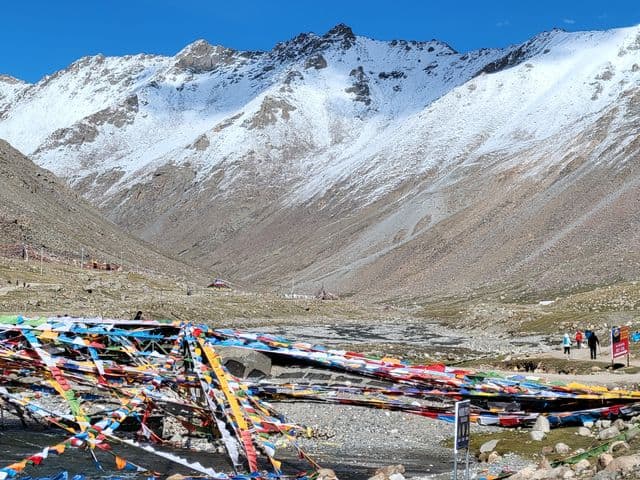
The path follows the Lha Chu Valley, offering the impeccable views of sky-touching mountains, diverse landscapes and prayer flags.
As you approach the Dirapuk monastery, you will be overjoyed and blessed by seeing the north face of Mount Kailash. Overnight stay at a guest house with limited facilities.
Overnight stay in hotel
Included standard meals (Breakfast, Lunch, and Dinner)
Day 10 is the most challenging, rewarding, and spiritual day of the Kailash Mansarovar Yatra via Lhasa. You will have to trek approximately 18-20 kilometers, which takes around 8-10 hours to complete.
After having a morning meal, we will ascend towards the Dolma La Pass (5,630 m) – the highest point of the trek.
Once reaching the top of the Dolma La Pass, you will be glad to see the north face of Mount Kailash and spectacular views of the Tibetan landscapes.
Just below the Dolma La Pass, you will witness the Gauri Kund – the pious lake is associated with the goddess Parvati (wife) of Lord Shiva. The Gauari Kund is adored for its natural hot springs; it is also the base camp for the Kedarnath Temple, one of the Jyotirlingas of Lord Shiva.
After crossing the Dolma La pass, we will descend towards the Zuthulpuk. Here, we will stay in a guesthouse with minimal facilities.
Overnight stay in hotel
Included standard meals (Breakfast, Lunch, and Dinner)
The third day, Parikrama will be quite easier than the previous days. After 3-4 hours of trekking, the journey concludes near Darchen. The remaining day is to relax and rest our bodies. Overnight stay in Darchen.
Overnight stay in hotel
Included standard meals (Breakfast, Lunch, and Dinner)
After taking breakfast in Darchen, the devotees will start a journey towards Saga. The drive will take approximately 7 to 8 hours, depending on the stops and road conditions.
The journey passes through Lake Mansarovar, the Brahmaputra River, and the Barga Plateau. Upon reaching Saga, we will stay in a comfortable guesthouse.
Overnight stay in hotel
Included standard meals (Breakfast, Lunch, and Dinner)
After taking a delectable breakfast in Saga, we will drive back to the Tibetan capital, Lhasa. During the journey, the short breaks are taken for refreshments, rest, and photography. The descents towards Lhasa allow our body to adjust to the lower altitudes.
Upon arrival in Lhasa, we will stay in a luxurious hotel. The evening hours are for relaxing, shopping, and enjoying your favorite meal.
Overnight stay in hotel
Included standard meals (Breakfast, Lunch, and Dinner)
Today, our 15-day sacred long journey comes to an end. After 1 hour and 15 minutes of flight, we will reach Kathmandu.
Upon arriving in Kathmandu, our company representative will escort you to the hotel. You may also enjoy shopping at Thamel or Ason in Kathmandu.
At the end of the day, the guest will receive a farewell dinner from us. You will enjoy authentic Nepali flavors, which include Fresh Lemon Soda (welcome drink), Starters (chicken/veg/french fries), main courses (Rice, Lentils, Seasonal Vegetables, Chicken/Mutton/Fish/ curries), Gundruk Jhol, Paneer Butter Masala, Nepali Aachar, and Desserts (Rice Pudding, or Ice Cream).
Overnight stay in hotel
Included standard meals (Breakfast, and Dinner)
After taking a morning breakfast, you may also enjoy last-minute shopping at Thamel, depending on your flight schedule. Our team representative will drive you to the Tribhuvan International Airport for your onward flight. Have a safe journey ahead.
Included standard meals (Breakfast)
Frequently asked questions
Quick answers about this trip. Still unsure? Our team is happy to help.
The standard itinerary is 15 days – Kathmandu sightseeing, flight to Lhasa, Lake Mansarovar visit, and 3 days Parikrama of Mount Kailash.
The routes offer perfect altitude acclimatization, comfortable travel conditions, and a chance to explore Tibetan landscapes and monuments.
During the sacred trip, you will explore Jokhang Palace and Potala Temple and other monasteries too after onward travel to Mansarovar, Tibet, via central Tibet.
Yes, the pilgrims can perform Puja, Rituals and take a holy bath at Lake Mansarovar.
Compared to other trekking regions, there will be less medical support; travel insurance is highly recommended for the trekkers.
Yes, for the betterment of passengers, we carry oxygen during the journey in case of an emergency.
The Chinese currency Yuan, is widely used in Tibet. It is recommended to carry sufficient cash, as ATM facilities and money exchange are limited in the remote regions.
Yes, nutritious, freshly prepared vegetarian meals will be arranged during the Kailash Mansarovar Yatra. Our cook and kitchen team will prepare daily meals during the Kailash tour.
The group sizes to Mt. Kailash usually range from 15 to 25 travelers. In the peak season, it will have 25-35 participants.
No, actually, but prior treks are definitely helpful for the Kailash tour. While trekking, trekkers must have a reasonable level of fitness; it will be better.
Leave a review
Travelled with us? Share your experience. Your email address will not be published.
Planning a trip to Nepal?
Tell us what you have in mind and we’ll tailor a trip around you.