Thorong Peak Climbing / Expedition
Trip at a glance
- Duration
- 18 days
- Difficulty
- Strenuous
- Best season
- September- December and March - May
- Accommodation
- Hotel, Lodge Trek
- Group size
- 1 – 18 people
- Tour type
- Private Tour
- Meals included
- Breakfast, Lunch, Dinner included
- Max altitude
- 6,144 m
- Transportation
- Flight, Bus, Tourist & private vehicle
Overview
Thorong Peak Climbing / Expedition
Thorang Peak Climbing provides you the best views of the Dhaulagiri range, Annapurna range. Nilgiri Peak, Tilicho Peak and the breathtaking landscape of Mustang region with the world’s deepest gorge of Kaligandaki. Next, you can also get a great chance to explore the local Gurung culture with its own unique culture and tradition.
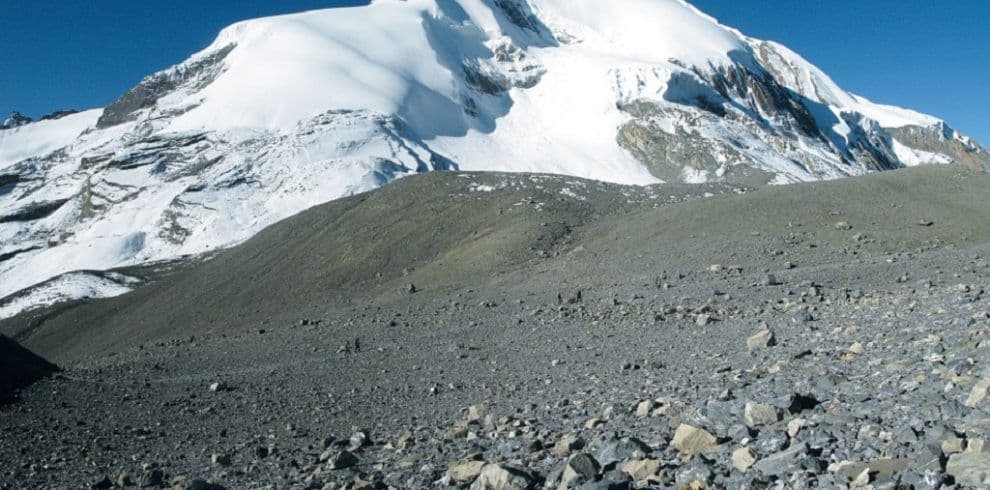
Thorong Peak climbing (6144m) covers the best location of the Annapurna Region and because of this, it is one of the most popular peaks climbing. Many climbers and adventure seekers mix up the route of Thorang La Pass (5416m) with Annapurna Round. You can observe Dhaulagiri range, Annapurna range, Nilgiri Peak, Tilicho Peak. The breathtaking landscape of Mustang region with the world’s deepest gorge of Kaligandaki valley in this trekking climb. Other highlights include the charming settlement of the Gurung community.
Their slate-covered houses with the incredible presence of rhododendron covered hills. Moreover, climbing to Thorong peak 6144 m / (20157 fits) it’s in the central part of the Annapurna region. While we climb Thraong peak it’s relatively easy and you don’t need any previous climbing experience. Though sound physical fitness and stamina aids in smooth ascent. You need climbing permits and experienced climbing guides to successfully summit Thorong Peak. Sunrise Adventure treks will arrange your everythings for Throng peak climbing.
Best time for Thorong Peak climbing (6144 m)
Touring in Nepal, can be done all year. But the best season are Spring (March – May) and Autumn (mid Sept. – mid Dec.). Trekking in autumn season is noted for clear weather with blue sky. It gets colder towards the end of December. This trek Thorong Peak climbing (6144m) can be done in any month with less focus on January and February as this month’s are colder than usual.
Similarly, our trip starts from Kathmandu followed up by drive to Besishar and Bulbule. From Bhulbule we trek to Jagat and then to Dharapani. As we trek, we get to cross famous rivers, pass through the amazing hillside. Unique settlements, waterfalls, lush forest and get an insight into different cultural ethnicity residing in the Annapurna region of Nepal.
We trek to Chame from Dharapani and then trek to Pisang from there. While we reach in Manang – Manang is a famous village with flat-roofed houses from where amazing views of mountains like – Annapurna I, II. Mt Annapurna III (7555m), Gangapurna to the South – Lake Tilicho (7132m) & grand Barrier to the west. Mountain Chulu West (6583m) & Chulu East (6059m) to the North.
We reach Yak Kharka from Manang & then trek to Thorang Phedi from where we climb to Base camp of Thorang peak. After a successful summit of Thorang Peak, we trek to Muktinath – popular of Muktinath temple Then we trek to Jomsom from where we take a scenic flight to Pokhara. Afterward, we take another flight to Kathmandu. At the end upon arriving Kathmandu, we offer last farewell dinner in Kathmandu.
What’s included
A clear breakdown of what your trip price covers.
Included
- Arrival & Departure transfers on both domestic and international flights.
- Accommodation in standard hotels in Kathmandu
- Full board meals on tented camping & Lodge expedition
- Accommodation on tented camp
- Everyday 3 meals during trek and climbing period
- Seasonal fruits during trip
- Guided city tour as listed in itinerary
- Peak Climbing Permit, trekking permits, TIMS card, Royalty and other government tax
- Group Climbing gear including climbing rope, ice axe, roomer, harness, figure of eight, carabineer etc.
- All camping equipment - 2-person member tent, dinning tent, kitchen tent, staff & porter tent, toilet tent with commode, dining table with backrest chair etc.
- Free use of quality trekking gear - sleeping bag, fleece inner liner, insulated mat, down jacket, duffel bag etc. during the trip
- Well-experienced Climbing guide with all his allowance and expenses
- Professional climbing Sherpa guides, porters to carry all personal gear and group equipment
- Insurance of all staff including porters
- Official T-shirts / certificate, other seasonal gifts
- Government taxes and VAT official expenses
Not included
- Nepal entry Visa fees
- your travel insurance of any kind (emergency evacuation insurance is recommended as this is an adventurous trip and evacuation
- International Airfare
- Additional meals except above mentioned itinerary
- Tips items for trekking crew members personal expenses like hot shower, battery charge, shopping etc.
Availability
Pick a departure date and we’ll fill in the rest of your 18-day trip automatically.
Select a date to enquire
Choose any available start date on the calendar.
Dates are subject to availability. Please contact us to confirm your preferred dates.
Itinerary
18 days, planned step by step. Tap a day to see the details.
Welcome to Kathmandu! Our airport representative picks you up from airport and transfers you directly to reserved hotel. A small meeting will be held in the evening to introduce with climbing guides and other staffs. Also, we discuss about the upcoming adventure depending upon your arrival time.
For the day time, you explore historically important monuments and heritages of Nepal while we prepare necessary equipments and gears for your smooth climb. Climbing equipment is inspected by licensed climbing guide and then only after his/her approval we finalize the gears to be equipped. Late in the evening, depending upon the situation, you take basic training of peak climbing.
Driving from Kathmandu to Bhulbule is amazing, you get to drive thought beautiful rivers with countryside hill as we drive further and further. Most of the hillsides are on the footsteps of Annapurna & Manaslu. Meals included: Breakfast, lunch and dinner and finally an overnight stay in trekking lodge.
Crossing few local wooden and suspension bridges, we pass waterfalls, several ups & downs, corss rice paddies and subtropical forest to reach Bahundanda (1310m) and then descend through rice terraces, steep vertical cliff, lush green forest and some interesting villages to reach Jagat after corssing a suspension bridge over Mayshyangdi River. Meals included: Breakfast, lunch and dinner with tea or coffee and finally an overnight stay in trekking lodge or tented camp.
Early in the trek, we have to walk across rocky trail to reach Chamje Village – Chamje is a small village settlement with primary school and surrounded by Bamboo bushes. We continue our trek toward a suspension bridge over Marshyangdi River and we can see waterfall, rocky lands and trails with small teashop. Then, we cross a river, continue our walk through cliff to reach Dharapani. Meals included: Breakfast, lunch and dinner with tea or coffee and finally an overnight stay in trekking lodge or tented camp.
Starting our day off from Dharapani, we trek to Chame. First, we encounter Bagarchhap village, where we get first view of Mt. Annapurna II. Our trail today passes through steep forested landscapes and there are some landslides on the route. En-route, we see Tibetan style villages before reaching Chame – Chame is district headquarter of Manang with close-up view of Mt. Lamjung & Annapurna II. Meals included: Breakfast, lunch and dinner with tea or coffee and finally an overnight stay in trekking lodge or tented camp.
After the stay in Chame, we pace forward crossing some narrow paths and dense forest. Right after the hours of walk, the steep and big rock (1500m.) can be seen. Crossing this rock can be an adventure before we reach to the accommodating area in Lower Pisang. We get the first glimpse of Pisang peak with other Himalaya Ranges during this trail. Meals included: Breakfast, lunch and dinner with tea or coffee and finally an overnight stay in trekking lodge or tented camp.
The Moments passing through Geru is excellent that offers us stunning landscapes and magnificent view of Mt. Annapurna and Pisang. Today, we will be going to Barge monastery, also the biggest monastery of whole Manang. Meals included: Breakfast, lunch and dinner with tea or coffee and finally an overnight stay in trekking lodge or tented camp.
To stay fit for further journey and atmospheric adaptation, we take a day off here in Manang for acclimatization. For the whole day, we will be doing some walk around the village viewing beautiful mountain sceneries because experts suggest us to stay active instead of idle for better acclimatization. Meals included: Breakfast, lunch and dinner with tea or coffee and finally an overnight stay in trekking lodge or tented camp.
Leaving Tilicho Lake off the trail on the left corner, we take short trek to Yak Kharka. Today, we have to gradually ascent a small hill and hike right behind the hill before reaching Yak Kharka. We can also hike to little hill for good view of surrounding mountain. Meals included: Breakfast, lunch and dinner with tea or coffee and finally an overnight stay in trekking lodge or tented camp.
This day we trek to the foot of Thorang La & we will have to climb uphill, cross a suspension bridge and ascend down a towering cliff. During the trek we are rewarded with the wonderful view of Mt. Gundang, Mt. Syagang, Thorung Peak & Mt. Khatungkang. Meals included: Breakfast, lunch and dinner with tea or coffee and finally an overnight stay in trekking lodge or tented camp.
We trek to Thorang Peak Base Camp and upon reaching the Camp. We learn techniques to climb and measures to take in case of emergencies. We also have to reserve as much energy as possible for tomorrow’s ascent. Meals included: Breakfast, lunch and dinner with tea or coffee and finally an overnight stay in trekking lodge or tented camp.
With proper gears and equipment, summit will go smoothly and at the top of the mountain, we take rest for a while, enjoy the moment and trek to Muktinath. Today, we should struggle for about 10 hours to complete the summit and return back to Muktinath – very popular place for Hindu pilgrimages. Meals included: Breakfast, lunch and dinner with tea or coffee and finally an overnight stay in trekking lodge or tented camp.
In case of bad weather, we have to postpone climbing or if any member feels uncomfortable with the environment, we take reserve day to fight the inconvenience. If the climbing goes smoothly, we do not use this day. Meals included: Breakfast, lunch and dinner with tea or coffee and finally an overnight stay in trekking lodge or tented camp.
Today we trek back to Jomsom through the same route of Kagbeni after visiting some monasteries and Hindu temples in Muktinath. Reaching Ekle Bhatti, we continue our trek to Jomsom – Jomsom is a large town and headquarter of Mustang region with airstrip which links the old Trans-Himalayan Salt trade route to Tibe.. Down the way, we get to see magnificent views of mountains and fields. Meals included: Breakfast, lunch and dinner with tea or coffee and finally an overnight stay in trekking lodge or tented camp.
After breakfast, we take jeep/bus/Flight from Jomsom and enjoy the awe-inspiring views of mountains and rivers. We pass Magar, Gurung & Thakali villages and enjoy fresh as well as dry apples and apple products. Pokhara is second tourist hub of Nepal, where we can choose from range of adventurous activities and houses many tourist attractions. Meals included: Breakfast, lunch and dinner with tea or coffee and finally an overnight stay in hotel.
Pokhara to Kathmandu drive takes around 5/7 hours. It is a scenic drive along the Trishuli and Marshyangdi Rivers. After your arrival in Kathmandu, in the evening, you are treated with a special dinner program with climbing guides and other staffs as a complimentary commencement from our side. Meals included: Breakfast, and finally an overnight stay in hotel. Attend the evening dinner and cultural program provided by the company.
After completing the trip, our representative drops you to the airport for your journey home. You are dropped off 3 hours earlier so that there is no any delay in flight. Or you can join another adventure and explore hidden gems of Nepal. Till then, have a safe journey to Home!
Frequently asked questions
Quick answers about this trip. Still unsure? Our team is happy to help.
Nepal, as a tourist destination is good for all seasons, however, the best seasons for trekking to Kanchenjunga region are Spring (March – May) and Autumn (mid Sept. – mid Dec. ). Trekking in autumn season is noted for clear weather and excellent views of silvery mountains against blue sky. It gets colder towards the end of December. This trek can be done in any month except January and February.
Nepal, as a tourist destination is good for all seasons, however, the best seasons for trekking to Kanchenjunga region are Spring (March – May) and Autumn (mid Sept. – mid Dec. ). Trekking in autumn season is noted for clear weather and excellent views of silvery mountains against blue sky. It gets colder towards the end of December. This trek can be done in any month except January and February.
Nepal, as a tourist destination is good for all seasons, however, the best seasons for trekking to Kanchenjunga region are Spring (March – May) and Autumn (mid Sept. – mid Dec. ). Trekking in autumn season is noted for clear weather and excellent views of silvery mountains against blue sky. It gets colder towards the end of December. This trek can be done in any month except January and February.
Nepal, as a tourist destination is good for all seasons, however, the best seasons for trekking to Kanchenjunga region are Spring (March – May) and Autumn (mid Sept. – mid Dec. ). Trekking in autumn season is noted for clear weather and excellent views of silvery mountains against blue sky. It gets colder towards the end of December. This trek can be done in any month except January and February.
Nepal, as a tourist destination is good for all seasons, however, the best seasons for trekking to Kanchenjunga region are Spring (March – May) and Autumn (mid Sept. – mid Dec. ). Trekking in autumn season is noted for clear weather and excellent views of silvery mountains against blue sky. It gets colder towards the end of December. This trek can be done in any month except January and February.
Nepal, as a tourist destination is good for all seasons, however, the best seasons for trekking to Kanchenjunga region are Spring (March – May) and Autumn (mid Sept. – mid Dec. ). Trekking in autumn season is noted for clear weather and excellent views of silvery mountains against blue sky. It gets colder towards the end of December. This trek can be done in any month except January and February.
Nepal, as a tourist destination is good for all seasons, however, the best seasons for trekking to Kanchenjunga region are Spring (March – May) and Autumn (mid Sept. – mid Dec. ). Trekking in autumn season is noted for clear weather and excellent views of silvery mountains against blue sky. It gets colder towards the end of December. This trek can be done in any month except January and February.
Nepal, as a tourist destination is good for all seasons, however, the best seasons for trekking to Kanchenjunga region are Spring (March – May) and Autumn (mid Sept. – mid Dec. ). Trekking in autumn season is noted for clear weather and excellent views of silvery mountains against blue sky. It gets colder towards the end of December. This trek can be done in any month except January and February.
Nepal, as a tourist destination is good for all seasons, however, the best seasons for trekking to Kanchenjunga region are Spring (March – May) and Autumn (mid Sept. – mid Dec. ). Trekking in autumn season is noted for clear weather and excellent views of silvery mountains against blue sky. It gets colder towards the end of December. This trek can be done in any month except January and February.
Nepal, as a tourist destination is good for all seasons, however, the best seasons for trekking to Kanchenjunga region are Spring (March – May) and Autumn (mid Sept. – mid Dec. ). Trekking in autumn season is noted for clear weather and excellent views of silvery mountains against blue sky. It gets colder towards the end of December. This trek can be done in any month except January and February.
Nepal, as a tourist destination is good for all seasons, however, the best seasons for trekking to Kanchenjunga region are Spring (March – May) and Autumn (mid Sept. – mid Dec. ). Trekking in autumn season is noted for clear weather and excellent views of silvery mountains against blue sky. It gets colder towards the end of December. This trek can be done in any month except January and February.
Leave a review
Travelled with us? Share your experience. Your email address will not be published.
Planning a trip to Nepal?
Tell us what you have in mind and we’ll tailor a trip around you.