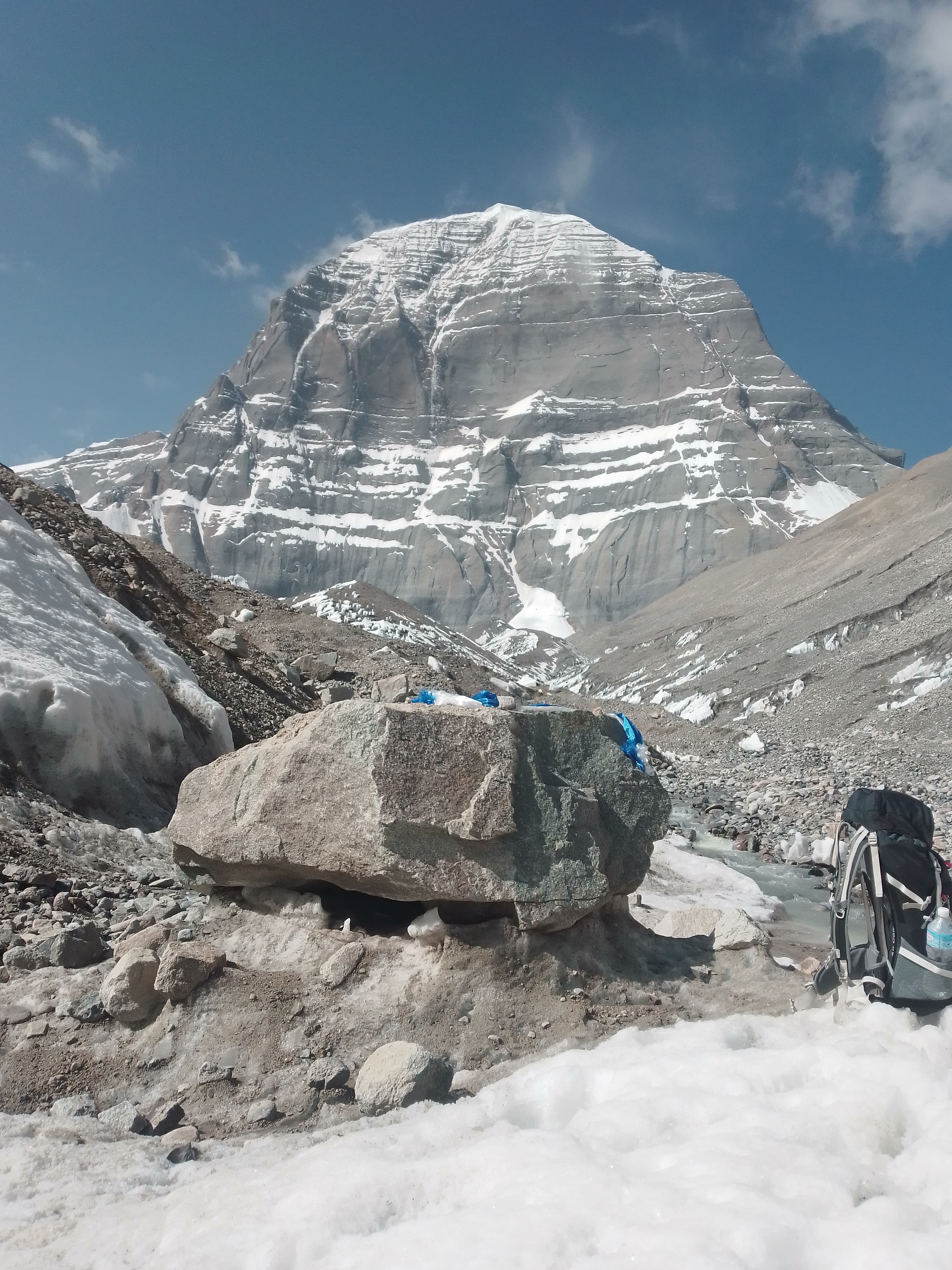
Spiritual Highlights of the Mount Kailash Mansarovar Yatra
Mount Kailash, also known as “Kailash Parvat”, “Kailasha” or “Gang Rinpoche," is one of the most significant spiritual centers, situated in the Tibetan Plateau. It draws pilgrims from several religion & traditions, including Hinduism, Buddhism, Jainism, and Bon followers.
A journey to Mount Kailash is not just a physical tour. It is a deep inward trip focusing on inner purification rather than conquering the landscapes or mountains.
The journey also involves exploring Mansarovar Lake to cleanse the sins and purify the soul.
Here are the key spiritual highlights of this sacred journey.
Darshan of Mount Kailash
The Darshan or view of Mount Kailash is considered significant for Hindu, Buddhist, Jain, and Bon followers. It is not just seeing the mountains. Unlike other mountains, it has never been climbed due to the devotees' belief and spiritual significance.
· In Hinduism, it is the abode of Lord Shiva, Goddess Parvati and is deeply connected with Lake Mansarovar
· Similarly, the Buddhist belief that Mount Kailash is called Kang Rinpoche, associated with Demchok
· In Jainism, Rishabhadeva (Adinath) attained moksha (liberation). The Jain followers named Kailash Mount Ashtapada.
· The Bon followers considered Mount Kailash as the spiritual purification, protection and sacred energy.
The Darshan often takes place from Darchen during the sacred 3 days Parikrama. For the pilgrims, the first glimpse of Mount Kailash is adorable. Seeing the Kailasha is a life-changing experience, and it can’t be described in words. The pilgrims have a deep state of serenity, emotional release from the heart, and a sense of living a life, physically and spiritually.
There is also a belief in the Kailash link between earth and heaven. In the Dwapara Yuga, they embarked on Mount Kailash, which led them to Swarg Loka.
3 days Kailash Parikrama (Kora)
The 3-day Kailash Parikrama is one of the significant highlights of the Mount Kailash trip. It is challenging, but equally rewarding for the pilgrims.
The sacred parikrama (kora) spans over 52 kilometres. It is usually accomplished in 3 days. The 3-day journey is physically and spiritually enriching, taking the devotees 5,500 meters above, passing the Dolma La Pass.
The sacred journey begins at Darchen and continues to Dirapuk. It takes the pilgrims from Darchen to the Lha Chu valley. As pilgrims trek through the valley, they will see the gigantic north face of the sacred mountain “Kailash”. Don’t forget to capture the pictures; it will be unforgettable memories for a lifetime. Upon that, the devotees will reach the Dirapuk monastery, taking a rest in the shadow of Kailash Parvat.
Day 2 parikrama from Dirapuk to Zuthulpuk is the most demanding part of the trek. It involves steep ascents passing over 5,630 meters (Dolma La Pass). The trek covers 20-22 kilometres. The pilgrims have to walk 9-11 hours to reach the Zuthulpuk monastery.
Before arriving at Zuthulpuk, you will also see and admire the sacred turquoise Gauri Kund and Mahadev site – Shiva-tsal.
The 3rd day of the Kailash Parikrama is typically the easiest and shortest compared to the first and second days. It covers approximately 8 to 14 kilometers. It will be completed in 3 to 4 hours.
After the three days Parikrama, you will have inner peace and a deep sense of spiritual purification.
Holy bath in Lake Mansarovar
Lake Mansarovar is considered one of the holiest, turquoise, and freshwater lakes located at an altitude of 4,590 meters near Mount Kailash. The water is very clear and transparent, so it reflects the Kailash Parvat.
According to the Rigveda, the lake was formed by Brahma, one of the three deities of the Hindu Gods. In Hindu belief, the lake is deeply connected with Lord Shiva and Goddess Parvati.
Likewise, the devotees believe that taking a dip in the river cleanses sins, purifies souls and leads to moksha (liberation).
The Buddhist followers considered Mansarovar as purity and enlightenment. It is also associated with Queen Maya Devi, who took a bath before the birth of Lord Buddha. Similarly, Jainism and Bon followers regarded it as a spiritual centre.
The pilgrims will perform a holy bath and perform rituals and Puja. Chanting the mantra “Om Namah Shivaya” is common and essential while performing the Puja or any ritual ceremony. The pilgrims also take holy water from the lake in bottles/containers.
The elderly and senior citizens are advised to consult their physician before taking a bath. This is because the water is extremely cold and the lake is situated at a high altitude.
Dolma La Pass (5,630 m)—the highest point of the trek
Dolma La Pass—the highest point of the trek, situated at an elevation of 5,630 meters; one of the rewarding aspects of the Kailash journey. The pilgrims will cross Dolma La on the second day of the Parikrama.
The Pass is named after the Goddess Tara (Dolma in Tibetan). This pass holds religious significance and is also considered the climax of the journey. From the top of the Pass, the pilgrims will explore snow-capped peaks, Tibetan landscapes, prayer flags, and Gauri Kund Lake.
Crossing Dolma La Pass symbolises birth and death. A successful crossing; the pilgrims will receive direct blessings from Lord Shiva and Goddess Tara.
Dolma La Pass is a spiritual journey, but physically challenging. Above 5600 meters, the oxygen level is relatively low. The trekkers may have the symptoms of dizziness, nausea, vomiting, headache, shortness of breath and more. In addition, the weather is unpredictable, with strong winds and possibly snowfall even in the summer season. Therefore, acclimatization plays a crucial role before attempting such a high pass.
Gauri Kund
Gauri Kund, located near Mount Kailash, is another major highlight of the Kailash journey. The lake is named after the Goddess “Parvati”. There is a belief that Goddess Parvati, also known as “Gauri”, lived, meditated and bathed here.
The pilgrims see this lake after passing the Dolma La. The pilgrims belief icy green water of Gauri Kund purifies the soul, cleanses the sins and brings serene peace. The place is also considered the harmony of Shiva and Shakti.
The lake has also been mentioned in the Hindu Scriptures, including the Rigveda, Yajurveda and Samaveda. In addition, the surroundings of Gauri Lake are huddled with several sacred sites, which are important for pilgrims.
Multi-Religion Significance – Hindu, Buddhist, Jain, and Bon followers
The Kailash Mansarovar Yatra is one of the profound and rare pilgrimage centers in the world. The Kailash is deeply revered by four major traditions—Hinduism, Buddhism, Jainism, and Bon. The Kailash Mountain, popularly known as Kailasha Parvat, is considered the centre of the universe. The devotees from every religion come here for inner peace, spiritual strength and moksha (liberation).
Hinduism—The Abode of the Divine
For Hinduism, it is not only a mountain. It is the eternal home of Lord Shiva (the destroyer), among the three main deities, along with Brahma (the creator) and Lord Vishnu (the preserver).
Performing 3 days Kailash Parikrama, the bhaktas (devotees) believed to wash their sins and purify their souls. The holy dip in pious Lake Mansarovar also led the pilgrims to moksha (liberation).
The Kailash Parikrama's significance has also been mentioned in the Vishnu Puran, the Shiva Puran and the Ramayana. The journey completely connects the Hindu followers to the divine energy.
Buddhist – The Path to Enlightenment
For Buddhist followers, Kailash Parvat holds spiritual significance. Mount Kailash is known as Kang Rinpoche (the snow jewel), the abode of “Demchok” or “Chakrasamvara).
The Tibetan Buddhist performs the Kailash Yatra in a clockwise direction, often called “Kora”. They believe walking along the Kailash leads them to the path of enlightenment and creates harmony among the people.
The Buddhist considered the holy Lake Mansarovar to be the mother of the world. It is highly revered. Maya Devi, the mother of Gautam Buddha, bathed here before giving birth to Buddha.
Jainism – the three jewels
In the Jain tradition, Mount Kailash holds spiritual significance. The Jain followers called Kailash “Mount Ashtapada, the sacred site where their spiritual guru Adinath (Rishabhadeva) attained liberation (moksha).
The exact location of the Ashtapada has not been located to date. According toJain scripture, “Guru Adinath”, son of “Bharata Chakravartin”, established 3 Stupas and 24 shrines. Therefore, Jain followers also consider Kailash as one of their sacred pilgrimage sites.
Bon Followers Significance
For Bon followers, Kailash Mansarovar is regarded as the most sacred site. They perform Parikrama counterclockwise, unlike other practitioners who follow.
The Bon followers also considered Mount Kailash as the centre of heaven where earth and heaven meet. They also believe Mount Kailash is the home of their founder, namely Tonpa Senrab, and Goddess Sipaimen.
Yama Dwar – The Gateway of Transformation & Salvation
Yama Dwar, situated at an elevation of 4725 meters, is located near Mount Kailash. It marks the beginning point of the Kailash trek. Therefore, it holds a promising position in the Hindu traditions.
The meaning of Yama Dwar denotes “the Gateway of Death”. To visit the Shiva home – Kailasha, one must pass through this promising and sacred site. There is also a belief that if you pass through the gate with no deception in mind, you begin a journey towards moksha (liberation).
The pilgrims walk through the gate without looking back. In addition, pilgrims also offer prayers and puja at Yama Dwar before starting their Kailash Parikrama.
Nandi Parvit – The Guardian of Mahadev
Nandi Parvat, also called Nandi Peak located very close to Mount Kailash. Also called the sacred guardian of Mahadev. The peak is just in front of the southern face of the Kailash Parvat.
Though Nandi Parvat is not globally famous. However, in the Puranas and the Vedas, it holds spiritual significance.
The shape of the mountain is like a “sitting bull” guarding the Kailash.
Lake Rakshas Tal (The Mystery Lake)
Lake Rakshas, also known as Ravan Tal or Lake of Demons, is situated at an altitude of 4,575 meters. The lake is situated close to Mount Kailash.
According to Hindu Mythology, the Lanka King Ravana performed intense penance to please and impress Lord Shiva in “Treta Yuga."
Unlike Mansarovar, Rakshastal has salty water. The pilgrims do not take holy dips or any rituals.
According to Ramayana, the lake reminds one of self-worth, personal desire, inner darkness, and negativity. However, the spot is perfect for photography and looks with the natural beauty.

Leave a reply
Your email address will not be published.