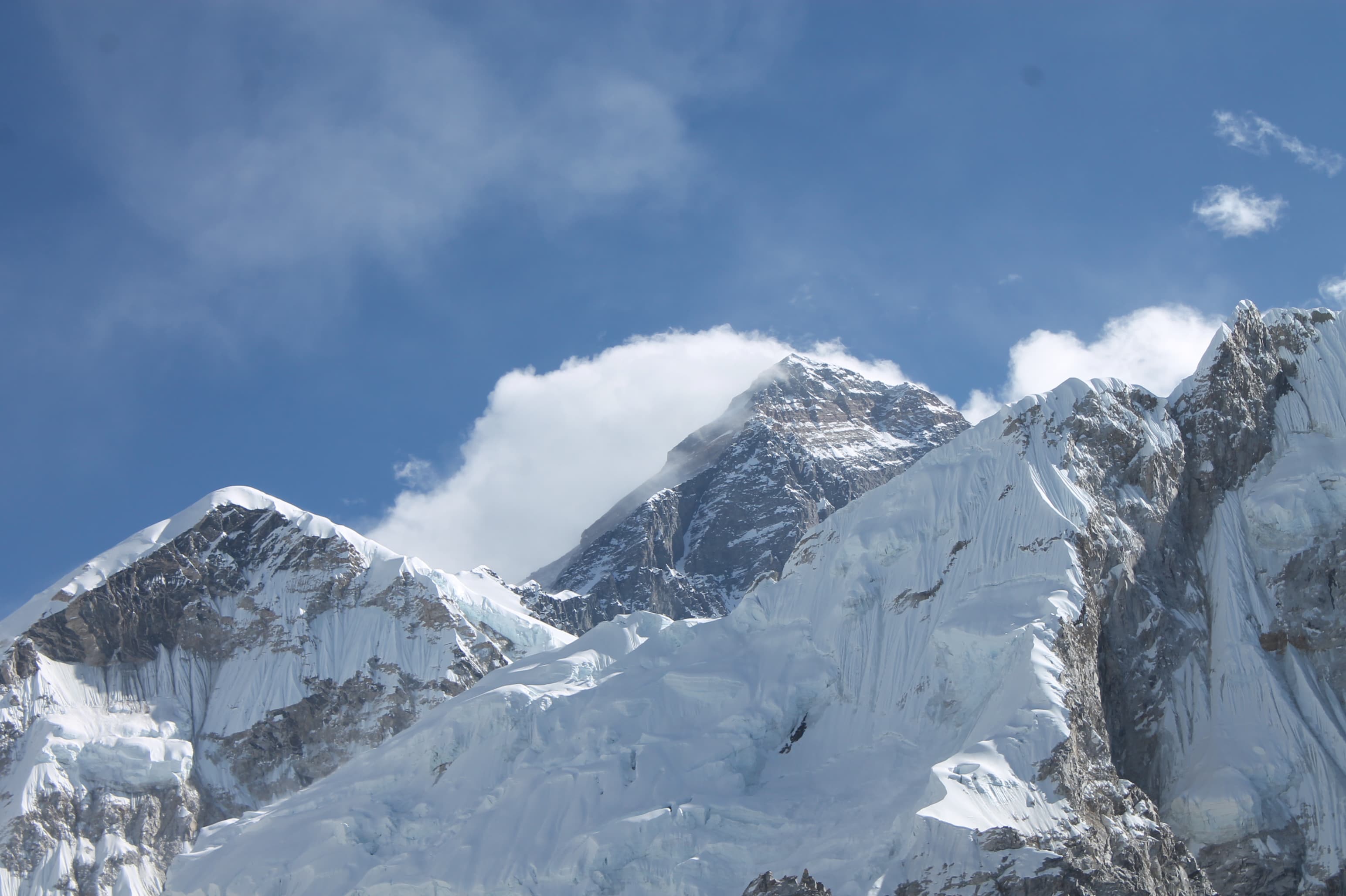
Everest Khumbu Icefall
An Overview
Everest Khumbu Icefall is the most frightening gateway to Mount Everest. It has an elevation of 5,486 meters, southwest of the summit.
Situated between Everest Base Camp and Camp I, the icefall is characterized by crevasses, snow bridges, and ice blocks ranging from jeep-sized to enormous structures.
The Khumbu icefall, often described as “admirable but dangerous,” is frequently referred to as a “graveyard” or “deathtrap” due to the high number of fatalities. As per the sources, 48 to 50 people died between 1953 and 2026. In 2014, 16 Nepali Sherpas died due to a disastrous avalanche.
Despite being dangerous, the Khumbu Icefall remains one of the most notable features of Everest. It symbolizes both “beauty & brutality." It also demands courage, determination, perseverance, and patience from the climbers.
Exactly, where is the Khumbu Icefall?
The Khumbu Icefall is located on the southern side of Mount Everest in the Solukhumbu district. It is inside the Sagarmatha National Park. Mount Everest, Nuptse, and Lhotse are the nearby peaks of Khumbu Icefall. Khumbu Ice Falls ranges in base level from 5400 meters (17700 ft) to 5900 meters (19350 ft) at the base of Western Cwm.
The climbers usually reach the Icefall from Luka via the Everest Base Camp trekking routes. For the Everest climbers, it is one of the most crippling sections. To reach the summit of Mount Everest, every climber has to navigate the Khumbu Icefall.
The Khumbu Icefall is easily noticeable from the base camp, offering dramatic views to the trekkers.
Formation of Khumbu Icefall
The Khumbu Icefall is formed by the rapid movement of the Khumbu glacier. It descends from western cwm to lower altitudes. Because the flows over uneven terrain and steep slopes ice breaks into massive blocks and deep crevasses.
The icefall is constantly changing over time, and the constant movement forms.
· Towering ice seracs
· Deep Crevasses
· Ice cliffs
· Fragile snow bridges
· Sudden Ice collapses
The unsteady and unstable conditions of the glacier make the Khumbu Icefall one of the most destructive portions of the Everest ascent.
Why is the Khumbu Icefall dangerous?
As we talked above, Khumbu Icefall is the most dangerous and deadliest section of Mount Everest. It is a climbing route towards the 8849 meters, and it is constantly changing and uncertain in nature.
Falling Seracs – Falling Seracs are giant towers or blocks that can suddenly collapse without giving any warning. Some seracs are very huge, like a building, which can fatally injure climbers without giving any notifications.
The climbers don’t climb in the evening; the temperature rises during the day, and the ice becomes unstable. This is the reason climbers usually cross the icefall early in the morning when the glaciers are stable.
Deep Crevasses – The Khumbu Icefall contains several crevasses that plunge hundreds of feet deep. These crevasses are extremely dangerous for the climbers.
The crevasses are often unstable and invisible. It is also often called “Death Trap” for the trekkers.
Avalanches – Avalanches are the additional threat climbers have to face while crossing the Khumbu glaciers. In 2014, 16 Nepali climbers from the Sherpa community died due to a disastrous avalanche.
Continuous Glacier movement - The glaciers never stop moving. The route that is safe today may be dangerous the next day. New crevasses can form without warning, and previous stable route suddenly collapses.
High Altitude – When you are 5,000 meters above, the oxygen level suddenly turns low. The climbers may suffer from fatigue, headache, dizziness, shortness of breath and other altitude-related health problems.
Crossing the Khumbu Icefall
Crossing the Khumbu Icefall is both physically and mentally challenging. Yet it is demanding, yet unavoidable for the Mount Everest (8,849 summit). It is situated between Everest Base Camp (5,364 m) and Camp I (6, 065 m).
Early Morning Starts
Usually, most of the climbers ascend early in the morning (before sunrise). Meanwhile, in the morning, the temperature is cold, which reduces the chances of glacier movements and minimizes the risk of falling ice.
Technical Gear & Equipment
Here are the technical gear & equipment that you need during the crossing of the Khumbu Icefall
· Ice Axes
· Ropes
· Harnesses
· Crampons
· Carabiners
· Footwear
· Fix Line Ladders
Ladder Crossings
Ladder crossing is one of the most significant challenges while crossing the Khumbu icefall. Basically, there are various types of ladders.
· Single Aluminium Ladders
· Lashed Aluminium Ladders
· Vertical Ladders
· Dual Line Ladders
· Fixed Line/Ropes
· Pot-Holding Ropes
Balancing the body and mind (physically & mentally)
Depending on the traffic, crossing the icefall usually takes around 6 to 12 hours. The route covers 1.3 kilometers of challenging terrain. The trekkers usually start around 3 to 4 A.M to avoid the rush and for the safety of the movements.
Major Disaster in the Khumbu Icefalls
The Khumbu Icefalls is located at the base of Mount Everest and at the head of Khumbu Glacier. It is constantly shifting, collapsing and melting, which leads to numerous accidents and fatalities.
2014 Mount Everest Avalanche Tragedy (16 deaths)
One of the disruptive incidents occurred on April 18, 2014, when 16 Nepali Sherpa were killed. It was considered the deadliest single incident in the history of mountain tragedy.
It happens early in the morning when Sherpas carry supplies and fix ropes for the expedition teams. The exact location was the ‘popcorn field”, which was within the Khumbu icefall.
May 2026
May 10, 2026, is reported as the date of recent fatalities at Khumbu Icefall. Nepali climber Bijiya Ghimire Biswakarma, 35, lost his life while ascending through Khumbu Icefall towards Camp I. The cause of death was altitude illness rather than avalanches or Crevasses falls.
Later, another Sherpa climber named Phura Gyalijen Sherpa fell into a crevasse and left the world. The accidental death occurred on May 11, 2026.
Other Accidents
Many brave climbers lost their lives in the Khumbu Icefall due to several reasons:
· Crevasse Falls
· Falling Ice
· Exposure
· Avalanches
· Altitude Sickness
Despite having all the necessary equipment and gears, the risks are always considerable.
How deep is the Khumbu Icefall?
The Khumbu Icefall is one of the most dangerous and fast-moving sections on the way to Mount Everest. As it is moving, it doesn’t have a single fixed depth.
· There are many crevasses that are typically 20 to 50 meters deep (65 to 165 feet)
· Some of the largest crevasses can reach up to 200-225 feet.
· In some cases, it may be deeper, but it is difficult to do so due to its depth.
It is dangerous because the deep crevasses are frequently invisible. It may suddenly collapse without any warning.
Crevasses in the Khumbu Icefall
Deep and vertical crevasses frightened every single climber during the Everest expeditions. These crevasses are 100 feet deep – a graveyard for the climbers.
These death traps are hidden in the snow. Therefore, climbers must be conscious while stepping with their foot.
Sometimes the Crevasses open suddenly as the glacier moves. It changes positions every season and sometimes daily. This is the reason; crevasses become a death trap for the climbers.
The Beauty of the Khumbu Icefall
Despite being dangerous and unsafe, the Khumbu Icefall is a breathtaking and mesmerising section of Mount Everest, offering elegant views to climbers.
As the first rays of sunlight reach the glacier at dawn, the ice sparkles in tints of white, silver, and icy blue, creating a magical and mystical landscape.
Situated between the Everest Base Camp and Camp I, ice is formed by the gradual movement of the khumbu glaciers.
For the climbers, crossing the Khumbu icefall is not only a physical or mental challenge, but also a mind-blowing experience surrounded by the beauty of the Himalayas.
Essential tips for the visitors crossing the Khumbu Icefall
The climbers have to follow certain essential protocols and rules while crossing the Khumbu icefall. Here is the breakdown.
Cross early in the morning.
Temperatures are colder before sunrise, which makes the ice stable. The majority of climbers cross between midnight and early morning, which reduces the chances of fatalities.
Acclimatization is essential
Spend enough time at the Everest Base Camp before ascending higher. It reduces the chances of altitude sickness and other health issues that arise due to the higher elevations.
Top-Quality Gears
Your gear and equipment play a significant role during the climb. The necessary gears and equipment are
· Helmet
· Crampons
· Carabiners
· Ice Axe
· Good quality boots and gloves
Teamwork plays a key role while crossing the Khumbu Icefall.
Follow the knowledge of an experienced Sherpa.
The route constantly changed. You may be new to this area. The Sherpas are socialized with this place. Therefore, follow the knowledge of Sherpas who are highly experienced.
Quickly but Cautiously
Regarding safety, do not spend unnecessary time while crossing the Khumbu Icefall. Always focused and maintain the steady movement.
Stay Hydrated
Your hydration is a fuel for your body. Stay hydrated, drink 3-4 litres of water before crossing the Icefall.
Keep an eye on weather conditions.
Bad weather can invite avalanches and fatalities. Wait for the stable weather before crossing the Khumbu Icefall.
Training
Training is significant and essential before crossing the Icefall.
· Strength & Endurance training
· Mental Preparation
· Safety & Rescue training
Final Thoughts
The Khumbu Icefall is a dangerous but demanding yet outstanding sections of the Mount Everest. It tests the climbers with crevasses, ice formations, and constantly shifting terrains.
Despite the risks, it is unavoidable part of the Mount Everest expeditions. The climbers must need thoughful planning and good physical health and mental resillence while crossing the Icefall.

Leave a reply
Your email address will not be published.