Is the Everest Base Camp Trek difficult for beginners?
Is the Everest Base Camp trek suitable for beginners? Every year, thousands of people with zero Himalayan experience type some version of that question into a search bar. The honest answer is yes, but that answer comes with real conditions attached, and glossing over them does you a disservice. The EBC trek is difficult in the sense of the altitude level. If you are good with body fitness, you can do easy to moderate trekking even for beginners.
Here's a number worth knowing upfront: Roughly 65% of EBC trekkers each season are first-time Himalayan trekkers. When the trek is structured correctly, guided completion rates reach 85% to 96%. That gap between "correctly structured" and everything else is where this article lives. By the time you finish reading, you'll know exactly what the trail demands, what your body needs to handle it, and how to stack the odds in your favor before you ever board the flight to Kathmandu.
What the EBC Trail Actually Demands Day by Day
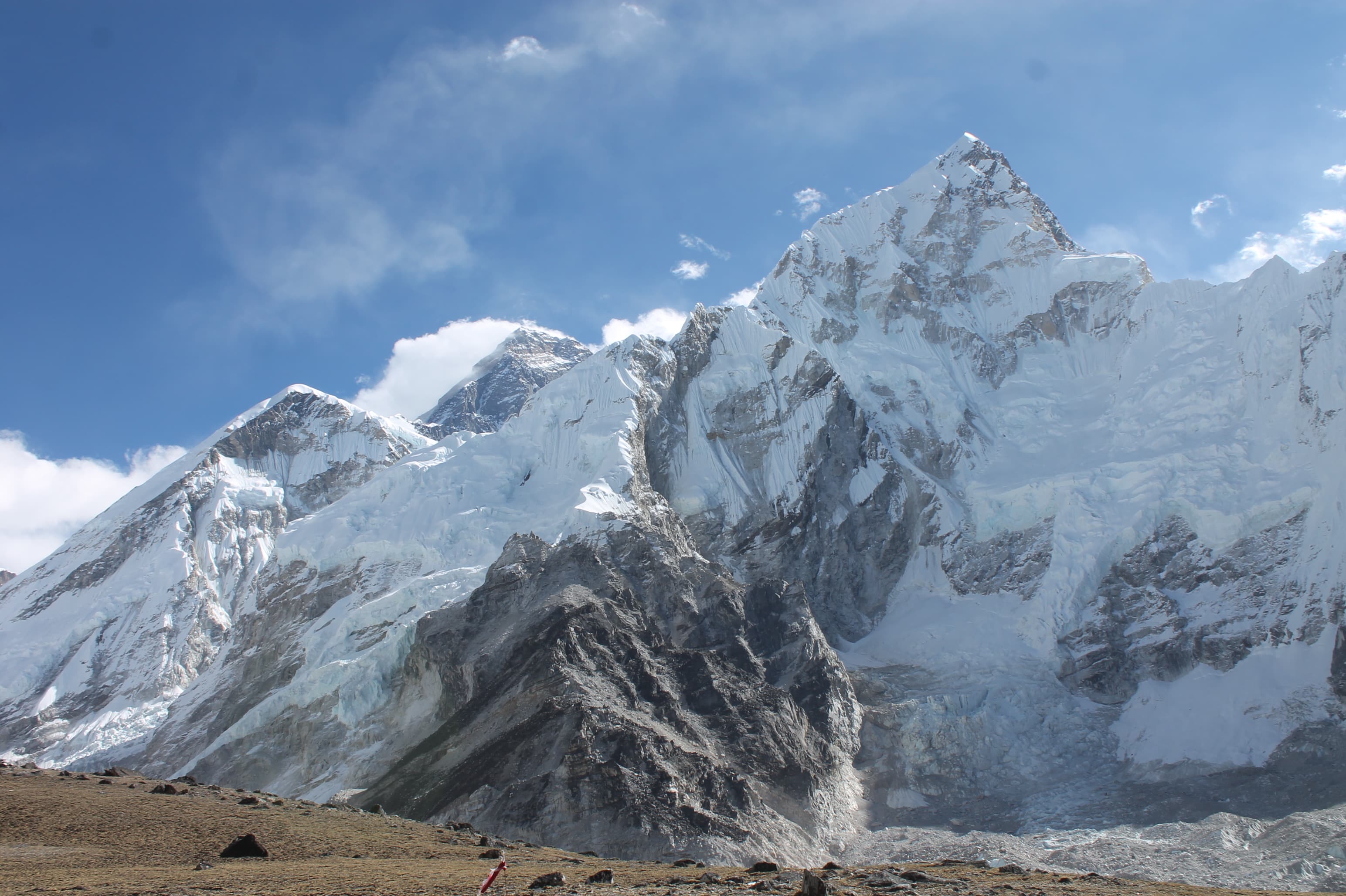
Most beginners picture Everest Base Camp as the highest point on the trek. It's not. The highest point is Kala Patthar, sitting between 5,545 and 5,645 meters, and you reach it on Day 9. That detail alone catches most first-timers off guard. The trek starts at Lukla (2,860m) and builds gradually through a series of villages before hitting the altitude crunch zone on Days 7 through 9, where the majority of turnarounds happen.
The daily profile isn't extreme on paper, but it accumulates. You'll walk 8 to 18 kilometers daily for 5 to 7 hours, carrying a 6 to 10 kg daypack, on rocky and uneven terrain. The trail is generally rated moderate to challenging, roughly 6 to 7 out of 10 on difficulty scales commonly used by Nepali trekking operators and guiding organizations. It involves no technical climbing, no ropes, no mountaineering skills. What it does involve is sustained effort, day after day, at progressively thinner air.
The Two Hardest Days and Why They Matter for First-Timers
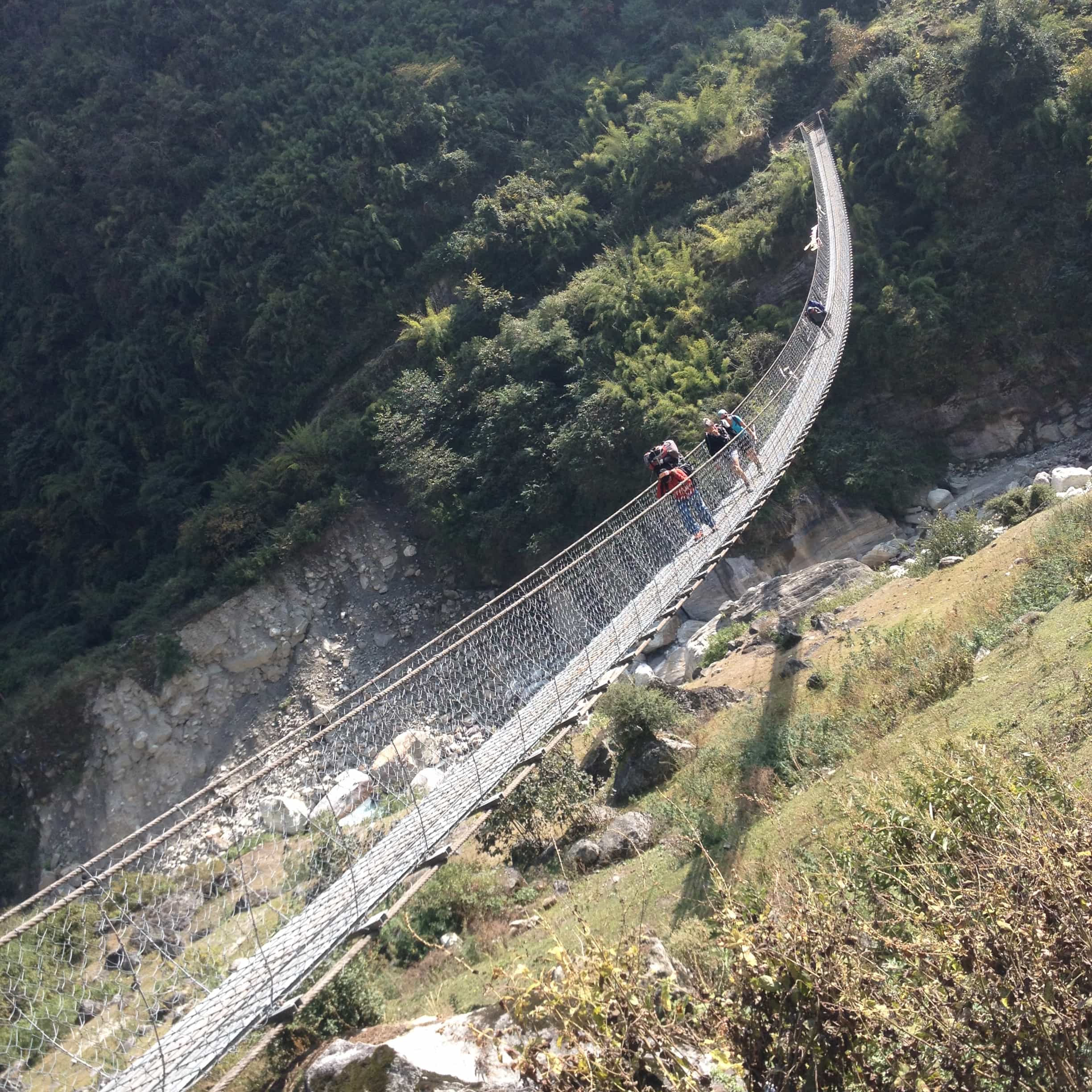
Day 2, from Phakding to Namche Bazaar, delivers an 830-meter elevation gain over suspension bridges and steep switchbacks. For many beginners, it's the first serious gut check of the whole trip. Day 8, the push from Lobuche through Gorak Shep to Base Camp, covers 13 to 15 kilometers with 7 to 8 hours of walking at over 5,000 meters elevation. These are the two days that separate trekkers who prepared from trekkers who didn't.
Knowing what's coming changes how you train. Day 2 is hard but doable with good fitness. Day 8 is a different animal because the physical effort layers on top of altitude fatigue that has been building since Day 5. First-timers who understand this structure train for endurance, not just cardio peaks.
The Acclimatization Days Built Into the Itinerary
Days 3 and 6 are not rest days. They are "climb high, sleep low" days at Namche (hike to 3,880m) and Dingboche (hike up to 5,083m). Spending 24 to 48 hours at a stable sleeping elevation triggers important adaptive responses that help your body tolerate altitude and reduce AMS risk, though measurable increases in red blood cell mass develop over a longer period of days to weeks. Skipping or shortening these days is the single fastest path to an early turnaround.
Is the Everest Base Camp Trek Suitable for Beginners? Fitness Benchmarks That Matter
Most beginner trek guides soften this part. Here it is straight: the baseline requirement is walking 5 to 8 hours daily on hilly, uneven terrain for 12 to 14 consecutive days with a 6 to 10kg daypack. If you can't currently do that, you're not ready, and the right answer is to extend your training, not to push through unprepared.
Translate the abstract into testable checkpoints. You should be able to climb 600 to 800 meters of elevation in a single day without major difficulty, cover 12 to 15 kilometers comfortably with a loaded pack, and sustain a conversational walking pace on sustained inclines. These aren't arbitrary numbers. They reflect exactly what the trail demands from Dingboche onward, where each day stacks fatigue from everything that came before it.
A 12-Week Training Plan That Prepares You Realistically
The plan breaks into four phases. Weeks 1 to 4 (Base Building): three hikes at 5 to 8 kilometers each week plus 30 to 40 minutes of cardio three times weekly. Weeks 5 to 8 (Intensity and Hills): incline treadmill work at 8 to 12% grade, pack weight building to 8kg, and 60-minute cardio sessions. Weeks 9 to 11 (Simulation): back-to-back hiking weekends with a loaded 9kg pack to simulate multi-day fatigue. Week 12 (Taper): light activity and a full gear check before departure.
The key insight for beginners is that back-to-back training days simulate multi-day trek fatigue better than any single long hike. One 20km day tells you about your peak capacity. Two consecutive 15km days tell you how your body recovers and performs when already tired. That's the condition you'll be in by Day 8.
Altitude: The Real Obstacle, Not the Distance
Most first-timers train hard for the physical distance and underestimate altitude. The trail to Base Camp is not technically difficult. It's a hiking trail. What defeats trekkers is Acute Mountain Sickness (AMS), which accounts for 47% of all turnarounds above 4,000 meters (based on Himalayan Rescue Association field data). More importantly, 80% of trek failures happen because of rushed itineraries, not poor physical fitness. That's the most important reframe in this entire article.
Why AMS Hits Harder Above Dingboche
The majority of failures cluster after Dingboche at 4,400 meters, where oxygen concentration drops sharply and symptoms compound. AMS feels like a persistent headache, nausea, disrupted sleep, and loss of appetite. These aren't signs of weakness. They're physiological signals that your body hasn't adapted yet. The standard response is always the same: stop ascending until symptoms resolve, or descend immediately if they worsen.
Acclimatization for Beginners on EBC: Prevention Strategies That Actually Work
Five pillars cover the evidence-based approach. Drink 3 to 5 liters of fluid daily. Eat a high-carbohydrate diet, since carbs require less oxygen to metabolize at altitude. Walk slowly using what Sherpa guides call "bistari bistari" pacing. Avoid alcohol and sedatives for the first five days above 3,000 meters, as both suppress breathing and slow acclimatization. Carry a pulse oximeter and monitor your SpO2 readings; altitude medicine guidelines recommend targeting 80% or above at high elevation, with readings below 70% warranting immediate attention.
Diamox (acetazolamide) is an option your doctor can prescribe, and it does accelerate acclimatization. But it supplements proper pacing, it doesn't replace it. No medication overrides a schedule that pushes too fast through altitude zones.
Why Itinerary Length Determines Success More Than Fitness
Guided trekkers on 14 to 16-day itineraries succeed at rates between 85% and 96%. Independent trekkers on compressed 10-day timelines succeed at 70% to 75%. That gap isn't about the quality of the trekker. It's about how much time the body gets to adapt before it's asked to perform at extreme altitude. (These figures draw from trekking operator records and Trekking Agencies' Association of Nepal data; exact results vary by season and group.)
The 12 to 14-Day Standard Itinerary, Broken Down
A properly paced itinerary covers roughly 130 kilometers round trip, with 8 to 18 kilometers per day and 5 to 7 hours of walking. The two acclimatization days at Namche (Day 3) and Dingboche (Day 6) do the critical physiological work that makes the summit push possible. One detail beginners always appreciate in retrospect: the descent moves significantly faster. Days 10 and 11 cover 20 and 18 to 19 kilometers respectively, and most trekkers report feeling noticeably stronger on the way down than on the ascent.
What a Rushed Itinerary Costs You
An 8 to 10-day itinerary removes the acclimatization windows that make the difference. Trekkers skip the hike-high-sleep-low days at Namche and Dingboche, compress elevation gain to unsafe levels, and arrive at altitude with bodies that simply haven't had time to adapt. The evidence on this is unambiguous: shortening the trek dramatically increases AMS rates. Treat 14 days as a practical minimum, not a preference, and where possible, build in extra days as a buffer.
How Guided Support Makes EBC More Suitable for Beginners
A solo trekker manages their own pace, reads their own symptoms, and makes their own turnaround calls alone at 5,000 meters. A guided trekker has an experienced Sherpa who monitors their condition, adjusts the day's plan when symptoms appear, and carries emergency descent capability. That structural difference is why success rates diverge so sharply between the two approaches.
Likewise, Sunrise Adventure Trek, EBC packages are structured around first-timer success: acclimatization schedules that follow the climb-high-sleep-low protocol, English-speaking licensed guides with altitude medicine training, pulse oximeter monitoring at camp, teahouse accommodations with full-board meals planned to maintain carbohydrate intake, and support available on the trail and back in Kathmandu. For a first-timer who has never managed altitude before, each of those elements removes a variable that routinely derails solo trekkers. When preparation and structure align like this, completion rates climb well above what independent trekkers on compressed schedules achieve.
Experienced guides on EBC do more than navigate the trail. They recognize early AMS symptoms that trekkers often dismiss as "just tiredness," hold the pace when adrenaline pushes someone too fast on summit morning, and make the turnaround call before a situation becomes a medical emergency. For a beginner, that expertise is the single most reliable factor in reaching Base Camp safely.
Essential Gear Checklist for the EBC Trek
Gear selection is where many first-timers cut corners and pay for it above 4,000 meters. The following covers the non-negotiables:
• Footwear: Waterproof, broken-in hiking boots with ankle support. Do not arrive with new boots.
• Layering system: Moisture-wicking base layer, insulating mid-layer (down or synthetic), and a waterproof shell. Temperatures drop sharply after sunset above Namche.
• Sleeping bag: Rated to at least -10°C (-14°F). Teahouses provide blankets, but nights at Gorak Shep are genuinely cold.
• Trekking poles: Essential for descent and knee protection on steep switchbacks.
• Pulse oximeter: Small, inexpensive, and one of the most important tools you'll carry. Monitor SpO2 at every camp.
• Daypack (25, 35L): Sized to carry your daily essentials, water, snacks, layers, first aid, without overloading.
• First-aid kit: Blister supplies, rehydration salts, pain relief, and any prescription medications, including Diamox, if advised by your doctor.
• Sun protection: High-SPF sunscreen, UV-blocking sunglasses (glacier glasses above Base Camp), and a sun hat. UV exposure intensifies significantly at altitude.
• Hydration system: A 2-liter capacity minimum. Water purification tablets or a filter for teahouse tap water.
• Warm accessories: Insulated gloves, a buff or balaclava, and a warm hat for high camps.
Is the Everest Base Camp Trek Suitable for Beginners? An Honest Go/No-Go Checklist
Here's a direct framework to assess where you stand right now, not in vague terms, but in specific criteria you can test before you book.
Signs you're ready to book EBC now:
• You can walk 5 or more hours on hilly terrain with a loaded pack with some stopping.
• You've completed at least one multi-day hiking trip.
• You're booking with a guided operator on a 14-day itinerary.
• You have three months before departure to complete a 12-week training program.
• You have travel insurance that covers high-altitude evacuation.
Signs you should wait or restructure:
• You currently struggle to hike more than 2 to 3 hours continuously.
• You're planning to go solo with no mountain experience.
• You're looking at 10-day itineraries to save money on accommodation costs.
• You haven't trained with a loaded pack.
In any of these cases, the right move is not to cancel the dream. Build the base, extend your timeline, or choose a shorter Himalayan trek first. Poon Hill (3 to 4 days) or Annapurna Base Camp (7 to 10 days) both build the altitude experience and trail confidence that make EBC far more achievable on your next Nepal trip.
The Bottom Line: Is Everest Base Camp Suitable for Beginners?
Yes, and the trail doesn't care how motivated you are. Of course, the EBC trek is suitable for the beginners, which depens on your physical and mental fitness. It responds to how well your body has adapted to altitude, how paced your ascent is, and how much support you have when things get difficult. First-timers who follow a properly structured guided itinerary, complete 12 weeks of targeted training, and respect the acclimatization schedule succeed at high rates. Those who rush, go unsupported, or underestimate altitude don't.
If EBC is on your list, the question isn't whether you can do it. It's whether you're willing to prepare the right way. Sunrise Adventure Trek offers EBC packages structured around exactly those principles, experienced guides, built-in acclimatization days, transparent pricing, and support from Kathmandu to Kala Patthar. Reach out to start planning your trek with a team that has been getting first-timers to Base Camp and back safely for years.
Leave a reply
Your email address will not be published.