What makes Mount Kailash a unique travel experience?
Kailash Mansarovar Yatra is not just an ordinary trip; it is a life-changing experience for the travelers. The trip offers 3 days of sacred Kailash Mountain Parikrama (Kora), untouched landscapes, sacred Lake Mansarovar, and astounding views of the Himalayas.
Many people, have questions what makes Mount Kailash a unique travel experience? Kaialsh Mansarovar tour info Situated in the remote region of Tibet, Mount Kailash is considered one of the holiest mountains in the world. Pilgrims from different traditions—Hinduism, Buddhism, Jainism, and Bon consider Kailash as the sacred region.
The Kailash Yatra is not an easy mountain trek. It challenges both body and mind. The travellers have to trek above 5,600 meters and follow the remote landscapes, rugged terrain, and slippery paths. It also demands good stamina, physical endurance, and bodily resilience from the pilgrims.
But what truly motivates the pilgrims? After completing the Parikrama, the devotees will have a deep connection with the divine energy – Lord Shiva.
Today, in this blog, we will explain what makes Mount Kailash a unique travel experience.
A spiritual pilgrimage and seeking blessings from Lord Shiva
Visiting Kailash is more than a journey. One of the most significant reasons to undertake the journey to Mount Kailash is to receive blessings from Lord Shiva.
Lord Shiva and Mata Parvati (Goddess Durga) are believed to reside in Mount Kailash, making it the most spiritual pilgrimage in the world.
The Kailash Yatra is followed by people from all over the world. They not only visit Mount Kailash. Aside from this, they also take a holy bath in Lake Mansarovar, Gauri Kund, YamaDwar and several other pilgrimage sites surrounding Kailash.
Devotees believe that after visiting Kailash, they will receive direct blessings from Shiva. Further, it will cleanse sins and purifies the soul. They will also have deeper connections with the divine energy.
A Mount Kailash Parikrama is like no other. The journey is challenging, but equally rewarding for the pilgrims.
The Sacred Kailash Parikrama (Kora)
Pilgrims visit Mount Kailash to perform the 3-day Kailash Parikrama, also called Kora. It is a 52-53 km Parikrama, with the highest altitudes of 5,630 m (Dolma La Pass).
Concluding the 3 days Kailash Parikrama, it is believed to cleanse sins, purify the soul and lead the pilgrims to Moksha (liberation).
The Parikrama route includes Yama Dwar—the gateway of the heaven of God, Dolma La Pass – the highest point of the trek, and Gauri Kund – the place where goddess Parvati lived and meditated.
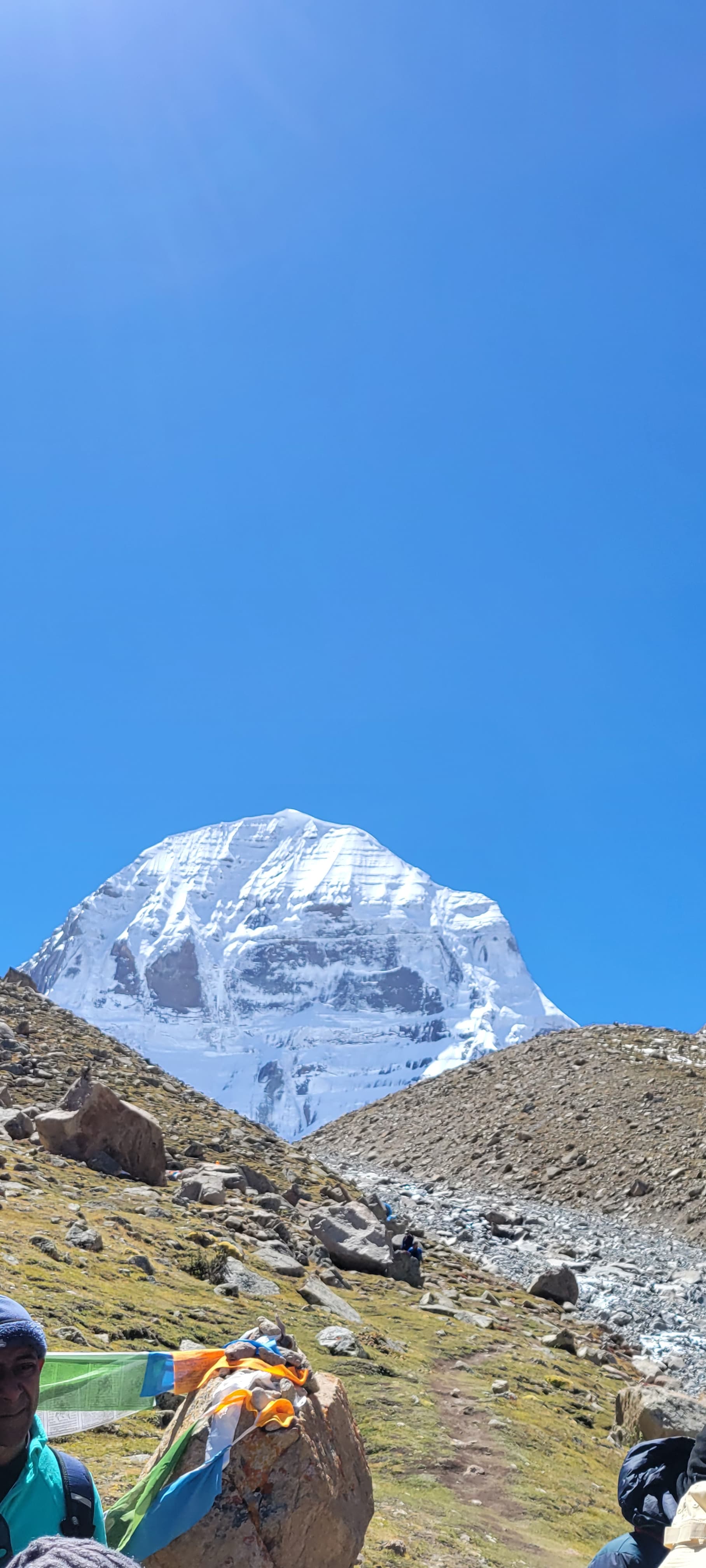
The sacred journey begins at Darchen and continues to Dirapuk. It takes the pilgrims from Darchen to the Lha Chu valley. As pilgrims trek through the valley, they will see the gigantic north face of the sacred mountain “Kailash”. The circumambulation again ends at Darchen from Zuthulpuk. The Parikrama is equally significant for the Buddhist, Jain and Bon followers.
Untouched & Unmatched Natural Beauty
The region of Mount Kailash takes travelers through some untouched mystic mountains and diverse landscapes.
Likewise, Mount Kailash itself has an altitude of 6,638 meters, offering spectacular views. It is in a perfect pyramid shape—a symbol of natural perfection. It also stands for persistence, resilience, and determination.
During your trek, you will also admire the beauty of Lake Mansarovar – the freshest lake water in the world. The water is very clear and transparent and reflects the Kailash Parvat.
Close to the Lake Mansarovar, there is Rakshas Tal, popularly called Ravan Tal or Lake of Demons, situated at an elevation of 4,575 meters.
The beauty of Kailash is not scenic. After reaching Kailash, the pilgrims will feel deep connections with Kailasha.
Mount Kailash offers truly enchanting experiences where nature, calmness and spirituality come together.
Kailash Mansarovar Yatra via Lhasa flight
Holy Bath in Lake Mansarovar – A Sacred Gem
Lake Mansarovar, also known as “Mapam Yumtso” in the Tibetan language, is a high-altitude freshwater lake which has an elevation of 4,600 meters.
Lake Mansarovar is one of the most promising attractions of the Kailash Mansarovar pilgrimage trek. Nestled at the foot of the Kailash, it holds deep spiritual significance.
According to Hindu belief, several centuries ago, it was created by Lord Brahma. A holy bath in Mansarovar Lake is believed to wash away sins and purifies the soul.
During bathing, the pilgrims chant the mantra “Om Namah Shivaya”. The devotees also take holy water from the lake in bottles/containers.
The Buddhist followers considered Mansarovar as divine purity and spiritual awakening. It is also associated with Queen Maya Devi, who took a bath before the birth of Lord Buddha. Similarly, Jainism and Bon followers regarded it as a spiritual hub.
Multi-Religious—Significance
The sacred Mount Kailash region is one of the rarest pilgrimage destinations that holds deep importance from several traditions—Hinduism, Buddhism, Jainism & Bon’s.
In Hinduism, it is not merely a mountain. It is a divine abode of Lord Shiva, along with Goddess Parvati. Performing a 3-day Kailash Parikrama and a holy dip in Mansarovar, the bhaktas (devotees) believed to wash their sins and purify their souls.
The Buddhist followers also called Mount Kailash Mount Meru, the spiritual center. The Tibetan Buddhist believes that 3 days of circumambulation (Kora) take them to the path of enlightenment.
In the Jainism traditions, the sacred Mount Kailash is revered as Asthapada. They believed their first Guru and God Rishabhadeva (Adinath) attained Moksha here. Lately, Adinath's son, Bharata Chakravartin, established several Stupas and 24 shrines.
The Bon followers considered Mount Kailash a holy pilgrimage site. Unlike other religious followers, they also attain three days of circumambulation (parikrama). However, they perform in opposite directions.
Witness Festival and Ceremonies
The sacred region of Kailash is not only for its spiritual significance or the natural beauties. The place is equally important for vibrant festivals, events, and ceremonies.
The festivals and events of the Kailash region are enchanting, colourful, and hold deep spiritual significance.
The Saga Dawa Festival is the most vibrant and prominent festival of the Kailash region. It is celebrated around Darchen and the Kailash region. It is usually celebrated in May or June (the fourth Tibetan Lunar month) to commemorate the birth of Gautam Buddha.
During the festivals, thousands of pilgrims from all around the world visited here. The atmosphere becomes spiritual with prayer flags, chanting monks and a sense of unity among the pilgrims.
Another important event is Gyangdrub. It is celebrated for the accomplishment of Guru Padmasambhava (Guru Rinpoche), who brought Buddhism to Tibet.
Aside from this, the local people of the Kailash region also celebrated the Tibetan New Year and Tiji Festival (Lo Mathang – close to the Mustang region).
Witness Rare Wildlife
The auspicious Kailash tour is not only spiritually significant but also home to several rare wild species. The region is quite far from human urbanization. During the 15 days journey, the travelers will witness wildlife in its purest form.
In the rugged mountains and dramatic landscapes, you will be able to see snow leopard, wild cats, Tibetan sheep, bharal (blue sheep), Himalayan griffons and several other predators.
Aside from this, you may also encounter the Bar-headed Goose; they are known for flying over the mountains at incredible heights.
Meeting the People of Tibet
A trip To Kailash Mansarovar is not only for the spirituality or admiring natural beauty. During the two weeks of journey, you will get a chance to connect with the warm and good-hearted people of Tibet.
The Tibetan people are widely admired for their kindness, hospitality and resilience. There are more than 85 percent people at this region are in farming business.
During the journey, the Tibetans served you with their local traditional dishes. It’s butter tea, Tingmo, Khatas and several other meals. They often served food by wearing their traditional dresses.
Meeting local people during trek is truly inspiring. Through the journey, the pilgrims will able to know about their culture, traditions, and daily lifestyle.
The pilgrims may also visit monasteries, visit local markets to know more about them.
Disconnects from the Modern World
A joyful journey to Mount Kailash offers a life-changing, unforgettable experience, and also disconnects pilgrims from the modern world. There will be no noise, rush, the distraction of cities, and chaos. For some days, you will live a life with a pure sense of peace.
The closer you get to the sacred region of Kailash, the more your internet disappears, and mobile networks fade away. You will also have limited facilities. Without mobile screens, social media or notifications, your mind turns calm and settles into stillness.
In the absence of modern facilities, you will slowly connect with the Kailash region. Many pilgrims experience that they will mentally relax, where stress and worries disappear.
Even walking, resting, and looking at the skies, you will evolve into a mindful and spiritually aware person.
Surrounded by natural beauty, you will have a real sense of accomplishment after concluding the journey.
The Path to Liberation (Moksha)
The sacred Kailash Yatra is often considered the Path to Liberation (Moksha). Not only for Hindus, is the journey equally significant for Buddhist, Jain and Bon followers. The Yatra involves 52-53 kilometres of circumambulation.
The journey is not easy to accomplish. It is primarily tough. The 3-day journey exceeded 5,600 meters. During the trek, the pilgrims have to face the unconditioned weather, thin air and freezing weather.
The pilgrims must have good endurance, physical stamina and fitness capacity to complete the 9-15-day journey.
Liberation is not a context of life after death. It is about breaking the cycle of birth and death. It is about freeing yourself from worries, fear, arrogance and living a life without materialistic facilities.

Leave a reply
Your email address will not be published.