

Upper Dolpo Trekking
Overview
Nepal, as a tourist destination is good for all seasons, however, the best seasons for trekking to Rara Lake region are Spring (March-May) and Autumn (mid-Sept. – mid-Dec.). Trekking in autumn season is noted for clear weather and excellent views of silvery mountains against the blue sky. It gets colder towards the end of December. This trek can be done in any month except January and February.
The Highlight of the Kanchenjunga Base Camp Trek
The world's third highest mountain Kanchenjunga Base Camp Trek offers stunning Himalayan scenery of Mt. Everest, Makalu, Kanchenjunga, and many other snow-capped mountains.
Explore Buddhist cultures, Yalung Ri base camp, wildlife, and the great Himalayas. Enjoy stunning views of Mount Kanchenjunga, climbing, camping, and exploring rhododendron forests. Sightseeing in ancient Kathmandu valley is also included.
Experience a scenic flight from Kathmandu to Biratnagar - Taplaijung. Cross Mirgin La Pass and witness diverse flora, fauna, and fascinating local cultures.
Enjoy a massif view of mountains, beautiful flora and fauna, and the Kanchenjunga Base Camp.
Take in great views of the Himalayas and explore Kanchenjunga Base Camp.
Trip Summary
Marvelous views of stunning Mt. Kanchenjunga (8,586 m / 28,169 ft) provide a great opportunity to explore the eastern region of Nepal. Exploring the region, you can observe the local Buddhist culture, unique traditions, and rituals. The surroundings are covered by wildlife such as leopards, wild yaks, grey langurs, jackals, and wild cats, as well as beautiful subtropical forests. Although Kanchenjunga is one of the restricted regions for trekking, it offers a chance to explore this sacred and untouched region.
About Kanchenjunga
Kanchenjunga (8,586 m / 28,169 ft), the third highest mountain in Nepal, is also known as the "Queen of Mountains" and is situated in the eastern part of the country. Kanchenjunga trekking is becoming popular among nature enthusiasts as it is a long adventure to the most remote and beautiful area of the Himalayas in Nepal’s eastern regions. Crossing the Mirgin-La Pass at 4,725 meters provides views of Mountain Makalu, Chamlang, and Everest. The Kanchenjunga region is rich in wildlife with iconic species. Visitors can explore some of the world heritage sites in Kathmandu and marvel at the art, architecture, stupas, and temples from the medieval period. The Sunrise Adventure trek ensures a memorable trip from arrival to departure.
Local Culture and Wildlife
Kanchenjunga trek is primarily inhabited by Rai and Limbu people in the eastern part of Nepal. This area is influenced by Tibetan Buddhist cultures. Mount Kanchenjunga is located on the border of Tibet and Sikkim. The trek passes through beautiful monasteries, stupas, and gompas.
Flora and Fauna
The Kanchenjunga Base Camp Trek takes you to the lap of the world’s third tallest mountain. You can explore diverse wildlife such as snow leopards, Tibetan wolves, and red pandas. At high altitudes, beautiful pine forests and bamboo jungles are visible. The name Kanchenjunga means "five treasures of the great snow," referring to the five summits that make up Kanchenjunga. This less crowded trek rewards you with a unique insight into Nepali rural lifestyle and its rich culture. Along the way, observe remarkable valleys with their Buddhist culture and traditions. The trek also showcases a range of Nepalese culture, from Rai and Limbu to Tibetan Buddhist villages. Enjoy views of frozen lakes and crystal-clear streams. Finally, return to Bhadrapur and fly back to Kathmandu.
The Highlight of the Upper Dolpo Trekking
Scenic flight from Kathmandu to Nepaljung and then to Jhupal with aerial views of the Himalayas.
Visit Shey Phosundo Lake and explore the Buddhist monasteries. Numla Pass (5190m) and the visit to the forbidden kingdom.
Massif view of mountains, beautiful flora and fauna of Phoksunda National Park.
Here you can observe spectacular views of many stunning mountains like Annapurna, Dhaulagiri, and Kanjiroba. You can also explore the amazing wildlife.
Trip Summary
Upper Dolpo Trekking is one of the least developed and restricted regions of Nepal, providing you with amazing moments of your life. This trek offers a great chance to observe the unique local culture of this region and the Buddhist monasteries, as the region is sacred and largely untouched by modernization. The main attractions of Upper Dolpo include:
Phoksundo Lake
Fascinating people and Tibetan Buddhist culture & lifestyle
The trek is for those with previous trekking experience who are seeking another heart-throbbing adventure.
About the Region
One of the least developed and most remote areas in Nepal, the Upper Dolpo region is unique compared to other trekking destinations. The area is inhabited by only a few hundred people, living well above 4300 meters in altitude. The unique culture and traditions have remained intact for decades, largely due to its geographical isolation. This site is home to snow leopards, blue sheep, and mysterious old monasteries with rich history. If you prefer a shorter trail, consider the Lower Dolpo Trek.
The first trek in this region was organized in 1990 by a British tour operator through the route of Lower Dolpa. Since then, trekking has been allowed but requires special permission from the government as the area is protected. The trek is suited for those with previous trekking experience who seek another thrilling adventure. Exploring this remote area is an opportunity to experience the restricted and forbidden kingdom. You can also sightsee in Kathmandu and explore ancient temples and monasteries. Sunrise Adventure Trek will make your trip memorable.
Additional Information
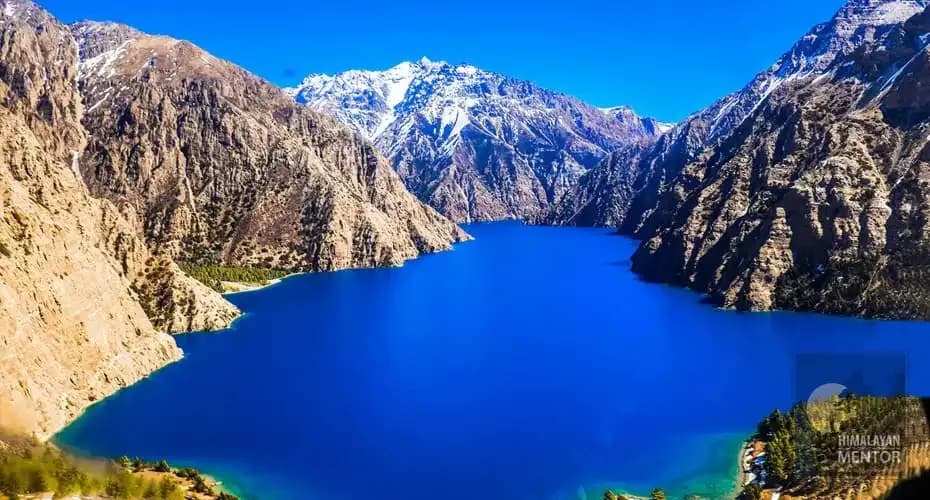
However, the Upper Dolpo trekking route passes through numerous gigantic mountain ranges, including Mt. Annapurna, Dhaulagiri, and Kanjiroba, to name a few. Within the trek route, we reach Ringmo, another highlight of the trek. Enjoy two nights to appreciate the deep blue waters of Shey Phoksundo Lake and the surrounding snow peaks of the Kanjirova Himalayan range. Next, visit the nearby isolated village of Ringmo and its monastery. Continuing the journey, we head towards the Crystal Mountain at Shey Gompa, following the ancient Trans-Himalayan Trade Route. Finally, return to Juphal for the flight back to Nepalgunj. This alternative route provides more opportunities to explore the fascinating wild west of the Nepal Himalayas.
What‘s Included
What‘s Excluded
Availability
Select your preferred departure date. Trip duration: 17 days
| Su | Mo | Tu | We | Th | Fr | Sa |
|---|---|---|---|---|---|---|
| Su | Mo | Tu | We | Th | Fr | Sa |
|---|---|---|---|---|---|---|
Number of Travellers
Select a date to book
Dates are subject to availability. Please contact us to confirm your preferred dates.
Itinerary
Altitude: 1,350m/4,428ft - Welcome to Kathmandu, our Sunrise Adventure Trek airport representative will welcome you in the airport and transfer you to your hotel. Then, at evening we will give you shortly details of the trip program. Overnight stay in hotel
After breakfast visit World Heritage Sites in the Kathmandu Valley which includes Swayambhunath Stupa / Monkey Temple, Bauddhanath Stupa and Pashupatinath Temple and arrangements for trek after trekking. Stupas and temples were made in ancient time and bear the great historical plus cultural values. Pashupatinath temple is mostly famous between Hindu pilgrimages. Along with religious impressions, it offers beautiful statues and structures built in ancient Nepalese architect style.
We take a scenic flight to Nepalgunj which takes an hour. As Nepalgunj is situated in western region, we can get a chance to observe the stunning mountainous views and the terai town during the flight and our overnight is also there. So, we can also closely explore the local cultures of Terai people. Meals included: Breakfast, lunch and dinner and finally an overnight stay in trekking lodge.
This morning we fly from Nepalgunj to Jumla. Jumla is the head quarter of Karnali zone. Thus, we see the governmental and non-governmental organization. Jumla is also known as the origin place of Nepalese language. Leaving the airport at Jumla, we cross the Tila Khola and the Chaudabise Khola near their confluence and climb gradually to a fertile valley of rice terraces. During the trek we pass by the Garjyakot and Depal villages where we observe the living style of Chetri people and traditions follow by them. Meals included: Breakfast, lunch and dinner and finally an overnight stay in trekking lodge.
We have an early breakfast and start our trek by following the Tila Khola. Passing by Tila Khola we walk through fields of corn, potato, buckwheat and barley. Along with this we pass through the Tibetans Maniwals on the way. Here we have lunch and take rest for few minutes then, we continue the trek along the river to Napakhola. Napakhola is a small Buddhist settlement where we get to observe the Buddhism cultures and values. Meals included: Breakfast, lunch and dinner and finally an Overnight stay in a camp or lodge.
Today, the trail is more steeply and we climb through a forest to a pass named Mauri Lagna [3820m]. After this, we trek through birch and sliver fire forest to reach Chaurikot. Reaching at Chaurikot offers the scenic views of Patrasi and Jagadu Himal visible to the north. Meals included: Breakfast, lunch and dinner and finally an Overnight stay in a camp or lodge.
After having breakfast we pass village of Balasa inhabited by blacksmiths and tailors. Walking through the beautiful forests of walnut trees we get to observe the spectacular views of Kagmara Peak. Trail drops us to a stream before climbing the rocky trail in which we pass by the apple orchards of jyakot. Meals included: Breakfast, lunch and dinner and finally an Overnight stay in a camp or lodge.
Today we climb gradually through lots of thorn bushes, where you can see the greenery of enchanting dense forests. After this we pass by Hurikot and along with walking for some hours we arrive at the entrance to the Shey Phoksundo National Park. Meals included: Breakfast, lunch and dinner and finally an Overnight stay in a camp or lodge.
We take our breakfast and continue to follow the trail upward of river stream. We ascend slowly towards the Kagmara La. Trek to Kagmara is short and easy as well. During the trail we get to observe the surrounding of green forests with rhododendron flowers. Meals included: Breakfast, lunch and dinner and finally an Overnight stay in a camp or lodge.
Walking continuously the trail becomes steeper today and comes to a rocky area. Slightly, the trail climbs to a moraine below the Kagmara La, and we make our camp among the boulders here. Reaching at Kagmara La offers the excellent views of mountains surrounded by, and the magnificent forests surrounding trials below. Meals included: Breakfast, lunch and dinner and finally an Overnight stay in a camp or lodge.
Today, the climbs become very strenuous now until a pass, this is a good place to spot the rare blue sheep. We walk down through the pastures of the Pungmo Khola Valley. Overnight camp at Pungmo Khola in the grassy spot Meals included: Breakfast, lunch and dinner and finally an Overnight stay in a camp or lodge.
The trail now enters birch and juniper forests. Good view of Kanjirowa peak on the way and can see a Good settlement of Tibeatan villages with Yak herders. The area is covered in Junper Birch and Apple trees. Meals included: Breakfast, lunch and dinner and finally an Overnight stay in a camp or lodge.
After breakfast we continue downstream to the national park headquarters at Sumduwa before joining the trail up the Phoksumdo Khola to Phoksumdo Lake. Working through a forest of Cedar on the way we will encounter a biggest waterfall of Nepal. Meals included: Breakfast, lunch and dinner and finally an Overnight stay in a camp or lodge.
Today we rest at Phoksundo Lake to admire the beauty of this great lake. We have our breakfast and enjoy the majestic views of snowy peaks. We can get to observe the marvelous views of mountains known as Kanjirolba and Kagmara and Batrasi Himal. Along with this we visit nearby villages, where we closely explore the Tibetan cultures of people and at last the Ringbo Gompa Meals included: Breakfast, lunch and dinner and finally an Overnight stay in a camp or lodge.
Walking through the forests of juniper and blue pine we collect some beautiful moments. The trail takes us following the river bank up to the valley and a waterfall. Finally, we will camp at the base camp of Bagala pass. Meals included: Breakfast, lunch and dinner and finally an Overnight stay in a camp or lodge.
Numla Pass base camp (5,190 m) - we trek through the narrow valley which slightly becomes wider and is surrounded by big glaciers. The scenery offers the best views along with blade-shaped rock cliffs. During the walk we enjoy incredible views of the Kanjiroba massif to the west. Meals included: Breakfast, lunch and dinner and finally an Overnight stay in a camp or lodge.
Chering Gompa - After the early breakfast we ascend to the top of the Numla Pass if the weather is clear, we can see as far as spectacular views of Dhaulagiri ranges. Walking for some hours ahead takes us to a beautiful valley of Upper Tarap where we can get a chance to closely analyze the daily living style and cultures of local people. Finally, we Camp near by Chering Gompa. Meals included: Breakfast, lunch and dinner and finally an Overnight stay in a camp or lodge.
FAQs about
the trip
Nepal, as a tourist destination is good for all seasons, however, the best seasons for trekking to Dhaulagiri region are Spring (March – May) and Autumn (mid Sept. – mid Dec. ). Trekking in autumn season is noted for clear weather and excellent views of silvery mountains against blue sky. It gets colder towards the end of December. This trek can be done in any month except January and February.
Nepal, as a tourist destination is good for all seasons, however, the best seasons for trekking to Dhaulagiri region are Spring (March – May) and Autumn (mid Sept. – mid Dec. ). Trekking in autumn season is noted for clear weather and excellent views of silvery mountains against blue sky. It gets colder towards the end of December. This trek can be done in any month except January and February.
Nepal, as a tourist destination is good for all seasons, however, the best seasons for trekking to Dhaulagiri region are Spring (March – May) and Autumn (mid Sept. – mid Dec. ). Trekking in autumn season is noted for clear weather and excellent views of silvery mountains against blue sky. It gets colder towards the end of December. This trek can be done in any month except January and February.
Nepal, as a tourist destination is good for all seasons, however, the best seasons for trekking to Dhaulagiri region are Spring (March – May) and Autumn (mid Sept. – mid Dec. ). Trekking in autumn season is noted for clear weather and excellent views of silvery mountains against blue sky. It gets colder towards the end of December. This trek can be done in any month except January and February.
Nepal, as a tourist destination is good for all seasons, however, the best seasons for trekking to Dhaulagiri region are Spring (March – May) and Autumn (mid Sept. – mid Dec. ). Trekking in autumn season is noted for clear weather and excellent views of silvery mountains against blue sky. It gets colder towards the end of December. This trek can be done in any month except January and February.
Nepal, as a tourist destination is good for all seasons, however, the best seasons for trekking to Dhaulagiri region are Spring (March – May) and Autumn (mid Sept. – mid Dec. ). Trekking in autumn season is noted for clear weather and excellent views of silvery mountains against blue sky. It gets colder towards the end of December. This trek can be done in any month except January and February.
Nepal, as a tourist destination is good for all seasons, however, the best seasons for trekking to Dhaulagiri region are Spring (March – May) and Autumn (mid Sept. – mid Dec. ). Trekking in autumn season is noted for clear weather and excellent views of silvery mountains against blue sky. It gets colder towards the end of December. This trek can be done in any month except January and February.
Nepal, as a tourist destination is good for all seasons, however, the best seasons for trekking to Dhaulagiri region are Spring (March – May) and Autumn (mid Sept. – mid Dec. ). Trekking in autumn season is noted for clear weather and excellent views of silvery mountains against blue sky. It gets colder towards the end of December. This trek can be done in any month except January and February.
Nepal, as a tourist destination is good for all seasons, however, the best seasons for trekking to Dhaulagiri region are Spring (March – May) and Autumn (mid Sept. – mid Dec. ). Trekking in autumn season is noted for clear weather and excellent views of silvery mountains against blue sky. It gets colder towards the end of December. This trek can be done in any month except January and February.
Nepal, as a tourist destination is good for all seasons, however, the best seasons for trekking to Dhaulagiri region are Spring (March – May) and Autumn (mid Sept. – mid Dec. ). Trekking in autumn season is noted for clear weather and excellent views of silvery mountains against blue sky. It gets colder towards the end of December. This trek can be done in any month except January and February.
Nepal, as a tourist destination is good for all seasons, however, the best seasons for trekking to Dhaulagiri region are Spring (March – May) and Autumn (mid Sept. – mid Dec. ). Trekking in autumn season is noted for clear weather and excellent views of silvery mountains against blue sky. It gets colder towards the end of December. This trek can be done in any month except January and February.
Speak to an Expert
Suresh Bhandari
Leave a Reply
Your email address will not be published.